
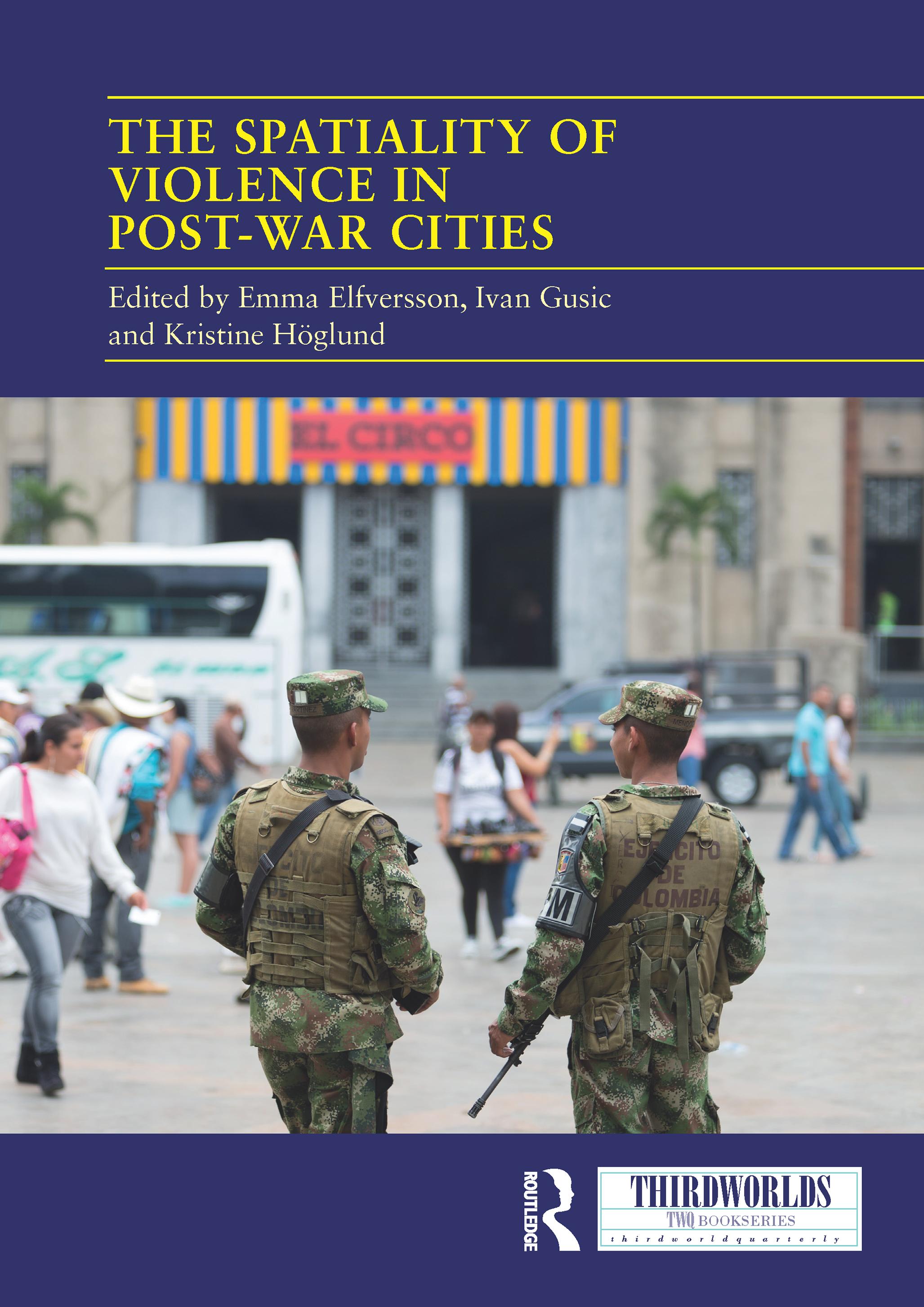
The Spatiality of Violence in Post-war Cities analyses violence in post-war cities from different perspectives and in different parts of the world, with a shared attention to space and how it affects violent dynamics.
The world is urbanising rapidly and cities are increasingly held as the most important arenas for sustainable development. Cities emerging from war are no exception, but across the globe, many post-war cities are ravaged by residual or renewed violence, which threatens progress towards peace and stability. This volume addresses why such violence happens, where and how it manifests, and how it can be prevented. It includes contributions that are informed by both post-war logics and urban particularities, that take intra-city dynamics into account, and that adopt a spatial analysis of the city. They focus on cases around the world, including Medellín (Colombia), Johannesburg (South Africa) and Mitrovica (Kosovo). The volume makes a threefold contribution to the research agenda on violence in post-war cities. First, the contributions nuance our understanding of the causes and forms of the uneven spatial distribution of violence, insecurities, and trauma within and across post-war cities. Second, the collection demonstrates how urban planning and the built environment shape and generate different forms of violence in post-war cities. Third, the contributions explore the challenges, opportunities, and potential unintended consequences of conflict resolution in violent urban settings.
Providing novel insights into the causes and dynamics of violence in post-war cities, and challenges and opportunities for violence reduction, The Spatiality of Violence in Post-war Cities will be of great interest to scholars of peace, violence, conflict and its resolution, urban studies, built environment and planning.
The chapters were originally published as a special issue of Third World Thematics.
Pay easily by card, Klarna, Apple Pay or Google Pay. Not happy? You always have a 14-day money-back guarantee. Read more in our terms. If you have any questions, email us at hello@memmo.org.
Memmo makes studying easier – wherever you are in the world. We bring your course books and smart study tools together in one place: summaries, quizzes, podcasts and flashcards. Plus Ted, your study buddy who answers anything you wonder. Over 75,000 students already study here – built to help you learn faster and stress less.