
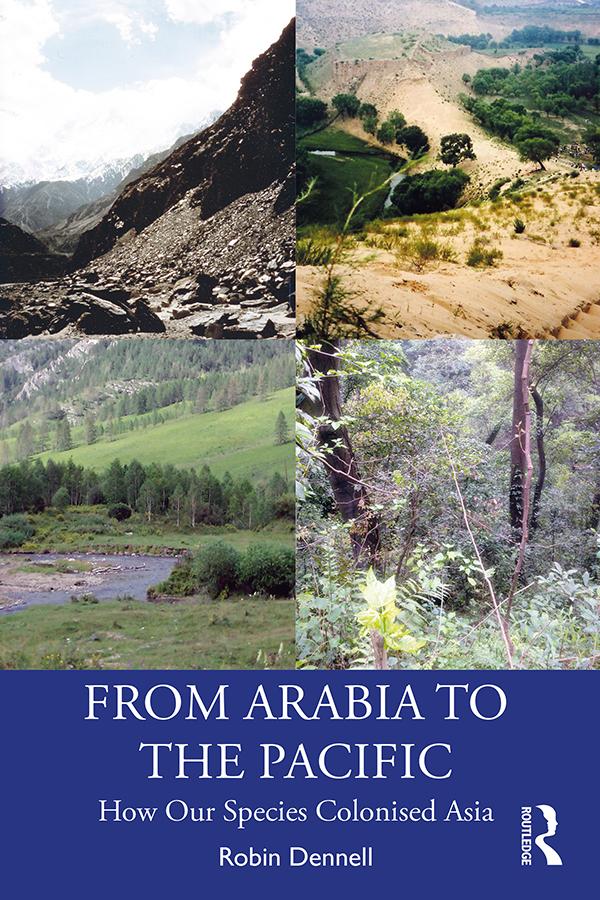
Drawing upon invasion biology and the latest archaeological, skeletal and environment evidence, From Arabia to the Pacific documents the migration of humans into Asia, and explains why we were so successful as a colonising species.
The colonisation of Asia by our species was one of the most momentous events in human evolution. Starting around or before 100,000 years ago, humans began to disperse out of Africa and into the Arabian Peninsula, and then across southern Asia through India, Southeast Asia and south China. They learnt to build boats and sail to the islands of Southeast Asia, from which they reached Australia by 50,000 years ago. Around that time, humans also dispersed from the Levant through Iran, Central Asia, southern Siberia, Mongolia, the Tibetan Plateau, north China and the Japanese islands, and they also colonised Siberia as far north as the Arctic Ocean. By 30,000 years ago, humans had colonised the whole of Asia from Arabia to the Pacific, and from the Arctic to the Indian Ocean as well as the European Peninsula. In doing so, we replaced all other types of humans such as Neandertals and ended five million years of human diversity.
Using interdisciplinary source material, From Arabia to the Pacific charts this process and draws conclusions as to the factors which made it possible. It will be invaluable to scholars of prehistory, and archaeologists and anthropologists interested in how the human species moved out of Africa and spread throughout Asia.
Pay easily by card, Klarna, Apple Pay or Google Pay. Not happy? You always have a 14-day money-back guarantee. Read more in our terms. If you have any questions, email us at hello@memmo.org.
Memmo makes studying easier – wherever you are in the world. We bring your course books and smart study tools together in one place: summaries, quizzes, podcasts and flashcards. Plus Ted, your study buddy who answers anything you wonder. Over 75,000 students already study here – built to help you learn faster and stress less.