
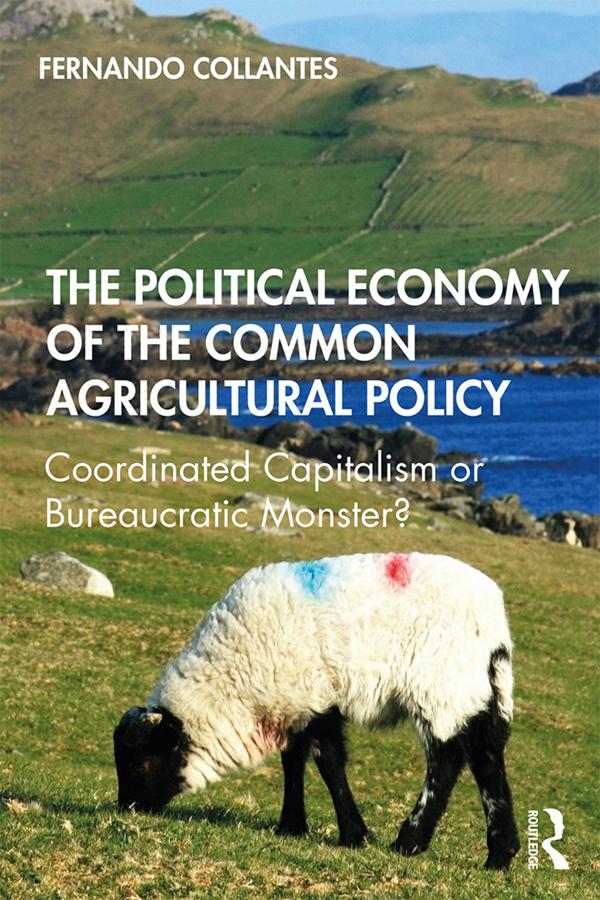
What is the balance of the European Union’s Common Agricultural Policy more than half a century after its birth? Does it illustrate the virtues of the European model of coordinated capitalism, as opposed to US-style liberal capitalism? Or is it an incoherent set of instruments that exert diverse negative impacts and, like Frankenstein’s monster, seems to have escaped the control of its designers?
The Political Economy of the Common Agricultural Policy does not criticize the CAP from the liberal standpoint that views most public interventions in the economy as bad for efficiency and welfare. The CAP has been costly to Europeans, both as consumers and as taxpayers, and has also generated a number of negative impacts upon third countries, but these costs and impacts have been more moderate than is suggested. This book proposes that the issue with the CAP is not a generic problem of coordinating capitalism but, instead, a more specific problem of low-quality coordination. The text argues that profound reform of the European Union’s institutions and policies is required to counter the rapid rise of a more Eurosceptical state of mind but – in the case of agricultural policy – history casts serious doubts on the capacity of the European network of agriculture-related politicians to lead such a reform.
This key work is essential reading for researchers, graduate students, and master’s level docents of the Common Agricultural Policy and – more broadly – European Union policy and reform.
Pay easily by card, Klarna, Apple Pay or Google Pay. Not happy? You always have a 14-day money-back guarantee. Read more in our terms. If you have any questions, email us at hello@memmo.org.
Memmo makes studying easier – wherever you are in the world. We bring your course books and smart study tools together in one place: summaries, quizzes, podcasts and flashcards. Plus Ted, your study buddy who answers anything you wonder. Over 50,000 students already study here – built to help you learn faster and stress less.