
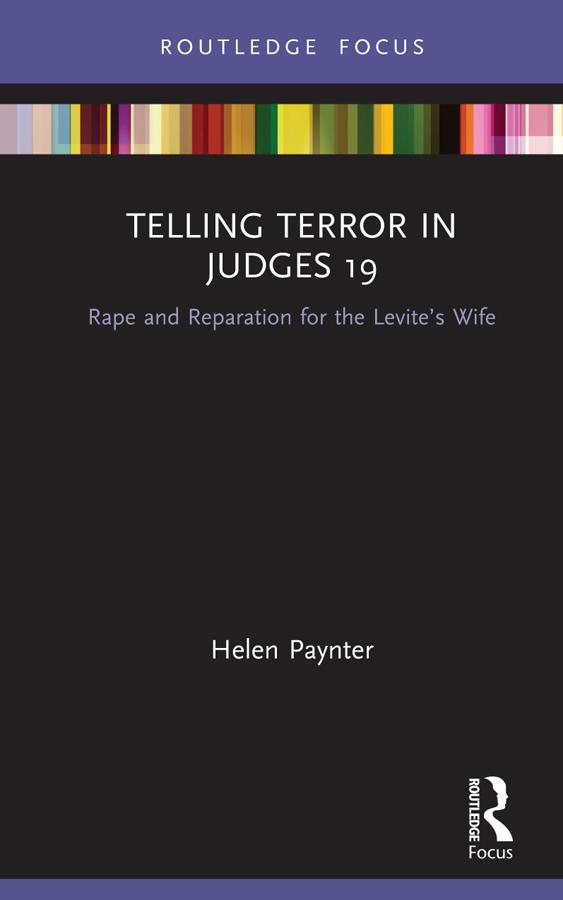
Telling Terror in Judges 19 explores the value of performing a ‘reparative reading’ of the terror-filled story of the Levite’s pilegesh (commonly referred to as the Levite’s concubine) in Judges 19, and how such a reparative reading can be brought to bear upon elements of modern rape culture. Historically, the story has been used as a morality tale to warn young women about what constitutes appropriate behaviour. More recently, (mainly male) commentators have tended to write the woman out of the story, by making claims about its purpose and theme which bear no relation to her suffering. In response to this, feminist critics have attempted to write the woman back into the story, generally using the hermeneutics of suspicion. This book begins by surveying some of the traditional commentators, and the three great feminist commentators of the text (Bal, Exum and Trible). It then offers a reparative reading by attending to the pilegesh’s surprising prominence, her moral and marital agency, and her speaking voice. In the final chapter, there is a detailed comparison of the story with elements of modern rape culture.
Pay easily by card, Klarna, Apple Pay or Google Pay. Not happy? You always have a 14-day money-back guarantee. Read more in our terms. If you have any questions, email us at hello@memmo.org.
Memmo makes studying easier – wherever you are in the world. We bring your course books and smart study tools together in one place: summaries, quizzes, podcasts and flashcards. Plus Ted, your study buddy who answers anything you wonder. Over 50,000 students already study here – built to help you learn faster and stress less.