
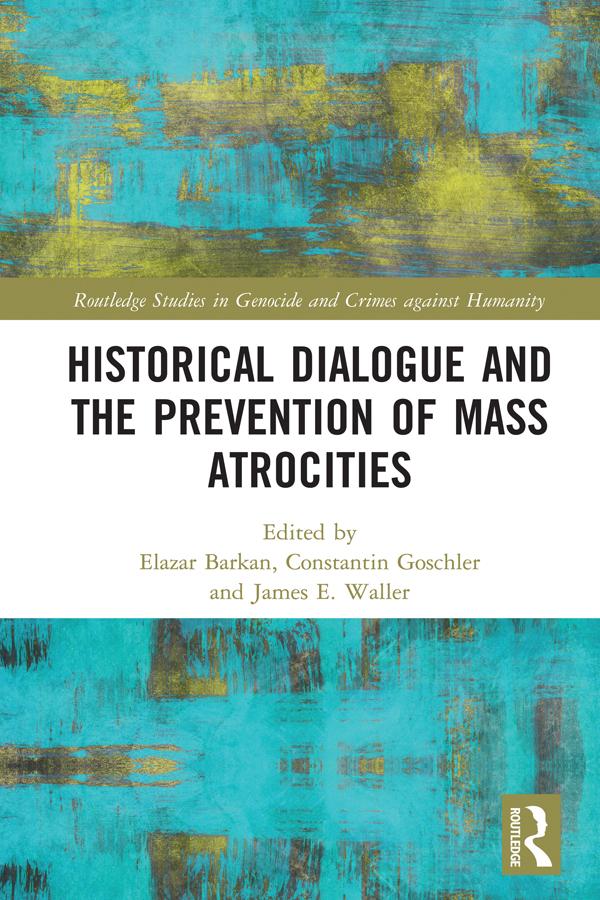
This book brings together a diverse range of international voices from academia, policymaking and civil society to address the failure to connect historical dialogue with atrocity prevention discourse and provide insight into how conflict histories and historical memory act as dynamic forces, actively facilitating or deterring current and future conflict.
Established on a variety of international case studies combining theoretical and practical points of view, the book envisions an integrated understanding of how historical dialogue can inform policy, education, and the practice of atrocity prevention. In doing so, it provides a vital basis for the development of preventive policies sensitive to the importance of conflict histories and for further academic study on the topic.
It will be of interest to all scholars and students of history, psychology, peace studies, international relations and political science.
Pay easily by card, Klarna, Apple Pay or Google Pay. Not happy? You always have a 14-day money-back guarantee. Read more in our terms. If you have any questions, email us at hello@memmo.org.
Memmo makes studying easier – wherever you are in the world. We bring your course books and smart study tools together in one place: summaries, quizzes, podcasts and flashcards. Plus Ted, your study buddy who answers anything you wonder. Over 50,000 students already study here – built to help you learn faster and stress less.