
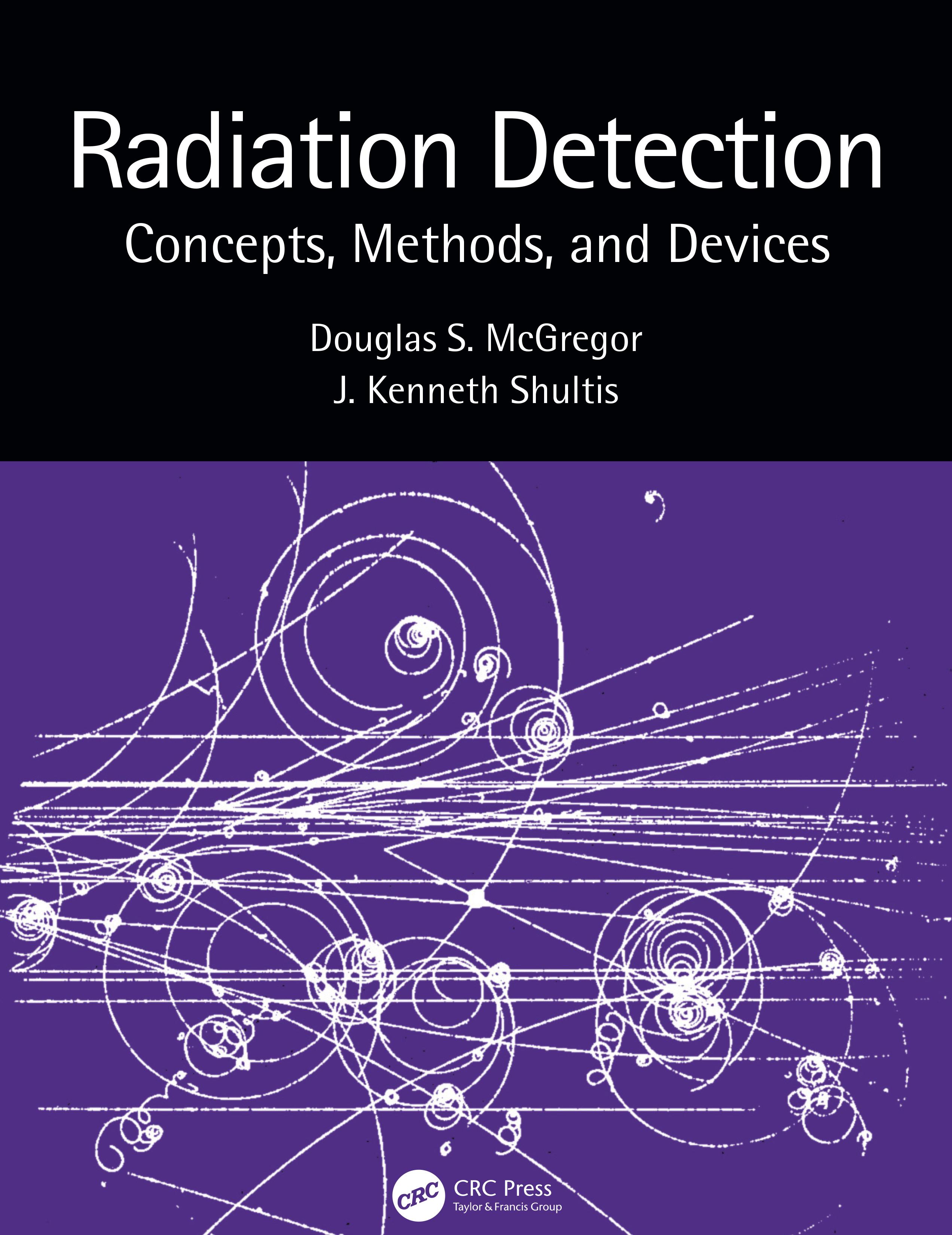
Radiation Detection: Concepts, Methods, and Devices provides a modern overview of radiation detection devices and radiation measurement methods. The book topics have been selected on the basis of the authors’ many years of experience designing radiation detectors and teaching radiation detection and measurement in a classroom environment.
This book is designed to give the reader more than a glimpse at radiation detection devices and a few packaged equations. Rather it seeks to provide an understanding that allows the reader to choose the appropriate detection technology for a particular application, to design detectors, and to competently perform radiation measurements. The authors describe assumptions used to derive frequently encountered equations used in radiation detection and measurement, thereby providing insight when and when not to apply the many approaches used in different aspects of radiation detection. Detailed in many of the chapters are specific aspects of radiation detectors, including comprehensive reviews of the historical development and current state of each topic. Such a review necessarily entails citations to many of the important discoveries, providing a resource to find quickly additional and more detailed information.
This book generally has five main themes:
- Physics and Electrostatics needed to Design Radiation Detectors
- Properties and Design of Common Radiation Detectors
- Description and Modeling of the Different Types of Radiation Detectors
- Radiation Measurements and Subsequent Analysis
- Introductory Electronics Used for Radiation Detectors
Topics covered include atomic and nuclear physics, radiation interactions, sources of radiation, and background radiation. Detector operation is addressed with chapters on radiation counting statistics, radiation source and detector effects, electrostatics for signal generation, solid-state and semiconductor physics, background radiations, and radiation counting and spectroscopy. Detectors for gamma-rays, charged-particles, and neutrons are detailed in chapters on gas-filled, scintillator, semiconductor, thermoluminescence and optically stimulated luminescence, photographic film, and a variety of other detection devices.
Pay easily by card, Klarna, Apple Pay or Google Pay. Not happy? You always have a 14-day money-back guarantee. Read more in our terms. If you have any questions, email us at hello@memmo.org.
Memmo makes studying easier – wherever you are in the world. We bring your course books and smart study tools together in one place: summaries, quizzes, podcasts and flashcards. Plus Ted, your study buddy who answers anything you wonder. Over 50,000 students already study here – built to help you learn faster and stress less.