
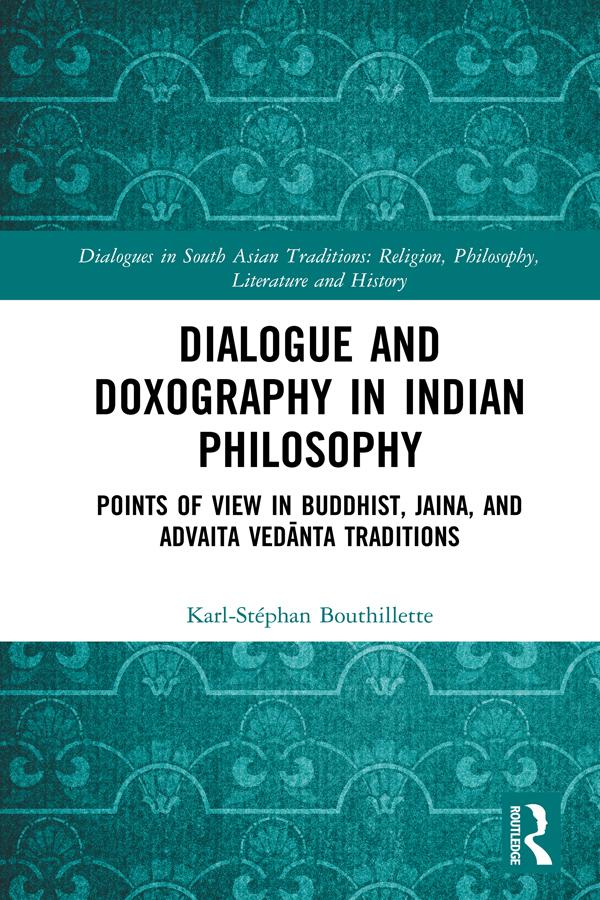
This is the first book fully dedicated to Indian philosophical doxography. It examines the function such dialectical texts were intended to serve in the intellectual and religious life of their public. It looks at Indian doxography both as a witness of inter- and intra-sectarian dialogues and as a religious phenomenon. It argues that doxographies represent dialectical exercises, indicative of a peculiar religious attitude to plurality, and locate these ‘exercises’ within a known form of ‘yoga’ dedicated to the cultivation of ‘knowledge’ or ‘gnosis’ (jñāna).
Concretely, the book presents a critical examination of three Sanskrit doxographies: the Madhyamakahṛdayakārikā of the Buddhist Bhāviveka, the Ṣaḍdarśanasamuccaya of the Jain Haribhadra, and the Sarvasiddhāntasaṅgraha attributed to the Advaitin Śaṅkara, focusing on each of their respective presentation of the Mīmāṃsā view.
It is the first time that the genre of doxography is considered beyond its literary format to ponder its performative dimension, as a spiritual exercise. Theoretically broad, the book reaches out to academics in religious studies, Indian philosophy, Indology, and classical studies.
Pay easily by card, Klarna, Apple Pay or Google Pay. Not happy? You always have a 14-day money-back guarantee. Read more in our terms. If you have any questions, email us at hello@memmo.org.
Memmo makes studying easier – wherever you are in the world. We bring your course books and smart study tools together in one place: summaries, quizzes, podcasts and flashcards. Plus Ted, your study buddy who answers anything you wonder. Over 50,000 students already study here – built to help you learn faster and stress less.