
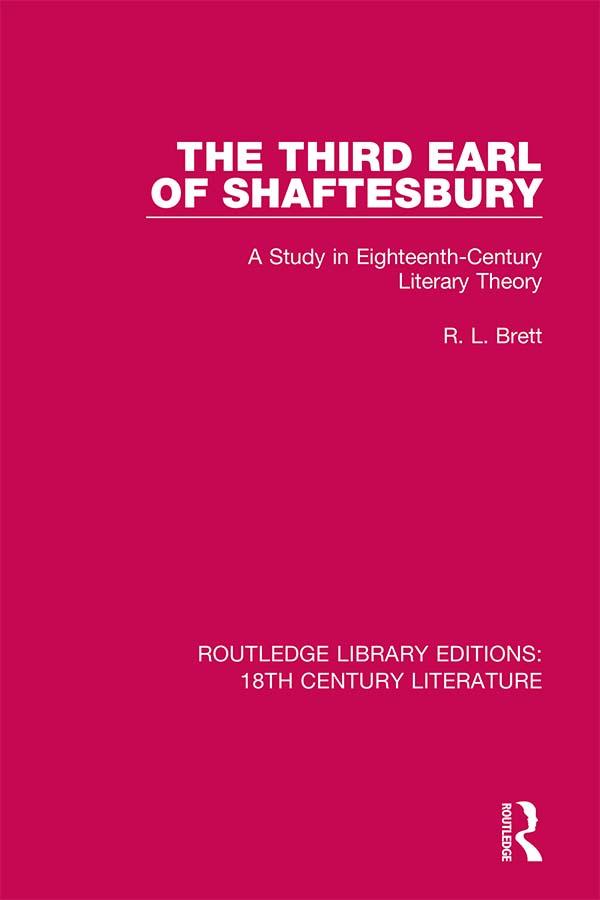
The third Earl of Shaftesbury had generally been known as the forerunner of the Moral Sense school of philosophers in the eighteenth century. Surprisingly little attention had been paid to his importance for literature and yet undoubtedly this had been very great. Originally published in 1951, this study gives an account of Shaftesbury’s aesthetic and literary theory; his discussion of the imagination, ridicule, the aesthetic judgment and the sublime; and his anticipation of later writers such as Burke, Coleridge and Kant. It also considers Shaftesbury’s thought as part of the background of ideas in the Augustan period and his influence in such fields as literature, architecture and landscape gardening. In addition, the author assesses in more general terms Shaftesbury’s attempt to maintain a Platonic viewpoint that would be more congenial to poetry than Locke’s "new way of ideas".
Pay easily by card, Klarna, Apple Pay or Google Pay. Not happy? You always have a 14-day money-back guarantee. Read more in our terms. If you have any questions, email us at hello@memmo.org.
Memmo makes studying easier – wherever you are in the world. We bring your course books and smart study tools together in one place: summaries, quizzes, podcasts and flashcards. Plus Ted, your study buddy who answers anything you wonder. Over 50,000 students already study here – built to help you learn faster and stress less.