
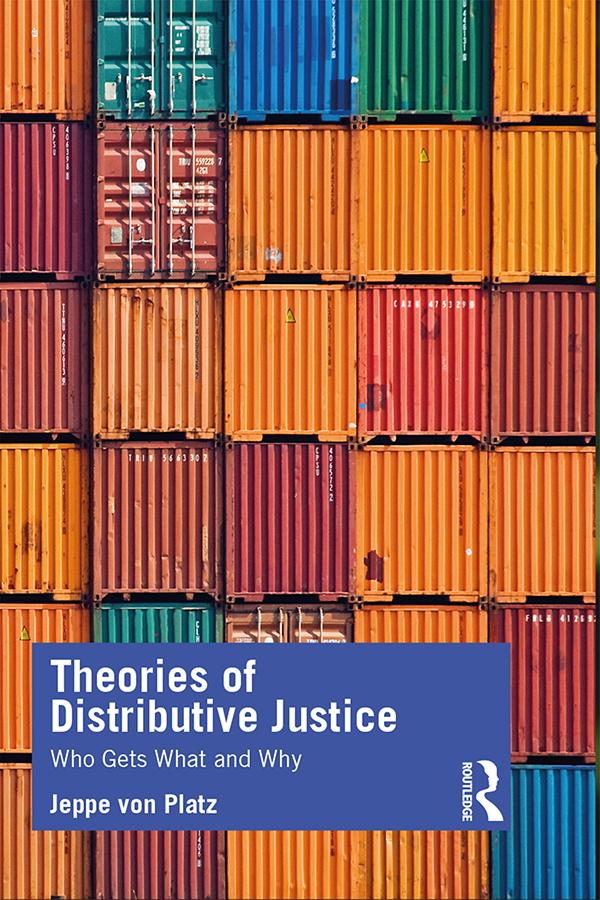
How should we design our economic systems? Should we tax the rich at a higher rate than the poor? Should we have a minimum wage? Should the state provide healthcare for all? These and many related questions are the subject of distributive justice, and different theories of distributive justice provide different ways to think about and answer such questions. This book provides a thorough introduction to the main theories of distributive justice and reveals the underlying sources of our disagreements about economic policy. It argues that the universe of theories of distributive justice is surprisingly simple, yet complicated. It is simple in that the main theories of distributive justice are just four in number, and in that these theories each offer a distinct, well-defined theoretical approach to distributive justice; yet it is complicated in that the main theories disagree at several distinct, fundamental levels, and in that it is possible to spin innumerable new theories from the elements of the four main theories.
Key Features:
- Covers the four major theories of distributive justice and their leading philosophers, elucidating the attractions and drawbacks of each:
- Friedrich A. von Hayek and right-liberalism;
- John Rawls and left-liberalism;
- Robert Nozick and libertarianism;
- Gerald A. Cohen and socialism.
- Explains why these four theories have come to dominate most philosophical discussions on distributive justice, highlighting the essential answer provided in each that is lacking in other theories.
- Written for any reader interested in the topic, with an annotated reading list at the end of each chapter and helpful glossary at the back of the book.
Pay easily by card, Klarna, Apple Pay or Google Pay. Not happy? You always have a 14-day money-back guarantee. Read more in our terms. If you have any questions, email us at hello@memmo.org.
Memmo makes studying easier – wherever you are in the world. We bring your course books and smart study tools together in one place: summaries, quizzes, podcasts and flashcards. Plus Ted, your study buddy who answers anything you wonder. Over 50,000 students already study here – built to help you learn faster and stress less.