
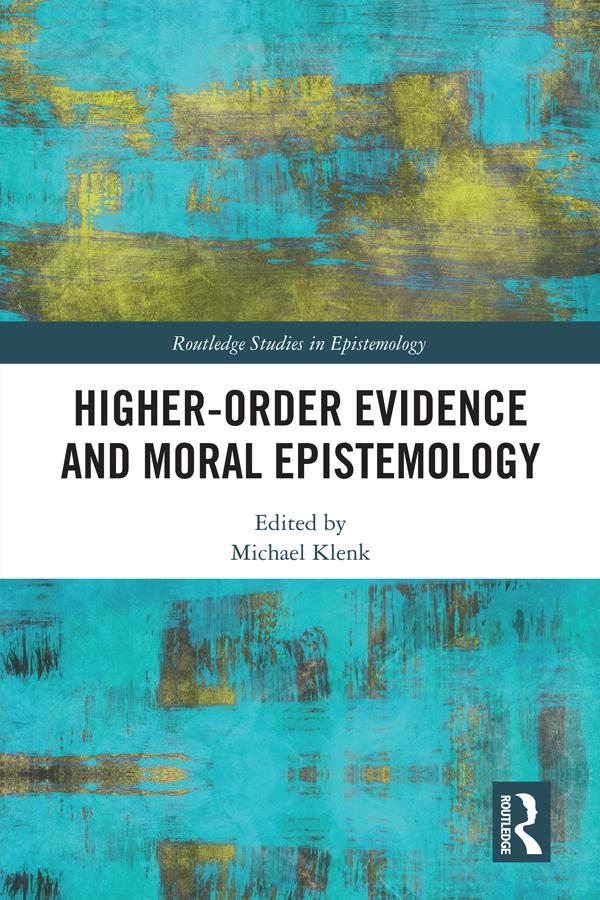
This book offers a systematic look at current challenges in moral epistemology through the lens of research on higher-order evidence. Fueled by recent advances in empirical research, higher-order evidence has generated a wealth of insights about the genealogy of moral beliefs. Higher-Order Evidence and Moral Epistemology explores how these insights have an impact on the epistemic status of moral beliefs.
The essays are divided into four thematic sections. Part I addresses higher-order evidence against morality that comes from sources such as disagreement and moral psychology. Part II covers rebuttals of higher-order evidence against morality. The essays in Part III examine the relevance of higher-order evidence for a broader range of phenomena in moral epistemology, for both individuals and groups, including moral testimony and phenomena of practical concern, such as fundamentalist views about moral matters. Finally, Part IV discusses permissible epistemic attitudes regarding a body of moral evidence, including the question of how to determine the permissibility of such attitudes.
This volume is the first to explicitly address the implications of higher-order evidence in moral epistemology. It will be of interest to researchers and advanced graduate students working in epistemology and metaethics.
Pay easily by card, Klarna, Apple Pay or Google Pay. Not happy? You always have a 14-day money-back guarantee. Read more in our terms. If you have any questions, email us at hello@memmo.org.
Memmo makes studying easier – wherever you are in the world. We bring your course books and smart study tools together in one place: summaries, quizzes, podcasts and flashcards. Plus Ted, your study buddy who answers anything you wonder. Over 50,000 students already study here – built to help you learn faster and stress less.