
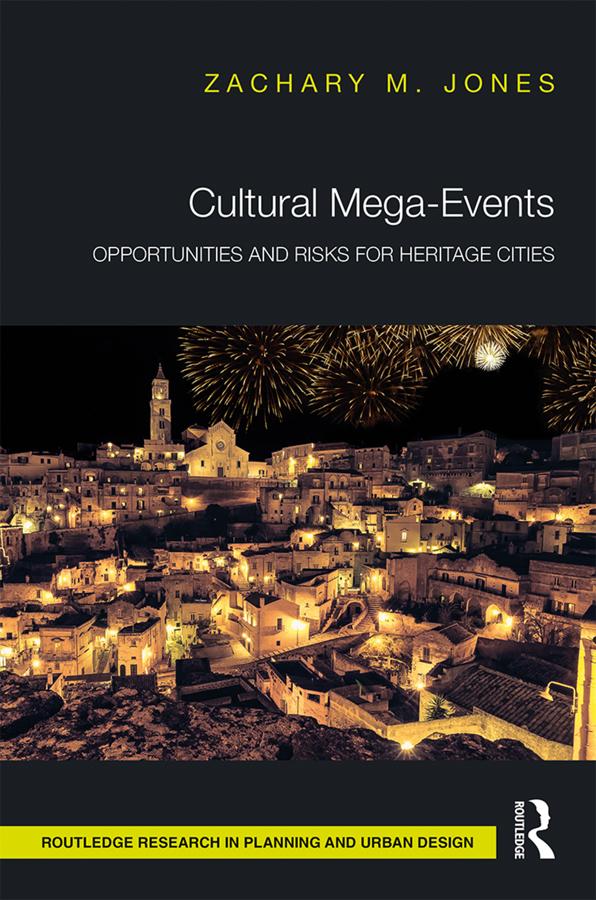
Mega-events have long been used by cities as a strategy to secure global recognition and attract future economic investment. However, while cultural mega-events like the European Capital of Culture have become increasingly popular, cities have begun questioning the traditional model of other events such as the Olympic Games with many candidate cities cancelling bids in recent years. This approach to planning and developing cities through mega-events introduces a broad range of physical effects and nuanced institutional changes for cities, particularly for the more sensitive heritage areas of cities. This book explores these issues by first examining the dynamics of cities’ attempts to reduce overall costs and increase the sustainability of these large events by further embedding them within the existing fabric of the city and second by studying in depth the impact on the heritage of host cities. This book investigates three World Heritage Cities: Genoa, Liverpool and Istanbul, each of which have hosted the European Capital of Culture and introduced a variety of opportunities and risks for their heritage. The book highlights the potential benefits and challenges of integrating event and heritage planning to provide lessons that can help future historic cities and heritage decision makers better prepare for such events.
Pay easily by card, Klarna, Apple Pay or Google Pay. Not happy? You always have a 14-day money-back guarantee. Read more in our terms. If you have any questions, email us at hello@memmo.org.
Memmo makes studying easier – wherever you are in the world. We bring your course books and smart study tools together in one place: summaries, quizzes, podcasts and flashcards. Plus Ted, your study buddy who answers anything you wonder. Over 75,000 students already study here – built to help you learn faster and stress less.