
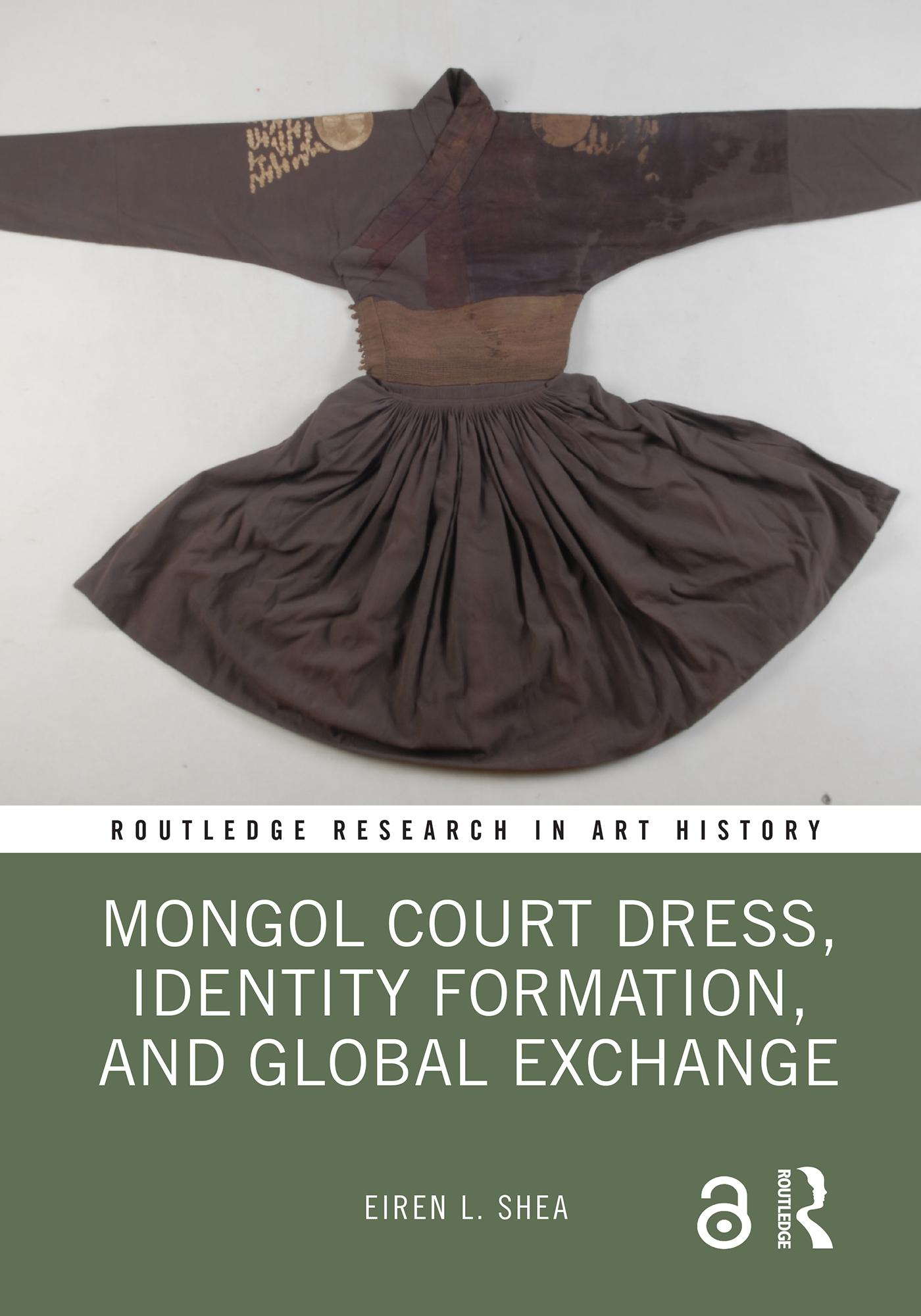
The Mongol period (1206-1368) marked a major turning point of exchange – culturally, politically, and artistically – across Eurasia.
The wide-ranging international exchange that occurred during the Mongol period is most apparent visually through the inclusion of Mongol motifs in textile, paintings, ceramics, and metalwork, among other media. Eiren Shea investigates how a group of newly-confederated tribes from the steppe conquered the most sophisticated societies in existence in less than a century, creating a courtly idiom that permanently changed the aesthetics of China and whose echoes were felt across Central Asia, the Middle East, and even Europe.
This book will be of interest to scholars in art history, fashion design, and Asian studies.
The Open Access version of this book, available at http://www.taylorfrancis.com, has been made available under a Creative Commons Attribution-Non Commercial 4.0 license.
Pay easily by card, Klarna, Apple Pay or Google Pay. Not happy? You always have a 14-day money-back guarantee. Read more in our terms. If you have any questions, email us at hello@memmo.org.
Memmo makes studying easier – wherever you are in the world. We bring your course books and smart study tools together in one place: summaries, quizzes, podcasts and flashcards. Plus Ted, your study buddy who answers anything you wonder. Over 50,000 students already study here – built to help you learn faster and stress less.