
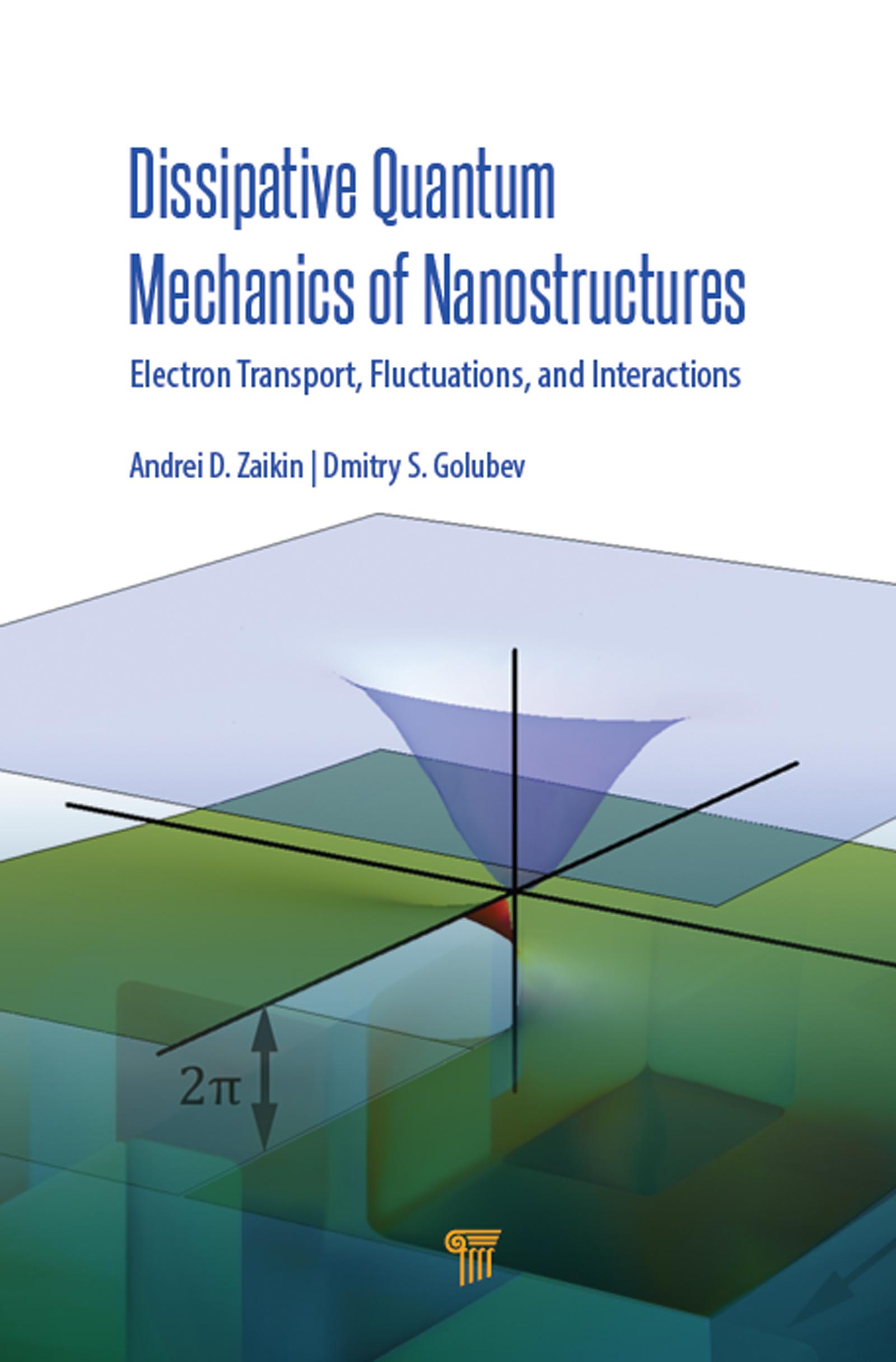
Continuing miniaturization of electronic devices, together with the quickly growing number of nanotechnological applications, demands a profound understanding of the underlying physics. Most of the fundamental problems of modern condensed matter physics involve various aspects of quantum transport and fluctuation phenomena at the nanoscale. In nanostructures, electrons are usually confined to a limited volume and interact with each other and lattice ions, simultaneously suffering multiple scattering events on impurities, barriers, surface imperfections, and other defects. Electron interaction with other degrees of freedom generally yields two major consequences, quantum dissipation and quantum decoherence. In other words, electrons can lose their energy and ability for quantum interference even at very low temperatures. These two different, but related, processes are at the heart of all quantum phenomena discussed in this book.
This book presents copious details to facilitate the understanding of the basic physics behind a result and the learning to technically reproduce the result without delving into extra literature. The book subtly balances the description of theoretical methods and techniques and the display of the rich landscape of the physical phenomena that can be accessed by these methods. It is useful for a broad readership ranging from master’s and PhD students to postdocs and senior researchers.
Pay easily by card, Klarna, Apple Pay or Google Pay. Not happy? You always have a 14-day money-back guarantee. Read more in our terms. If you have any questions, email us at hello@memmo.org.
Memmo makes studying easier – wherever you are in the world. We bring your course books and smart study tools together in one place: summaries, quizzes, podcasts and flashcards. Plus Ted, your study buddy who answers anything you wonder. Over 50,000 students already study here – built to help you learn faster and stress less.