
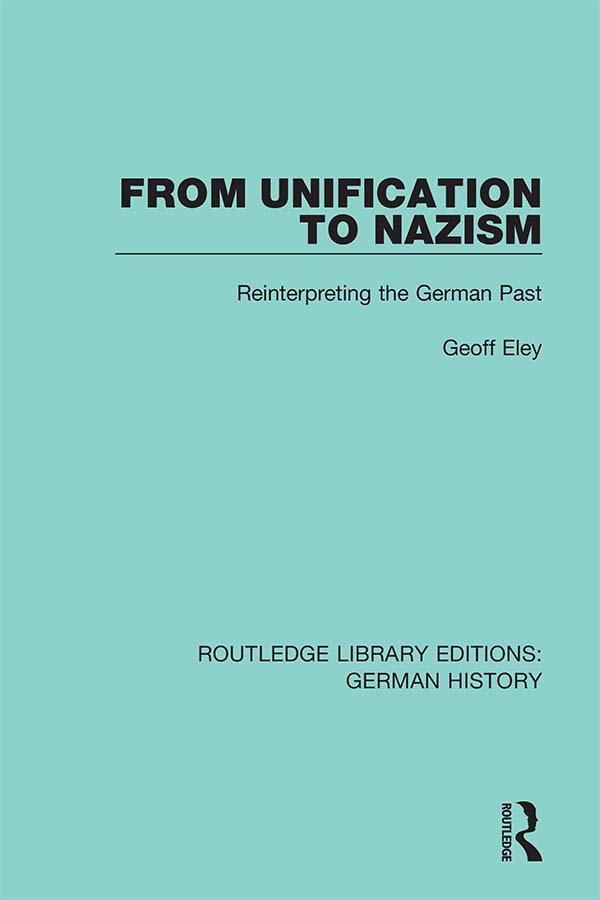
Originally published in 1986, and bringing together essays written over a 10 year period, this volume offers a coherent and challenging interpretation of the German past. The book argues that the German Empire between 1971 and 1914 may have enjoyed greater stability and cohesion than is often assumed. It suggests that Imperial Germany’s political institutions showed considerable flexibility and capacity for growth and puts forward the idea that without WWI, or in the event of a German victory, the Empire might well have demonstrated its viability as a modern state. In that case, the origins of fascism should be sought mainly in the subsequent experiences of war, revolution and economic crisis and not so much in the Empire’s so-called structural backwardness.
Pay easily by card, Klarna, Apple Pay or Google Pay. Not happy? You always have a 14-day money-back guarantee. Read more in our terms. If you have any questions, email us at hello@memmo.org.
Memmo makes studying easier – wherever you are in the world. We bring your course books and smart study tools together in one place: summaries, quizzes, podcasts and flashcards. Plus Ted, your study buddy who answers anything you wonder. Over 50,000 students already study here – built to help you learn faster and stress less.