
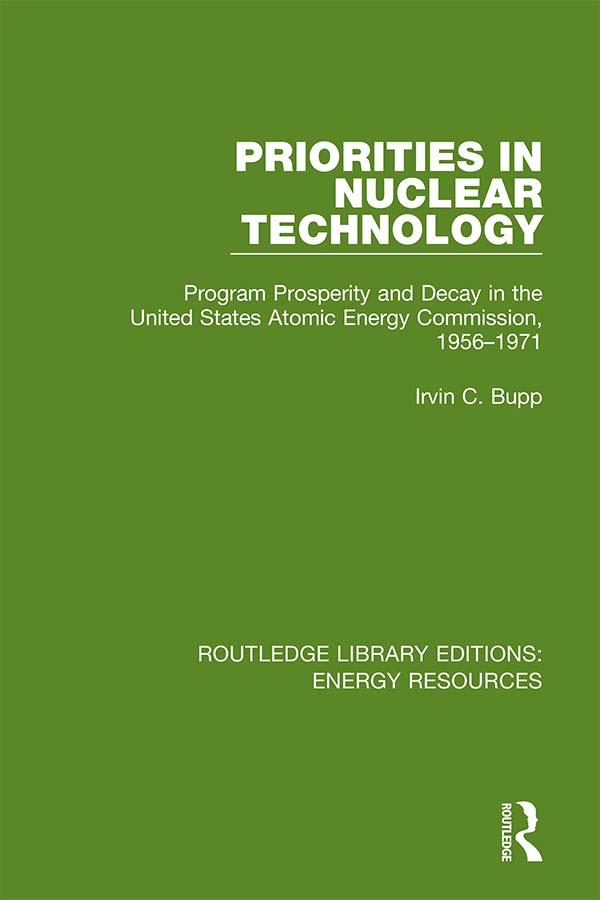
Originally published in 1988. This book considers why some public policies succeed and others do not. It looks at the entrepreneurial process that creates public policies and examines whether they prosper or falter because of their political consequences. The programs and personnel of the Atomic Energy Commission are the empirical foundation for these arguments. The data generated by that agency's annual budget-making cycles, collected over time and organised by program, are used as evidence to test some propositions about policy formation within the executive branch of government. The author's concern is with questions of where and how priorities are established in a complex institutional environment. To answer the more fundamental causal question of why some programs prosper while others wither or die, use is made of more historical analysis and comparison of the fortunes of several of AEC's efforts to develop applied nuclear technology.
Pay easily by card, Klarna, Apple Pay or Google Pay. Not happy? You always have a 14-day money-back guarantee. Read more in our terms. If you have any questions, email us at hello@memmo.org.
Memmo makes studying easier – wherever you are in the world. We bring your course books and smart study tools together in one place: summaries, quizzes, podcasts and flashcards. Plus Ted, your study buddy who answers anything you wonder. Over 50,000 students already study here – built to help you learn faster and stress less.