
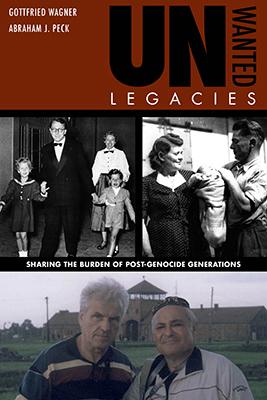
How does a society reconcile itself in a post-genocide era? How can generations of those whose families were victims and victimizers break the cycle of hate, mistrust, shame, and guilt that characterizes their relationship? What family reactions do they face as they seek to begin the act of sitting across from each other and facing their legacies? For more than two decades, Gottfried Wagner, great-grandson of composer Richard Wagner, whose music inspired Adolf Hitler and whose family helped the Nazis rise to power, and Abraham J. Peck, the son of two survivors whose entire families were murdered in the Holocaust, have been engaged in a unique and often torturous discussion on the German-Jewish relationship after the Shoah. That discussion has focused on their family histories and on the myths and realities of the relationship between Germans and Jews since the beginning of the nineteenth century and the process of reshaping that relationship for those Germans and Jews born after 1945. Rejecting the notion that they are either victims or perpetrators, both authors examine the “unwanted legacies” they inherited and have had to confront and overcome.
Pay easily by card, Klarna, Apple Pay or Google Pay. Not happy? You always have a 14-day money-back guarantee. Read more in our terms. If you have any questions, email us at hello@memmo.org.
Memmo makes studying easier – wherever you are in the world. We bring your course books and smart study tools together in one place: summaries, quizzes, podcasts and flashcards. Plus Ted, your study buddy who answers anything you wonder. Over 50,000 students already study here – built to help you learn faster and stress less.
You might also like
Buy the book0