
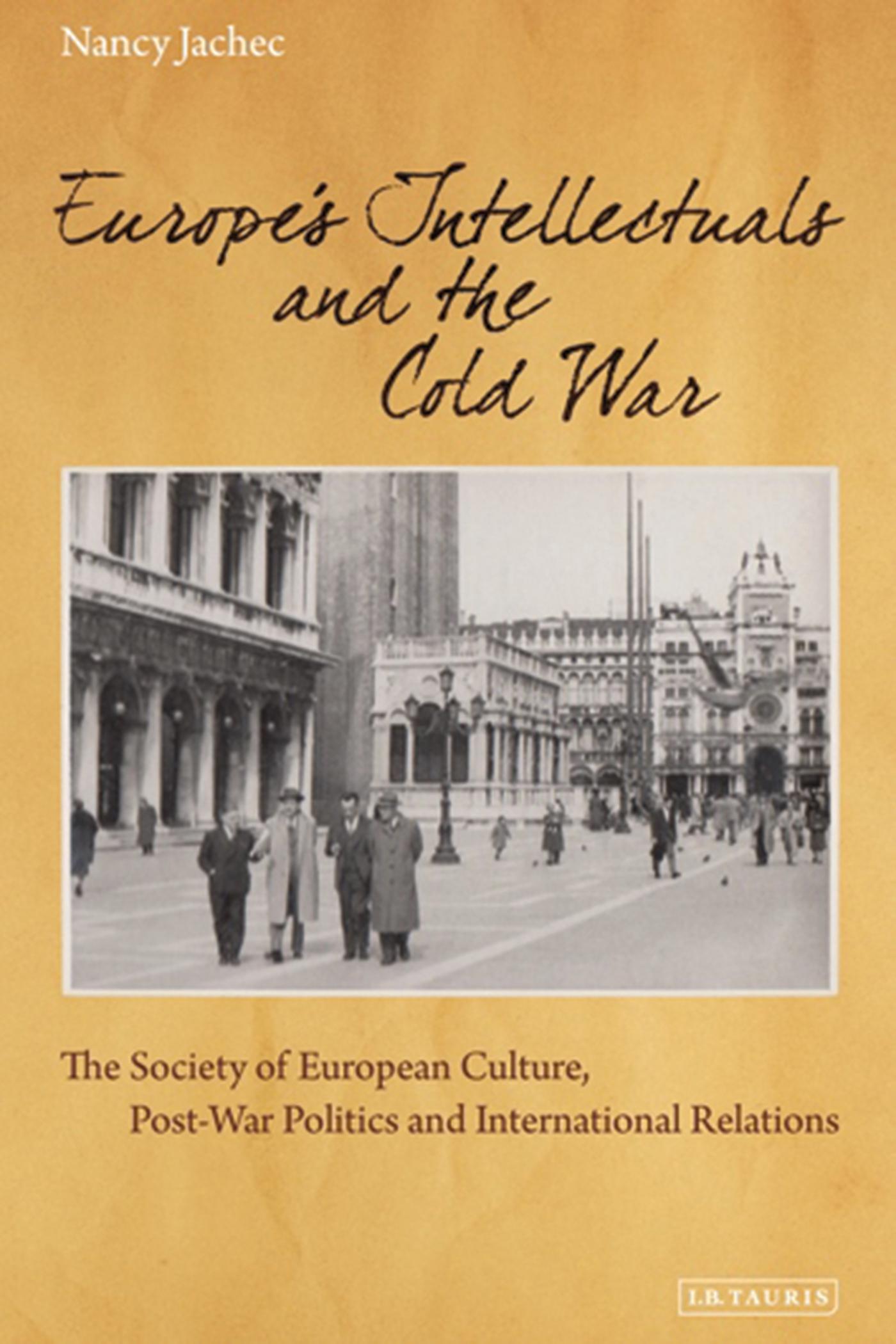
In 1950, nearly 300 of Europe's leading artists, philosophers and writers formed an international society intended to end the Cold War. The European Society of Culture was composed of many of Western Europe's best-known intellectuals, including Theodor Adorno, Julien Benda, Albert Camus, Benedetto Croce, Andre Gide, J. B. Haldane, Karl Jaspers, Carl Jung, Thomas Mann, Henri Matisse, Francois Mauriac, Maurice Merleau-Ponty, Jean-Paul Sartre, Giuseppe Ungaretti and Albert Schweitzer, among many others; over the next twenty years it would also include many luminaries from the East, such as Bertolt Brecht, Ernst Bloch, Ilya Ehrenburg and Georg Lukacs. Pioneering the earliest political discussions between intellectuals in Eastern and Western Europe that would serve as a model for the activities of the better-known CCF in its efforts to end communism, the ESC went on to create an informal but powerful, 1,600 member-strong cultural and political network across the world in pursuit of dialogue between the Marxist East and the liberal West, and in pursuit of peace and shared cultural values.
Here, in this first, comprehensive history of the SEC's early years, Nancy Jachec demonstrates the influence its members had not only on preventing the isolation of Europe's eastern states, but on enabling the flow of people, publications and ideas from the West into the East, thus playing a vital role in introducing the ideals of human rights and cultural rights in the East in the run-up to the signing of the Helsinki Accords of 1975. She also shows the profound impact that the SEC had on the development of post-colonial theory through the exchanges it organised between European and African intellectuals, directly shaping the expectations statesmen like Leopold Sedar Senghor, revolutionaries like Frantz Fanon, and institutions such as Unesco would have of culture in newly emerging countries.
Here, in this first, comprehensive history of the SEC's early years, Nancy Jachec demonstrates the influence its members had not only on preventing the isolation of Europe's eastern states, but on enabling the flow of people, publications and ideas from the West into the East, thus playing a vital role in introducing the ideals of human rights and cultural rights in the East in the run-up to the signing of the Helsinki Accords of 1975. She also shows the profound impact that the SEC had on the development of post-colonial theory through the exchanges it organised between European and African intellectuals, directly shaping the expectations statesmen like Leopold Sedar Senghor, revolutionaries like Frantz Fanon, and institutions such as Unesco would have of culture in newly emerging countries.
Pages: 344
Category: Statsvetenskap & Politik
e-ISBN: 9780857738424
Shipping weight: 1.2 kg
Ships in: 1-2 days
Pay easily by card, Klarna, Apple Pay or Google Pay. Not happy? You always have a 14-day money-back guarantee. Read more in our terms. If you have any questions, email us at hello@memmo.org.
Memmo makes studying easier – wherever you are in the world. We bring your course books and smart study tools together in one place: summaries, quizzes, podcasts and flashcards. Plus Ted, your study buddy who answers anything you wonder. Over 50,000 students already study here – built to help you learn faster and stress less.