
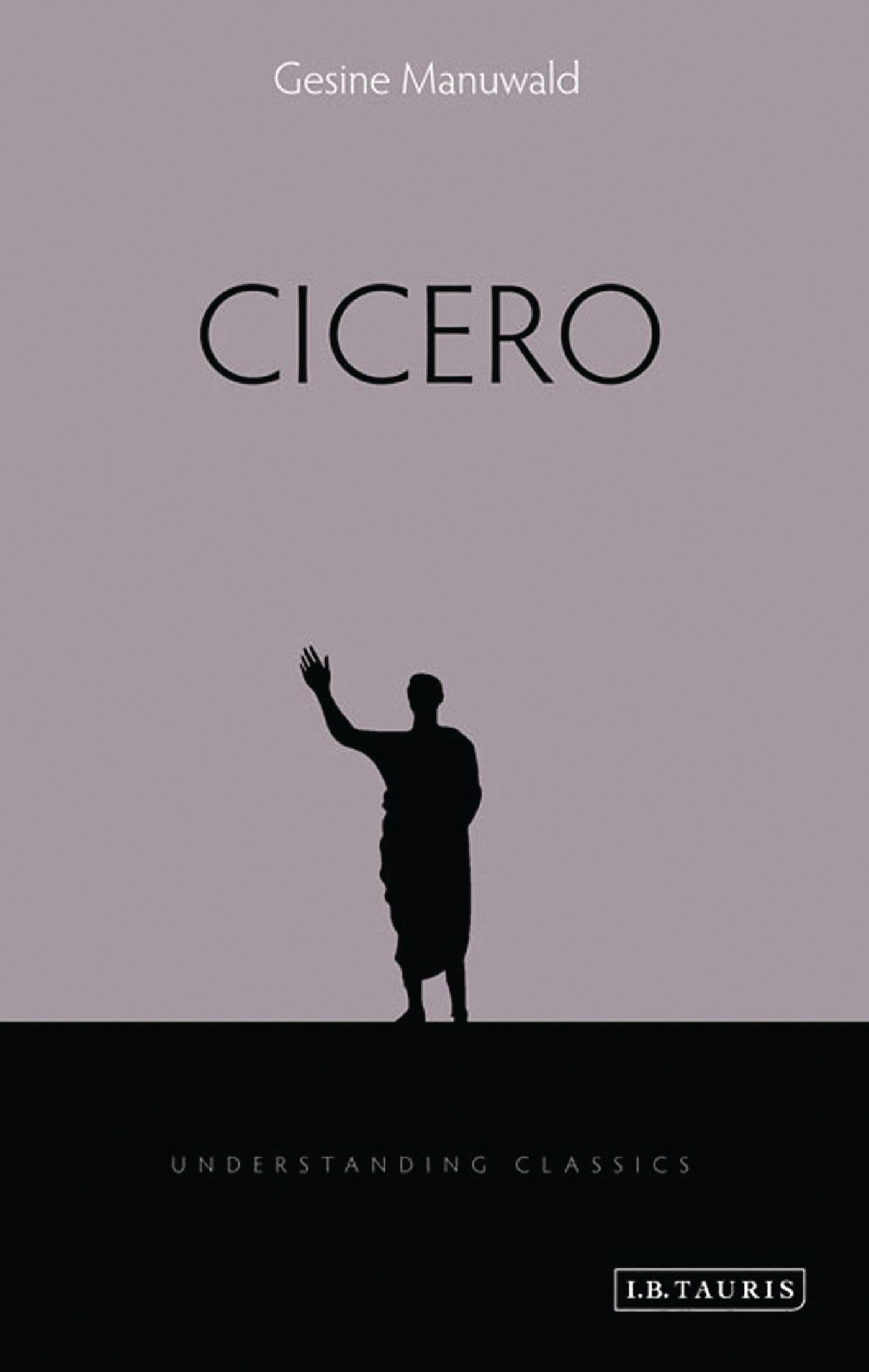
Marcus Tullius Cicero (106-43 BCE) introduced Romans to the major schools of Greek philosophy, forging a Latin conceptual vocabulary that was entirely new. But for all the sophistication of his thinking, it is perhaps for his political and oratorical career that Cicero is best remembered. He was the nemisis of Catiline, whose plot to overthrow the Republic he famously denounced to the Senate. He was the selfless politician who turned down the opportunity to join Julius Caesar and Pompey in their ruling triumvirate with Crassus. He was briefly Rome's leading man after Caesar's assassination in 44 BCE.And he was the great political orator whose bitter coflict with Mark Antony led to his own violent death in 43 BCE. In her authoritative survey, Gesine Manuwald evokes the many faces of Cicero as well as his complexities and seeming contradictions. She focuses on his major works, allowing the great writer to speak for himself. Cicero's rich legacy is seen to endure in the works of Quintilian and the Church Fathers as well as in the speeches of Harry S. Truman and Barack Obama.
Pay easily by card, Klarna, Apple Pay or Google Pay. Not happy? You always have a 14-day money-back guarantee. Read more in our terms. If you have any questions, email us at hello@memmo.org.
Memmo makes studying easier – wherever you are in the world. We bring your course books and smart study tools together in one place: summaries, quizzes, podcasts and flashcards. Plus Ted, your study buddy who answers anything you wonder. Over 75,000 students already study here – built to help you learn faster and stress less.