
Winner of the Vern Williamsen Comedia Book Prize, Association for Hispanic Classical Theater, 2023
Winner of the Nancy Staub Award, UNIMA-USA (Union Internationale de la Marionnette), 2023
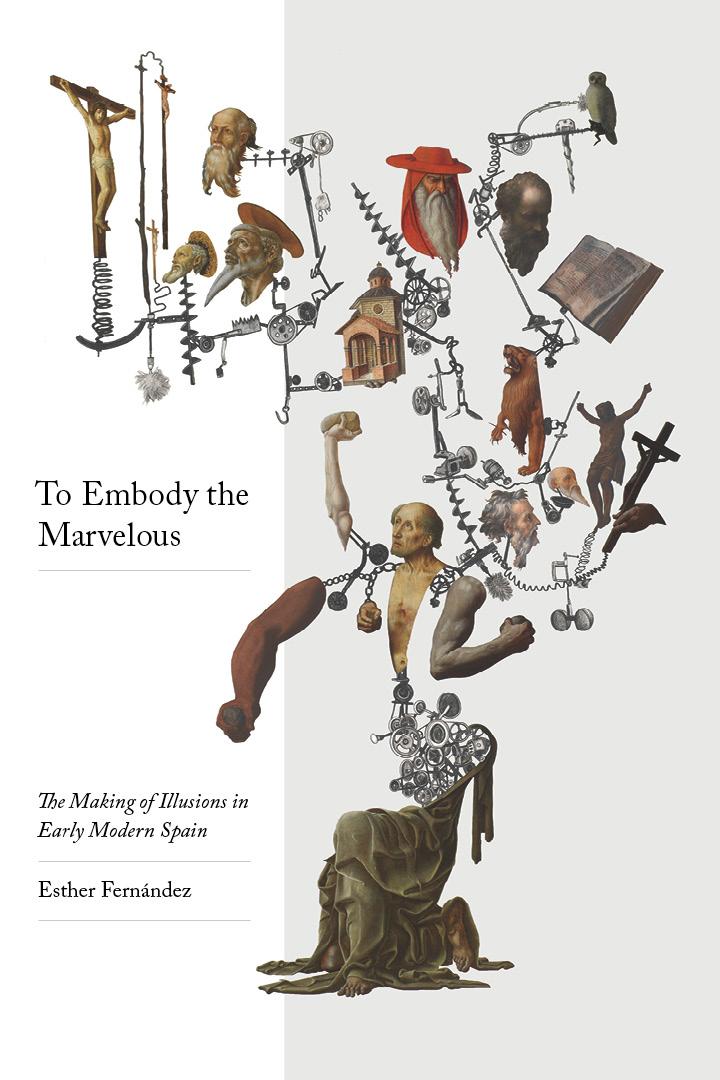
In its exploration of puppetry and animation as the performative media of choice for mastering the art of illusion, To Embody the Marvelous engages with early modern notions of wonder in religious, artistic, and social contexts.
From jointed, wood-carved figures of Christ, saintly marionettes that performed hagiographical dramas, experimental puppets and automata in Cervantes' Don Quixote, and the mechanical sets around which playwright Calderón de la Barca devised secular magic shows to deconstruct superstitions, these historical and fictional artifacts reenvisioned religious, artistic, and social notions that led early modern society to critically wrestle with enchantment and disenchantment.
The use of animated performance objects in Spanish theatrical contexts during the sixteenth and seventeenth centuries became one of the most effective pedagogical means to engage with civil society. Regardless of social strata, readers and spectators alike were caught up in a paradigm shift wherein belief systems were increasingly governed by reason—even though the discursive primacy of supernatural doxa and Christian wonder remained firmly entrenched. Thanks to their potential for motion, religious and profane puppets, automata, and mechanical stage props deployed a rationalized sense of wonder that illustrates the relationship between faith and reason, reevaluates the boundaries of fiction in art and entertainment cultures, acknowledges the rise of science and technology, and questions normative authority.
Winner of the Nancy Staub Award, UNIMA-USA (Union Internationale de la Marionnette), 2023
In its exploration of puppetry and animation as the performative media of choice for mastering the art of illusion, To Embody the Marvelous engages with early modern notions of wonder in religious, artistic, and social contexts.
From jointed, wood-carved figures of Christ, saintly marionettes that performed hagiographical dramas, experimental puppets and automata in Cervantes' Don Quixote, and the mechanical sets around which playwright Calderón de la Barca devised secular magic shows to deconstruct superstitions, these historical and fictional artifacts reenvisioned religious, artistic, and social notions that led early modern society to critically wrestle with enchantment and disenchantment.
The use of animated performance objects in Spanish theatrical contexts during the sixteenth and seventeenth centuries became one of the most effective pedagogical means to engage with civil society. Regardless of social strata, readers and spectators alike were caught up in a paradigm shift wherein belief systems were increasingly governed by reason—even though the discursive primacy of supernatural doxa and Christian wonder remained firmly entrenched. Thanks to their potential for motion, religious and profane puppets, automata, and mechanical stage props deployed a rationalized sense of wonder that illustrates the relationship between faith and reason, reevaluates the boundaries of fiction in art and entertainment cultures, acknowledges the rise of science and technology, and questions normative authority.
Pay easily by card, Klarna, Apple Pay or Google Pay. Not happy? You always have a 14-day money-back guarantee. Read more in our terms. If you have any questions, email us at hello@memmo.org.
Memmo makes studying easier – wherever you are in the world. We bring your course books and smart study tools together in one place: summaries, quizzes, podcasts and flashcards. Plus Ted, your study buddy who answers anything you wonder. Over 75,000 students already study here – built to help you learn faster and stress less.
You might also like
Buy the book0