
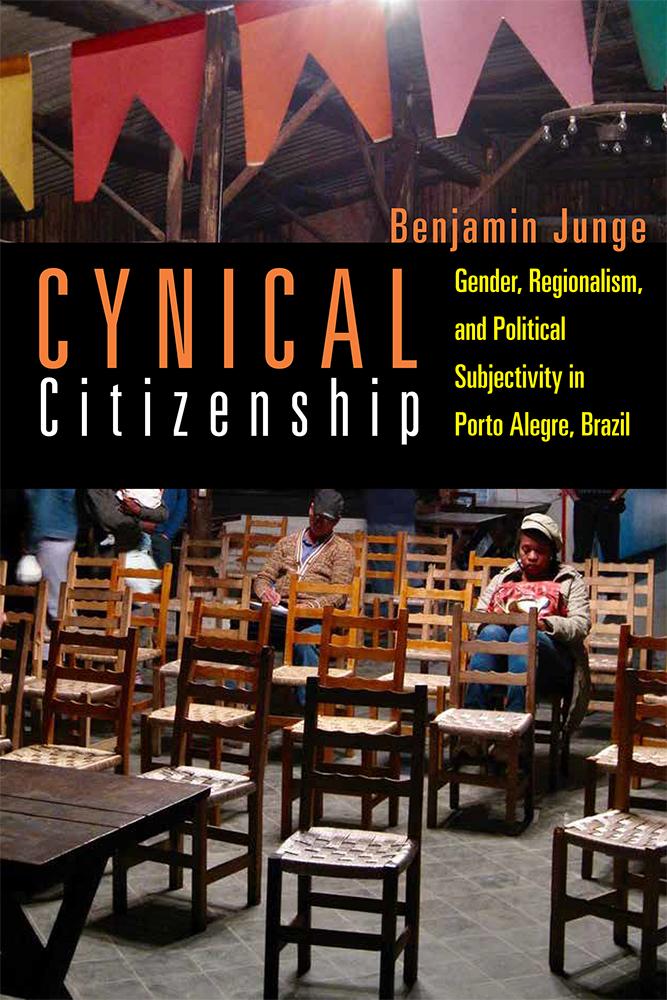
This anthropological study of grassroots community leaders in Porto Alegre, Brazil’s leftist hotspot, focuses on gender, politics, and regionalism during the early 2000s, when the Workers’ Party (Partido dos Trabalhadores) was in power. The author explores the ways community leaders make sense of official notions of citizenship and how gender, politics, and regional identities shape these interpretations. Junge further examines the implications of leaders’ deep ambivalence toward normative participation discourses for how we theorize and study participatory democracy, citizenship, and political subjectivity in Brazil and beyond.
Pay easily by card, Klarna, Apple Pay or Google Pay. Not happy? You always have a 14-day money-back guarantee. Read more in our terms. If you have any questions, email us at hello@memmo.org.
Memmo makes studying easier – wherever you are in the world. We bring your course books and smart study tools together in one place: summaries, quizzes, podcasts and flashcards. Plus Ted, your study buddy who answers anything you wonder. Over 50,000 students already study here – built to help you learn faster and stress less.