
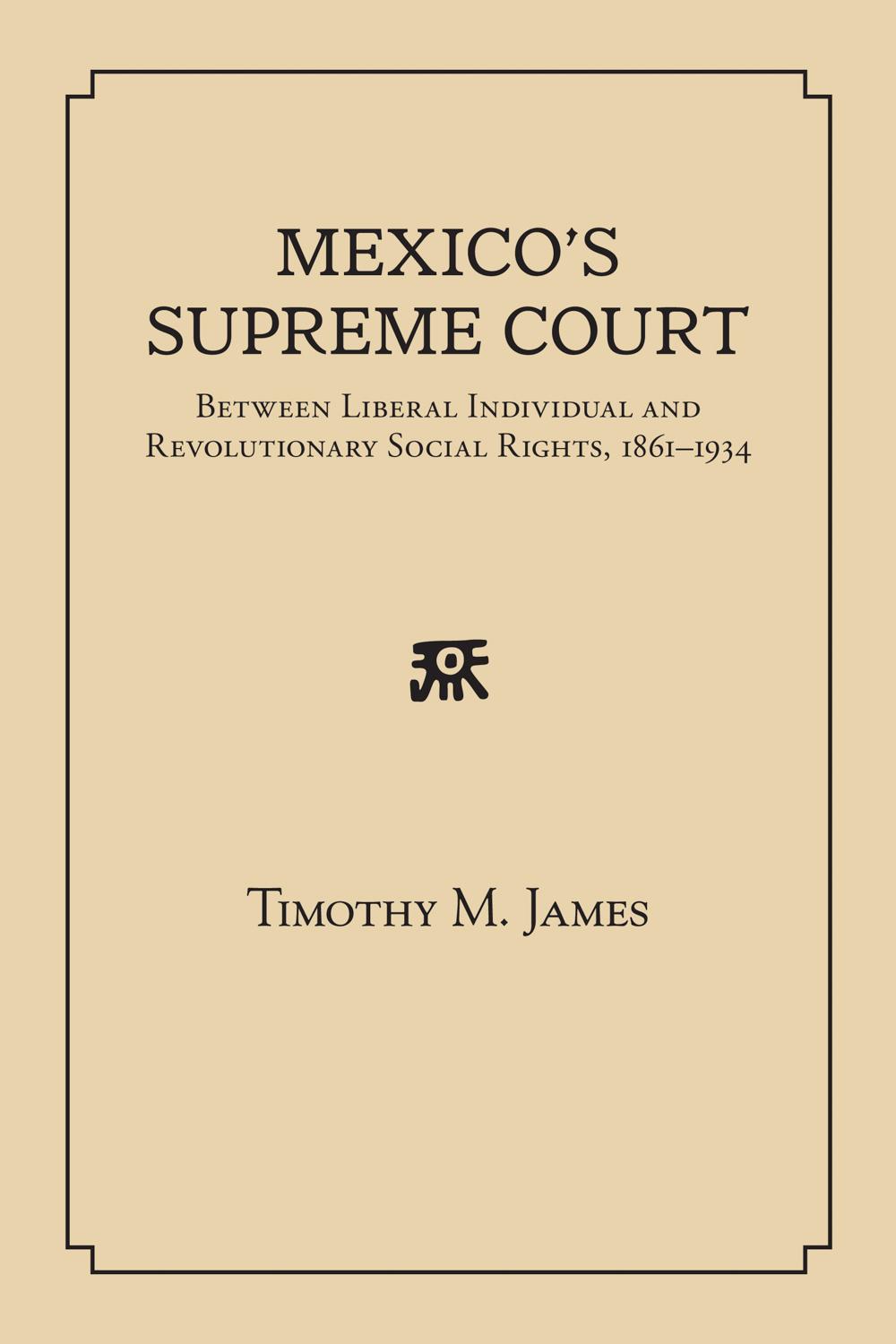
Although Mexico’s Constitution of 1917 mandated the division of large landholdings, provided land for the landless, and guaranteed workers the rights to organize, strike, and bargain collectively, it also guaranteed fundamental liberal rights to property and due process that enabled property owners and employers to resist the implementation of the new social rights by filing suit in federal court. Taking as its main focus the way new and old rights were adjudicated before the Supreme Court, this book is the first to examine the subject through the lens of court documents and the writings and commentaries of jurists and other legal professionals. The author asks and answers the question, how did the judicial interpretation of the Constitution of 1917 become a barrier to implementing agrarian land rights and labor legislation in the years immediately following Mexico’s social revolution of 1910?
Pay easily by card, Klarna, Apple Pay or Google Pay. Not happy? You always have a 14-day money-back guarantee. Read more in our terms. If you have any questions, email us at hello@memmo.org.
Memmo makes studying easier – wherever you are in the world. We bring your course books and smart study tools together in one place: summaries, quizzes, podcasts and flashcards. Plus Ted, your study buddy who answers anything you wonder. Over 50,000 students already study here – built to help you learn faster and stress less.