
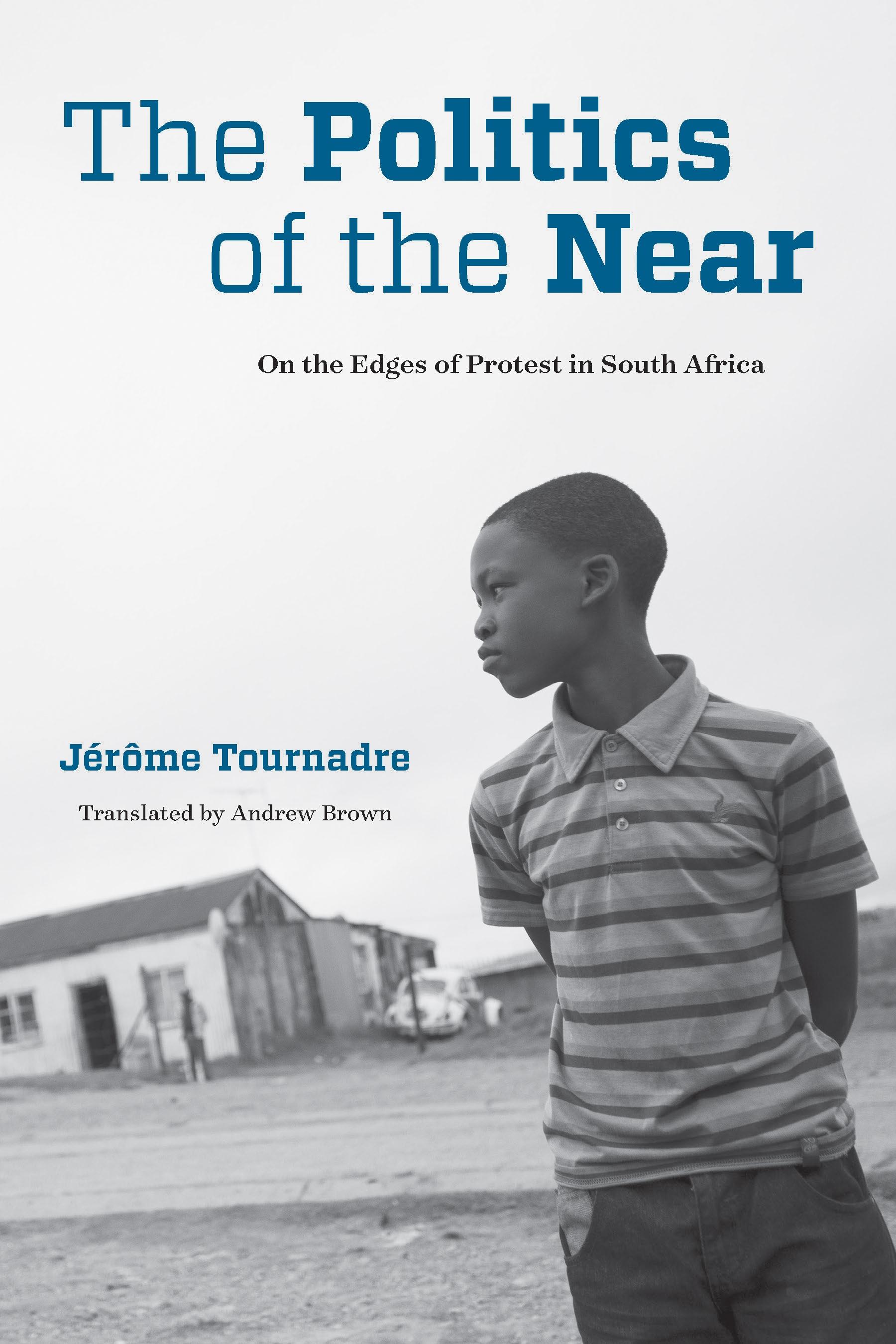
The Politics of the Near offers a novel approach to social unrest in post-apartheid South Africa. Keeping the noise of demonstrations, barricades, and clashes with the police at a distance, this ethnography of a poor people’s movement traces individual commitments and the mainsprings of mobilization in the ordinary social and intimate life of activists, their relatives, and other township residents.
Tournadre’s approach picks up on aspects of activists lives that are often neglected in the study of social movements that help us better understand the dynamics of protest and the attachment of activists to their organization and its cause. What Tournadre calls a “politics of the near” takes shape, through sometimes innocuous actions and beyond the separation between public and domestic spheres.
By mapping the daily life of Black and low-income neighborhoods and the intimate domain where expectations and disappointments surface, The Politics of the Near offers a different perspective on the “rainbow nation”—a perspective more sensitive to the fact that, three decades after the end of apartheid, poverty and race are still as tightly interwoven as ever.
Pay easily by card, Klarna, Apple Pay or Google Pay. Not happy? You always have a 14-day money-back guarantee. Read more in our terms. If you have any questions, email us at hello@memmo.org.
Memmo makes studying easier – wherever you are in the world. We bring your course books and smart study tools together in one place: summaries, quizzes, podcasts and flashcards. Plus Ted, your study buddy who answers anything you wonder. Over 50,000 students already study here – built to help you learn faster and stress less.