
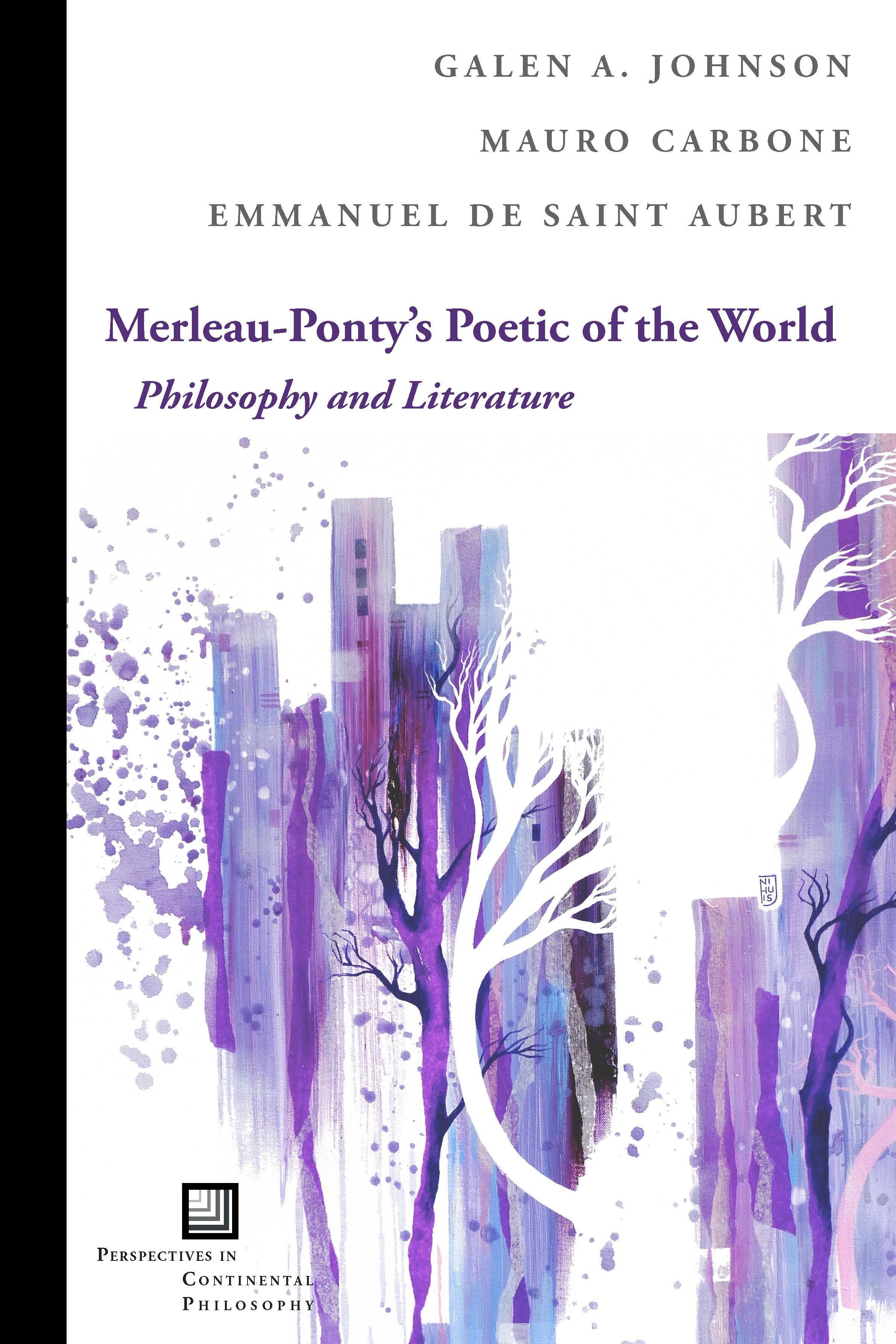
Merleau-Ponty has long been known as one of the most important philosophers of aesthetics, yet most discussions of his aesthetics focus on visual art. This book corrects that balance by turning to Merleau-Ponty's extensive engagement with literature.
From Proust, Merleau-Ponty developed his conception of “sensible ideas,” from Claudel, his conjoining of birth and knowledge as “co-naissance,” from Valéry came “implex” or the “animal of words” and the “chiasma of two destinies.” Literature also provokes the questions of expression, metaphor, and truth and the meaning of a Merleau-Pontian poetics.
The poetic of Merleau-Ponty is, the book argues, a poetic of the flesh, a poetic of mystery, and a poetic of the visible in its relation to the invisible. Ultimately, theoretical figures or “figuratives” that appear at the threshold between philosophy and literature enable the possibility of a new ontology. What is at stake is the very meaning of philosophy itself and its mode of expression.
Pay easily by card, Klarna, Apple Pay or Google Pay. Not happy? You always have a 14-day money-back guarantee. Read more in our terms. If you have any questions, email us at hello@memmo.org.
Memmo makes studying easier – wherever you are in the world. We bring your course books and smart study tools together in one place: summaries, quizzes, podcasts and flashcards. Plus Ted, your study buddy who answers anything you wonder. Over 50,000 students already study here – built to help you learn faster and stress less.