
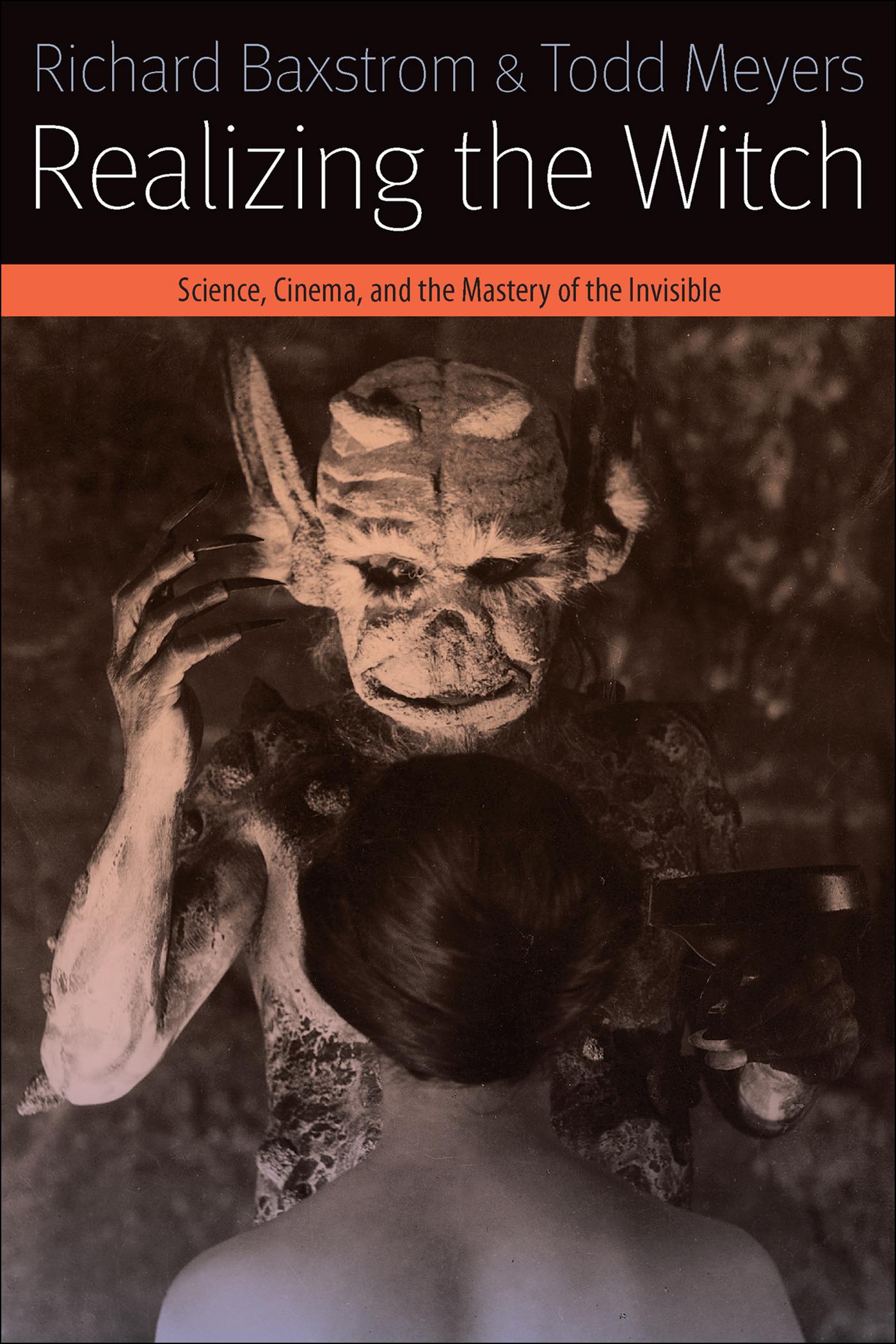
Benjamin Christensen’s Häxan (The Witch, 1922) stands as a singular film within the history of cinema. Deftly weaving contemporary scientific analysis and powerfully staged historical scenes of satanic initiation, confession under torture, possession, and persecution, Häxan creatively blends spectacle and argument to provoke a humanist re-evaluation of witchcraft in European history as well as the contemporary treatment of female “hysterics” and the mentally ill.
In Realizing the Witch, Baxstrom and Meyers show how Häxan opens a window onto wider debates in the 1920s regarding the relationship of film to scientific evidence, the evolving study of religion from historical and anthropological perspectives, and the complex relations between popular culture, artistic expression, and concepts in medicine and psychology. Häxan is a film that travels along the winding path of art and science rather than between the narrow division of “documentary” and “fiction.” Baxstrom and Meyers reveal how Christensen’s attempt to tame the irrationality of “the witch” risked validating the very "nonsense" that such an effort sought to master and dispel. Häxan is a notorious, genre-bending, excessive cinematic account of the witch in early modern Europe. Realizing the Witch not only illustrates the underrated importance of the film within the canons of classic cinema, it lays bare the relation of the invisible to that which we cannot prove but nevertheless “know” to be there.
Pay easily by card, Klarna, Apple Pay or Google Pay. Not happy? You always have a 14-day money-back guarantee. Read more in our terms. If you have any questions, email us at hello@memmo.org.
Memmo makes studying easier – wherever you are in the world. We bring your course books and smart study tools together in one place: summaries, quizzes, podcasts and flashcards. Plus Ted, your study buddy who answers anything you wonder. Over 50,000 students already study here – built to help you learn faster and stress less.