
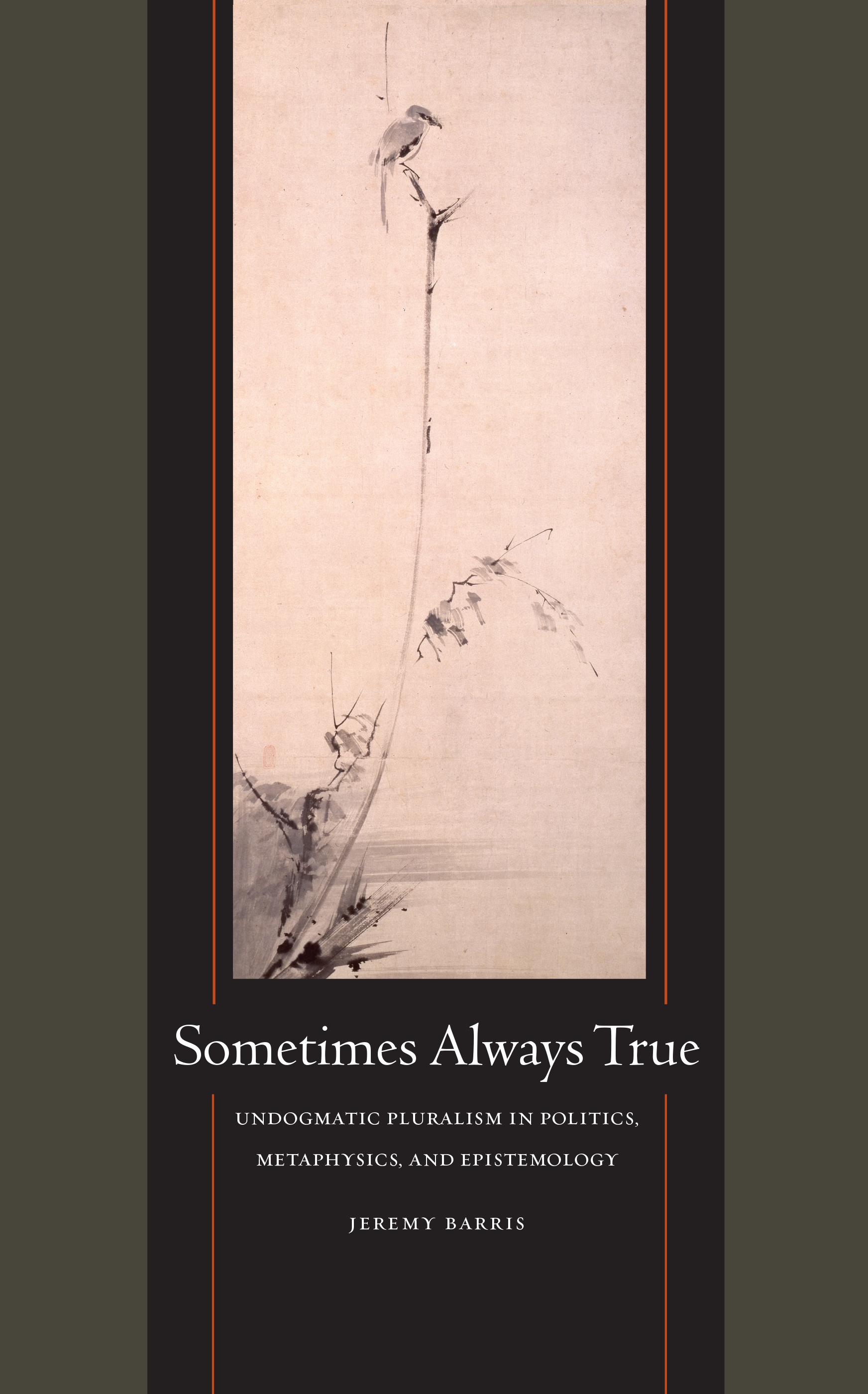
Sometimes Always True aims to resolve three connected problems. First, we need an undogmatic pluralist standpoint in political theory, metaphysics, and epistemology. But genuine pluralism suffers from the contradiction that making room for fundamental differences in outlook means making room for outlooks that exclude pluralism.
Second, philosophy involves reflecting on the world and meaning as a whole, yet this means adopting a vantage point in some way outside of meaning.
Third, our lived experience of the sense of our lives similarly undermines its own sense, as it involves having a vantage point in some way wholly outside ourselves.
In detailed engagement with, among others, Davidson, Rorty, Heidegger, Foucault, Wilde, and gender and sexuality theory, the book argues that these contradictions are so thoroughgoing that, like the liar’s paradox, they cancel the bases of their own meaning. Consequently, it argues, they resolve themselves and do so in a way that produces a vantage point on these issues that is not dogmatically circular because it is, workably, both within and outside these issues’ sense. The solution to a genuinely undogmatic pluralism, then, is to enter into these contradictions and the process of their self-resolution.
Pay easily by card, Klarna, Apple Pay or Google Pay. Not happy? You always have a 14-day money-back guarantee. Read more in our terms. If you have any questions, email us at hello@memmo.org.
Memmo makes studying easier – wherever you are in the world. We bring your course books and smart study tools together in one place: summaries, quizzes, podcasts and flashcards. Plus Ted, your study buddy who answers anything you wonder. Over 50,000 students already study here – built to help you learn faster and stress less.