
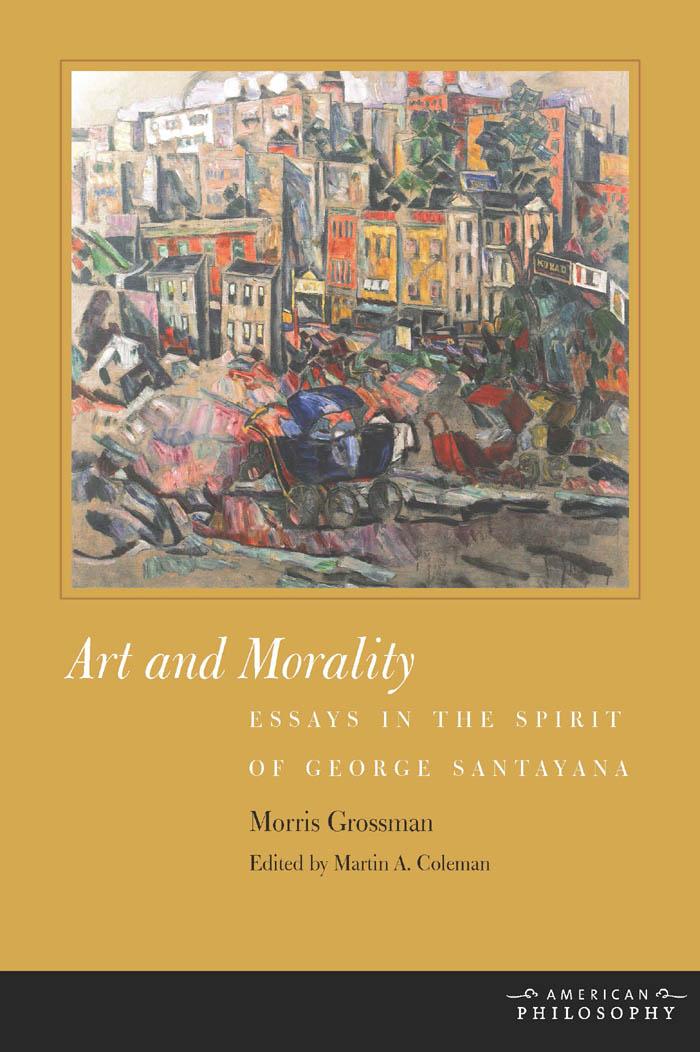
The guiding theme of these essays by aesthetician, musician, and Santayana scholar Morris Grossman is the importance of preserving the tension between what can be unified and what is disorganized, random, and miscellaneous. Grossman described this as the tension between art and morality: Art arrests a sense of change and yields moments of unguarded enjoyment and peace; but soon, shifting circumstances compel evaluation, decision, and action. According to Grossman, the best art preserves the tension between the aesthetic consummation of experience and the press of morality understood as the business of navigating conflicts, making choices, and meeting needs.
This concern was intimately related to his reading of George Santayana. The best philosophy, like the best art, preserves the tension between what can be ordered and what resists assimilation, and Grossman read Santayana as exemplifying this virtue in his embrace of multiple perspectives. Other scholars have noted the multiplicity or irony in Santayana’s work, but Grossman was unique in taking such a style to be a substantive part of Santayana’s philosophizing.
Pay easily by card, Klarna, Apple Pay or Google Pay. Not happy? You always have a 14-day money-back guarantee. Read more in our terms. If you have any questions, email us at hello@memmo.org.
Memmo makes studying easier – wherever you are in the world. We bring your course books and smart study tools together in one place: summaries, quizzes, podcasts and flashcards. Plus Ted, your study buddy who answers anything you wonder. Over 50,000 students already study here – built to help you learn faster and stress less.