
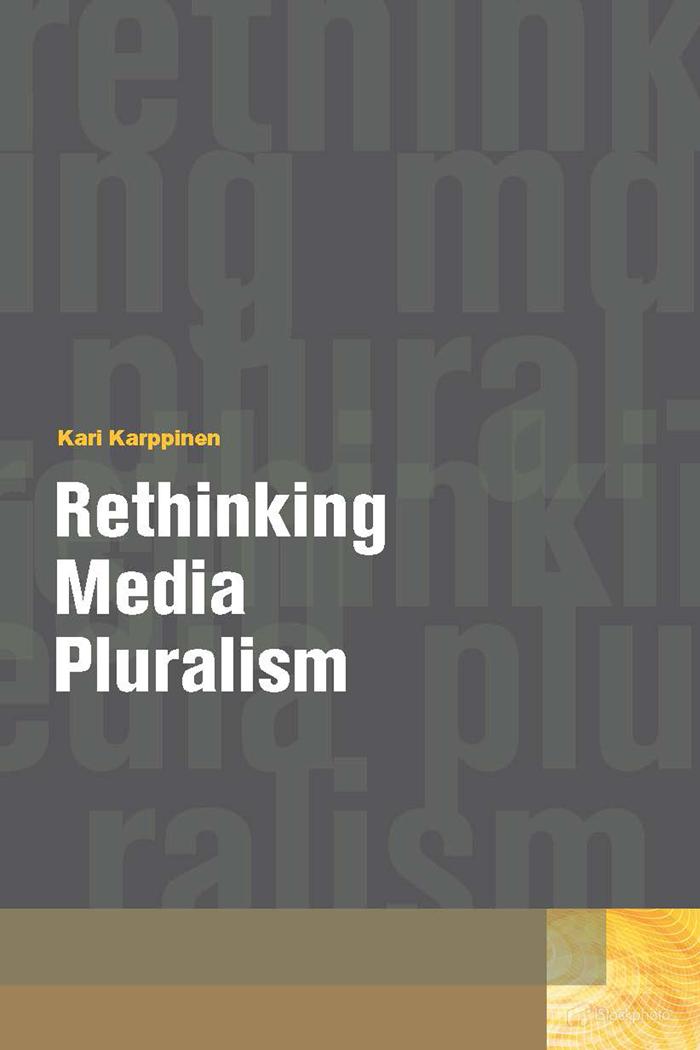
Access to a broad range of different political views and cultural expressions is often regarded as a self-evident value in both theoretical and political debates on media and democracy. Pluralism is commonly accepted as a guiding principle of media policy in addressing media concentration, the role of public service media, or more recently such questions as how to respond to search engines, social networking sites, and citizen media. However, opinions on the meaning and nature of media pluralism as a concept vary widely, and definitions of it can easily be adjusted to suit different political purposes.
Rethinking Media Pluralism contends that the notions of media pluralism and diversity have been reduced to empty catchphrases or conflated with consumer choice and market competition. In this narrow logic, key questions about social and political values, democracy, and citizenship are left unexamined. In this provocative new book, Kari Karppinen argues that media pluralism needs to be rescued from its depoliticized uses and re-imagined more broadly as a normative value that refers to the distribution of communicative power in the public sphere. Instead of something that could simply be measured through the number of media outlets available, media pluralism should be understood in terms of its ability to challenge inequalities and create a more democratic public sphere.
Pay easily by card, Klarna, Apple Pay or Google Pay. Not happy? You always have a 14-day money-back guarantee. Read more in our terms. If you have any questions, email us at hello@memmo.org.
Memmo makes studying easier – wherever you are in the world. We bring your course books and smart study tools together in one place: summaries, quizzes, podcasts and flashcards. Plus Ted, your study buddy who answers anything you wonder. Over 50,000 students already study here – built to help you learn faster and stress less.