
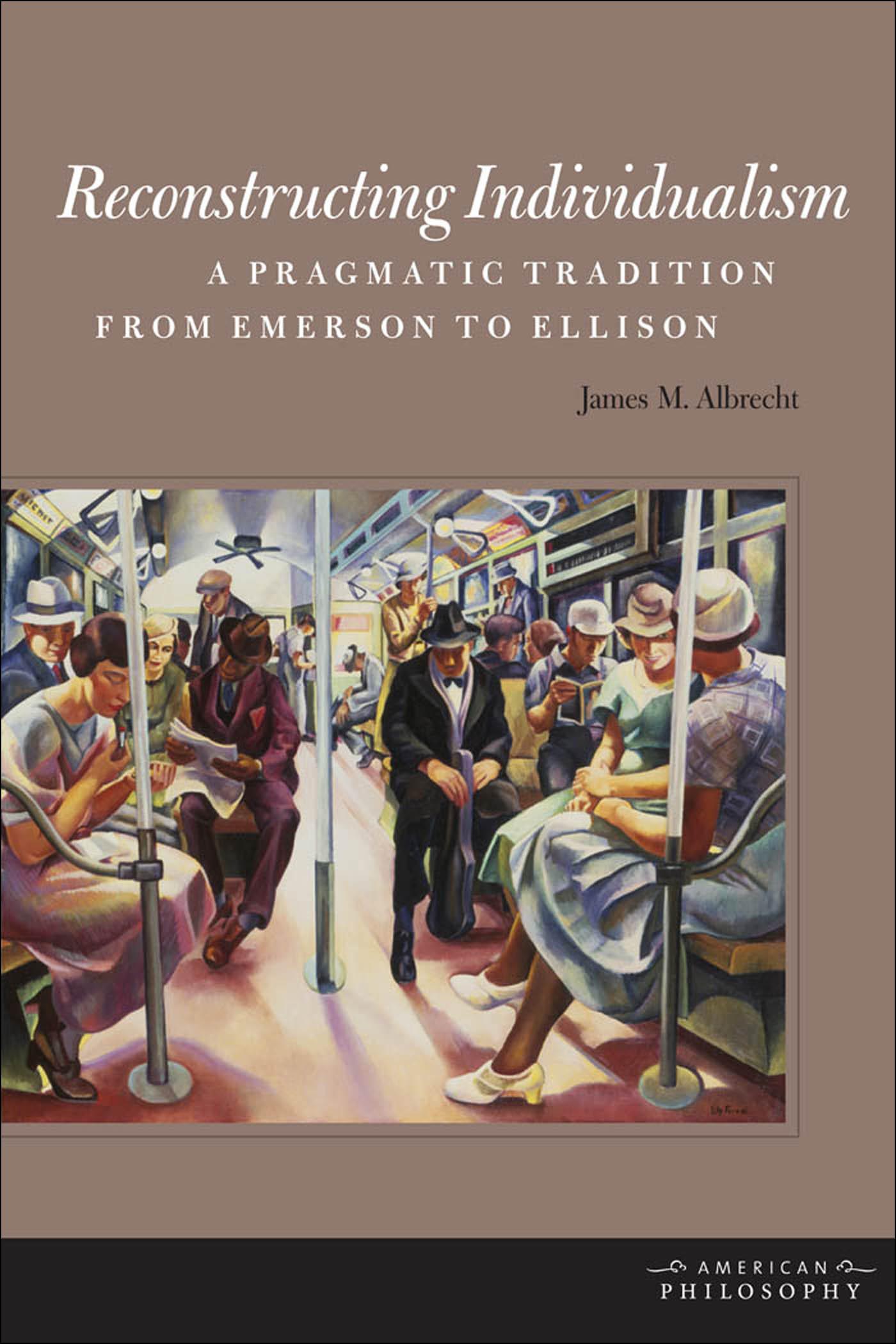
America has a love–hate relationship with individualism. In Reconstructing Individualism, James Albrecht argues that our conceptions of individualism have remained trapped within the assumptions of classic liberalism. He traces an alternative genealogy of individualist ethics in four major American thinkers—Ralph Waldo Emerson, William James, John Dewey, and Ralph Ellison.
These writers’ shared commitments to pluralism (metaphysical and cultural), experimentalism, and a melioristic stance toward value and reform led them to describe the self as inherently relational. Accordingly, they articulate models of selfhood that are socially engaged and ethically responsible, and they argue that a reconceived—or, in Dewey’s term, “reconstructed”—individualism is not merely compatible with but necessary to democratic community. Conceiving selfhood and community as interrelated processes, they call for an ongoing reform of social conditions so as to educate and liberate individuality, and, conversely, they affirm the essential role individuality plays in vitalizing communal efforts at reform.
Pay easily by card, Klarna, Apple Pay or Google Pay. Not happy? You always have a 14-day money-back guarantee. Read more in our terms. If you have any questions, email us at hello@memmo.org.
Memmo makes studying easier – wherever you are in the world. We bring your course books and smart study tools together in one place: summaries, quizzes, podcasts and flashcards. Plus Ted, your study buddy who answers anything you wonder. Over 50,000 students already study here – built to help you learn faster and stress less.