
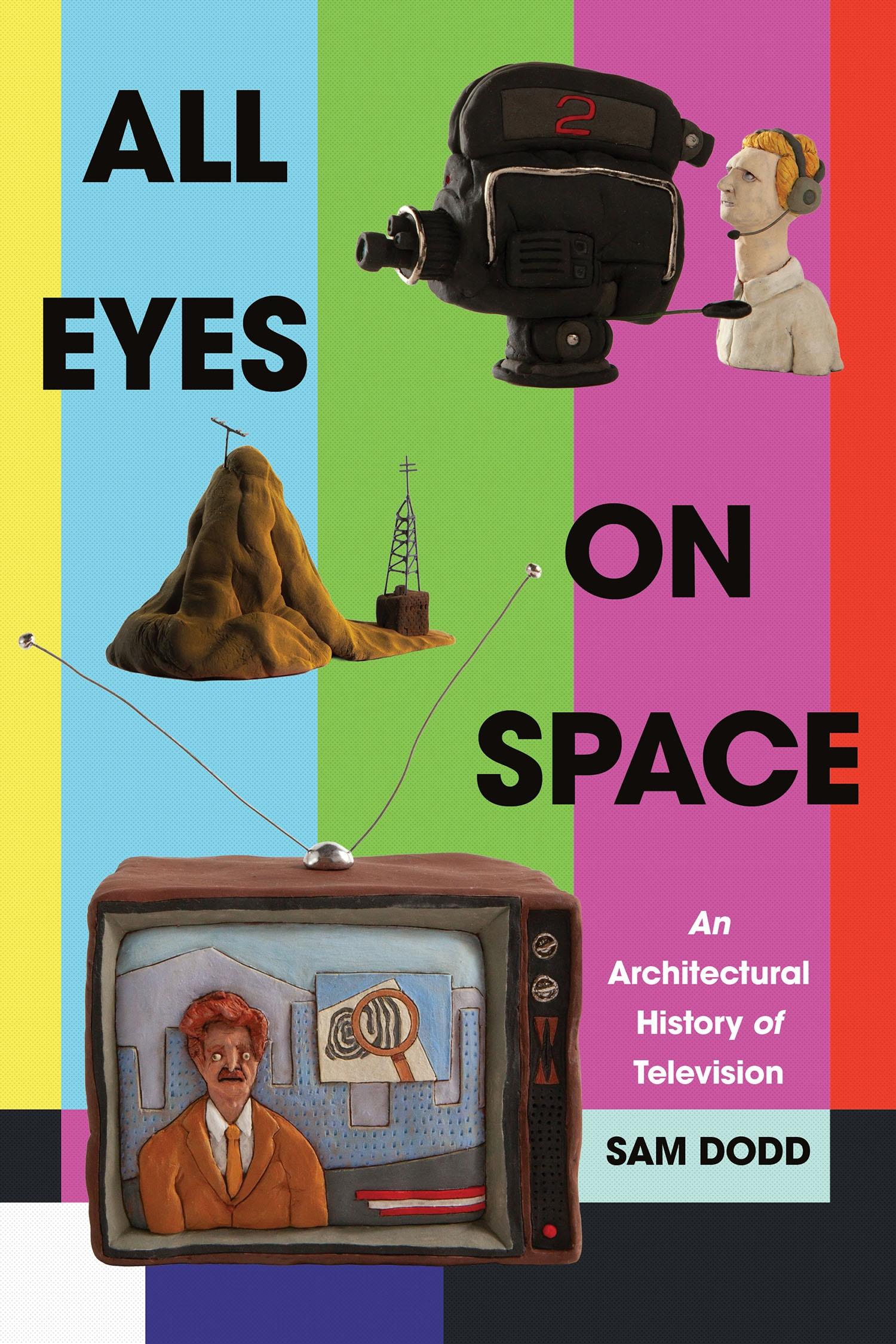
In All Eyes on Space, Sam Dodd looks at television and sees architecture: a dynamic system of spatial design, environmental planning, and bodily control operating behind and beyond the small screen. By transmitting images and sounds across vast distances, television brings faraway places into immediate view and, in the process, reshapes how space is imagined and inhabited. Yet, this seemingly effortless presentation of “distant sight” is only possible because of deliberate architectural investments made throughout the second half of the twentieth century. From the 1940s onward, American architects and planners designed stations, studios, towers, cables, and screens while also experimenting with television as a medium for public communication and engagement. Drawing on archival records, original broadcasts, and works of art and design, Dodd plots a history of television architecture in the United States to show how the medium produced a distinctly American spatial logic that tethered expansionist ambitions to the management of visibility and access. Ultimately, this book reveals how a ubiquitous medium commonly understood as immaterial—if not ephemeral—became one of the century’s most consequential built environments.
Pay easily by card, Klarna, Apple Pay or Google Pay. Not happy? You always have a 14-day money-back guarantee. Read more in our terms. If you have any questions, email us at hello@memmo.org.
Memmo makes studying easier – wherever you are in the world. We bring your course books and smart study tools together in one place: summaries, quizzes, podcasts and flashcards. Plus Ted, your study buddy who answers anything you wonder. Over 50,000 students already study here – built to help you learn faster and stress less.
You might also like
Buy the book0