
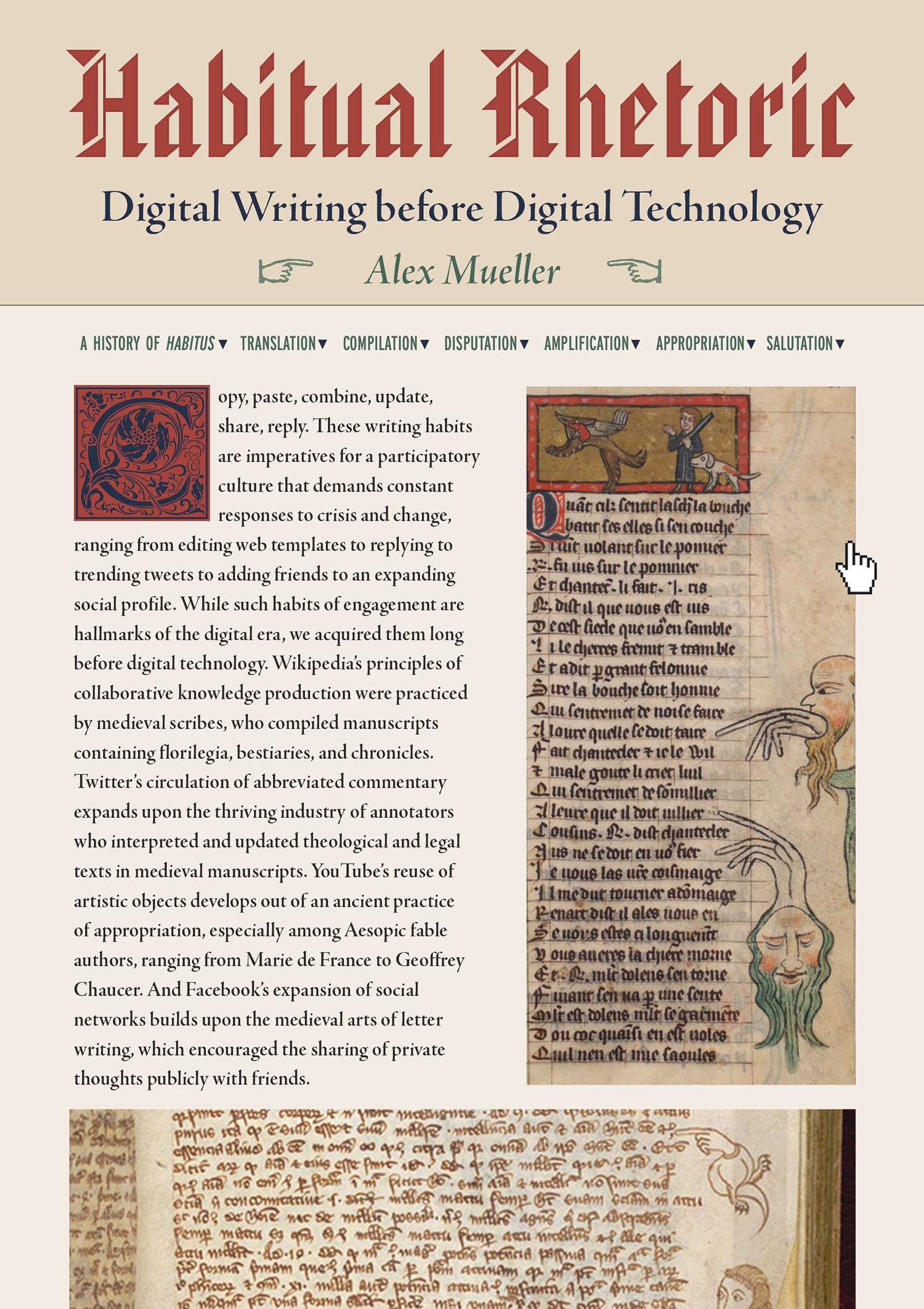
Writing has always been digital. Just as digits scribble with the quill or tap the typewriter, digits compose binary code and produce text on a screen. Over time, however, digital writing has come to be defined by numbers and chips, not fingers and parchment. We therefore assume that digital writing began with the invention of the computer and created new writing habits, such as copying, pasting, and sharing. Habitual Rhetoric: Digital Writing before Digital Technology makes the counterargument that these digital writing practices were established by the handwritten cultures of early medieval universities, which codified rhetorical habits—from translation to compilation to disputation to amplification to appropriation to salutation—through repetitive classroom practices and within annotatable manuscript environments. These embodied habits have persisted across time and space to develop durable dispositions, or habitus, which have the potential to challenge computational cultures of disinformation and surveillance that pervade the social media of today.
Pay easily by card, Klarna, Apple Pay or Google Pay. Not happy? You always have a 14-day money-back guarantee. Read more in our terms. If you have any questions, email us at hello@memmo.org.
Memmo makes studying easier – wherever you are in the world. We bring your course books and smart study tools together in one place: summaries, quizzes, podcasts and flashcards. Plus Ted, your study buddy who answers anything you wonder. Over 50,000 students already study here – built to help you learn faster and stress less.
You might also like
Buy the book0