
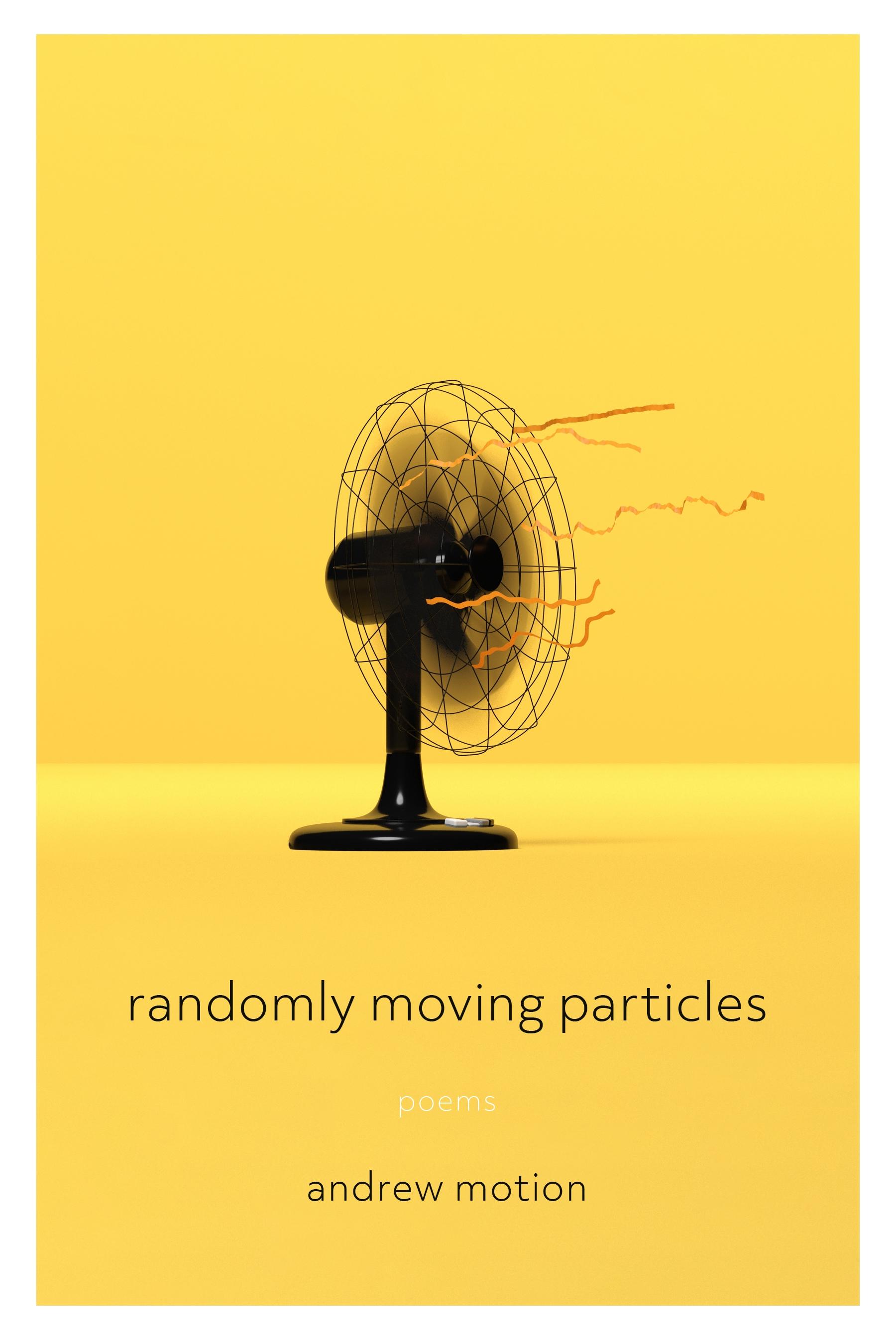
Randomly Moving Particles is built from two long poems that form its opening and close, connected by three shorter pieces. The title poem, in a kaleidoscope of compelling scenes, engages with subjects that include migration, placement, loss, space exploration, and current British and American politics. It is a clarifying action and reaction between terra and solar system, mundanity and possibility, taking us from the grit of road surfaces to the distant glimpses of satellites. The final poem, “How Do the Dead Walk,” combines mythic reach with acute observation of the familiar, in order to address issues of contemporary violence. It is altogether more dreamlike, even in its tangibly military moments, grasping as it does at phantoms and intermediate plains.
Andrew Motion’s expansive new poetry collection is direct in its emotional appeal and ambitious in its scope, all while retaining the cinematic vision and startling expression that so freshly lit the lines of his last, Essex Clay.
Andrew Motion’s expansive new poetry collection is direct in its emotional appeal and ambitious in its scope, all while retaining the cinematic vision and startling expression that so freshly lit the lines of his last, Essex Clay.
Pay easily by card, Klarna, Apple Pay or Google Pay. Not happy? You always have a 14-day money-back guarantee. Read more in our terms. If you have any questions, email us at hello@memmo.org.
Memmo makes studying easier – wherever you are in the world. We bring your course books and smart study tools together in one place: summaries, quizzes, podcasts and flashcards. Plus Ted, your study buddy who answers anything you wonder. Over 50,000 students already study here – built to help you learn faster and stress less.
You might also like
Buy the book0