
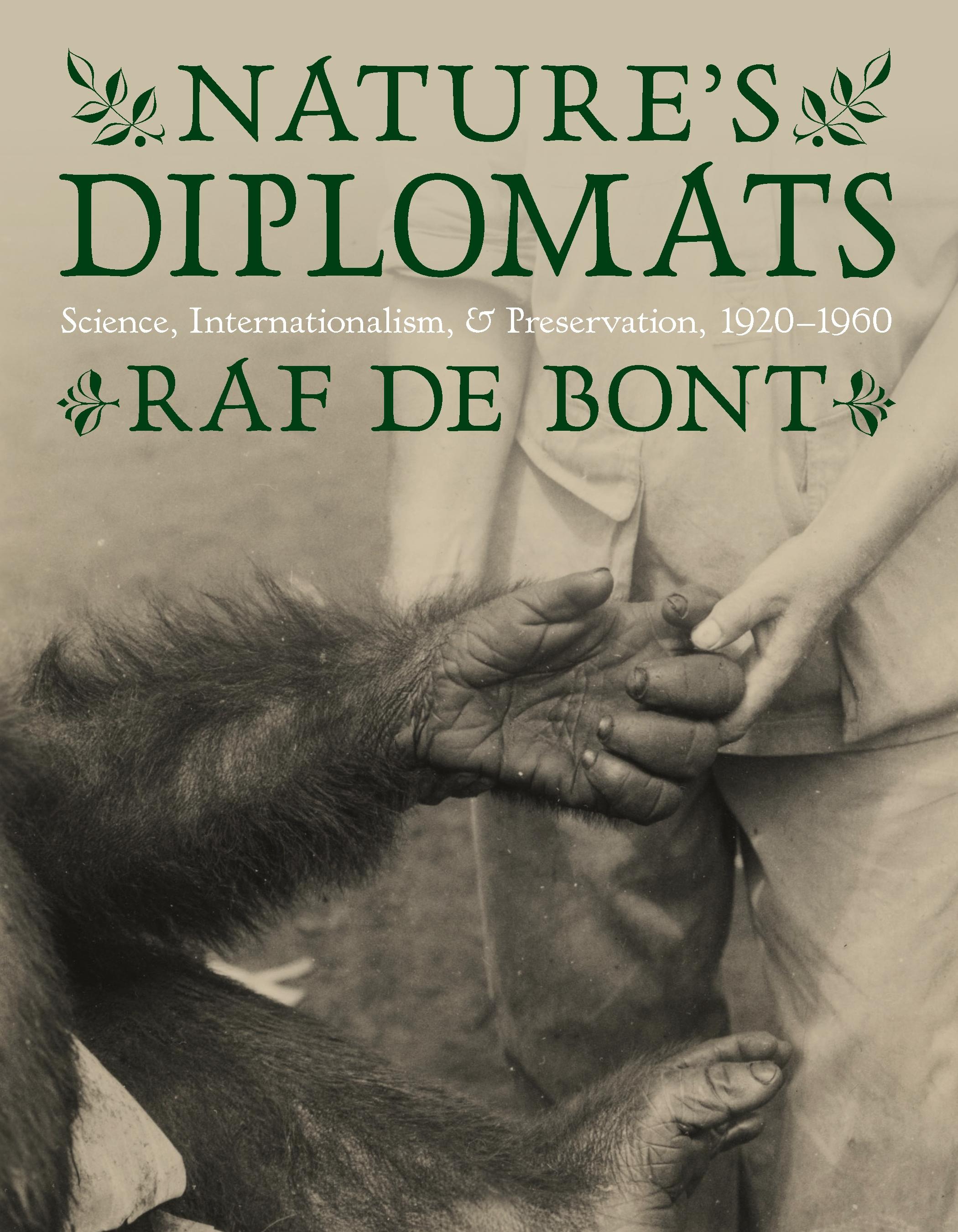
Nature’s Diplomats explores the development of science-based and internationally conceived nature protection in its foundational years before the 1960s, the decade when it launched from obscurity onto the global stage. Raf De Bont studies a movement while it was still in the making and its groups were still rather small, revealing the geographies of the early international preservationist groups, their social composition, self-perception, ethos, and predilections, their ideals and strategies, and the natures they sought to preserve.
By examining international efforts to protect migratory birds, the threatened European bison, and the mountain gorilla in the interior of the Belgian Congo, Nature’s Diplomats sheds new light on the launch of major international organizations for nature protection in the aftermath of World War II. Additionally, it covers how the rise of ecological science, the advent of the Cold War, and looming decolonization forced a rethinking of approach and rhetoric; and how old ideas and practices lingered on. It provides much-needed historical context for present-day convictions about and approaches to the preservation of species and the conservation of natural resources, the involvement of local communities in conservation projects, the fate of extinct species and vanished habitats, and the management of global nature.
By examining international efforts to protect migratory birds, the threatened European bison, and the mountain gorilla in the interior of the Belgian Congo, Nature’s Diplomats sheds new light on the launch of major international organizations for nature protection in the aftermath of World War II. Additionally, it covers how the rise of ecological science, the advent of the Cold War, and looming decolonization forced a rethinking of approach and rhetoric; and how old ideas and practices lingered on. It provides much-needed historical context for present-day convictions about and approaches to the preservation of species and the conservation of natural resources, the involvement of local communities in conservation projects, the fate of extinct species and vanished habitats, and the management of global nature.
Pay easily by card, Klarna, Apple Pay or Google Pay. Not happy? You always have a 14-day money-back guarantee. Read more in our terms. If you have any questions, email us at hello@memmo.org.
Memmo makes studying easier – wherever you are in the world. We bring your course books and smart study tools together in one place: summaries, quizzes, podcasts and flashcards. Plus Ted, your study buddy who answers anything you wonder. Over 50,000 students already study here – built to help you learn faster and stress less.
You might also like
Buy the book0