
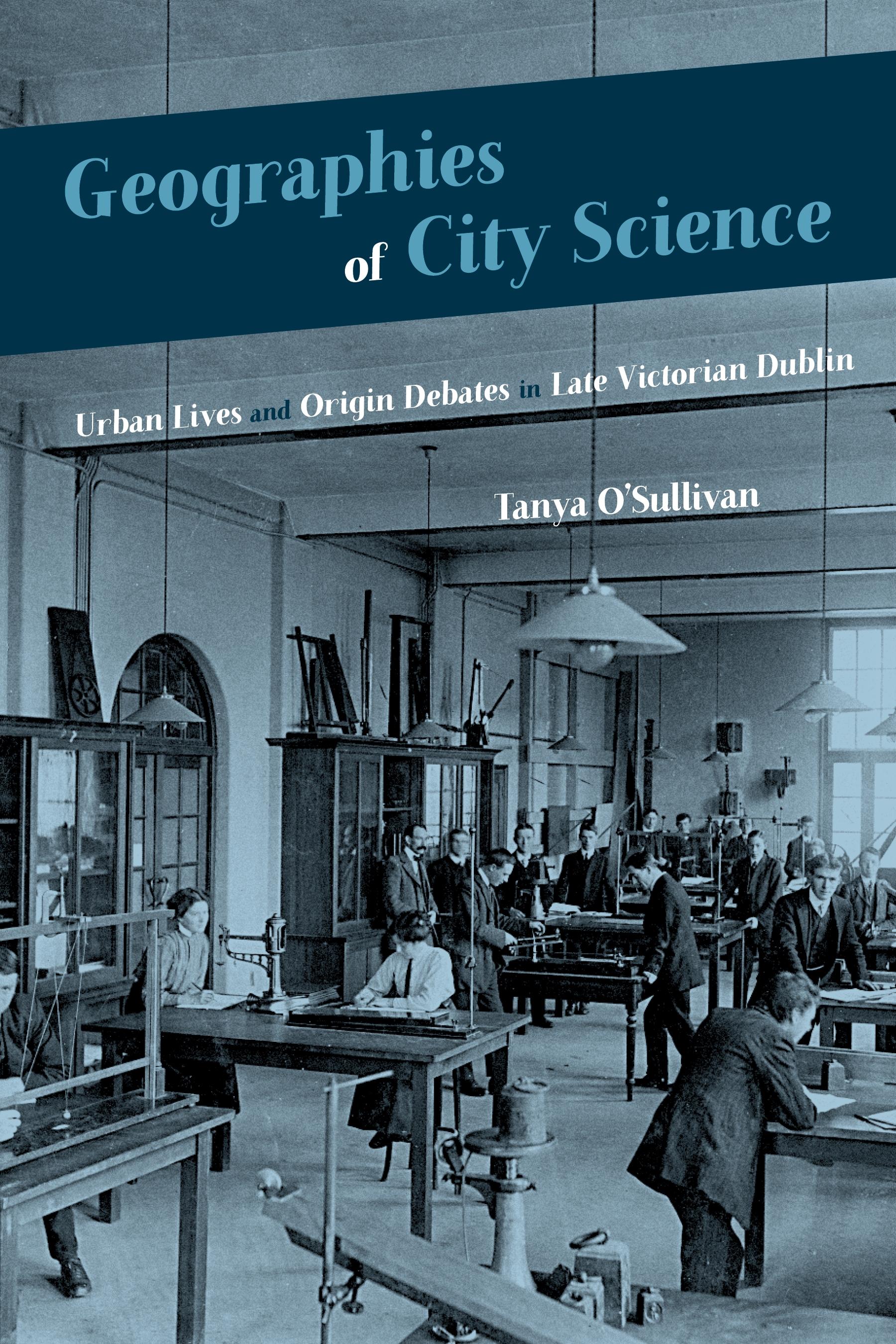
Dublin at the turn of the twentieth century was both the second city of the British Empire and the soon-to-be capital of an emerging nation, presenting a unique space in which to examine the past relationship between science and the city. Drawing on both geography and biography, Geographies of City Science underscores the crucial role urban spaces played in the production of scientific knowledge. Each chapter explores the lives of two practitioners from one of the main religious and political traditions in Dublin (either Protestant and Unionist or Catholic and Nationalist). As Tanya O’Sullivan argues, any variation in their engagement with science had far less to do with their affiliations than with their “life spaces”—domains where human agency and social structures collide. Focusing on nineteenth-century debates on the origins of the universe as well as the origins of form, humans, and language, O’Sullivan explores the numerous ways in which scientific meaning relating to origin theories was established and mobilized in the city. By foregrounding Dublin, her book complements more recent attempts to enrich the historiography of metropolitan science by examining its provenance in less well-known urban centers.
Pay easily by card, Klarna, Apple Pay or Google Pay. Not happy? You always have a 14-day money-back guarantee. Read more in our terms. If you have any questions, email us at hello@memmo.org.
Memmo makes studying easier – wherever you are in the world. We bring your course books and smart study tools together in one place: summaries, quizzes, podcasts and flashcards. Plus Ted, your study buddy who answers anything you wonder. Over 50,000 students already study here – built to help you learn faster and stress less.
You might also like
Buy the book0