
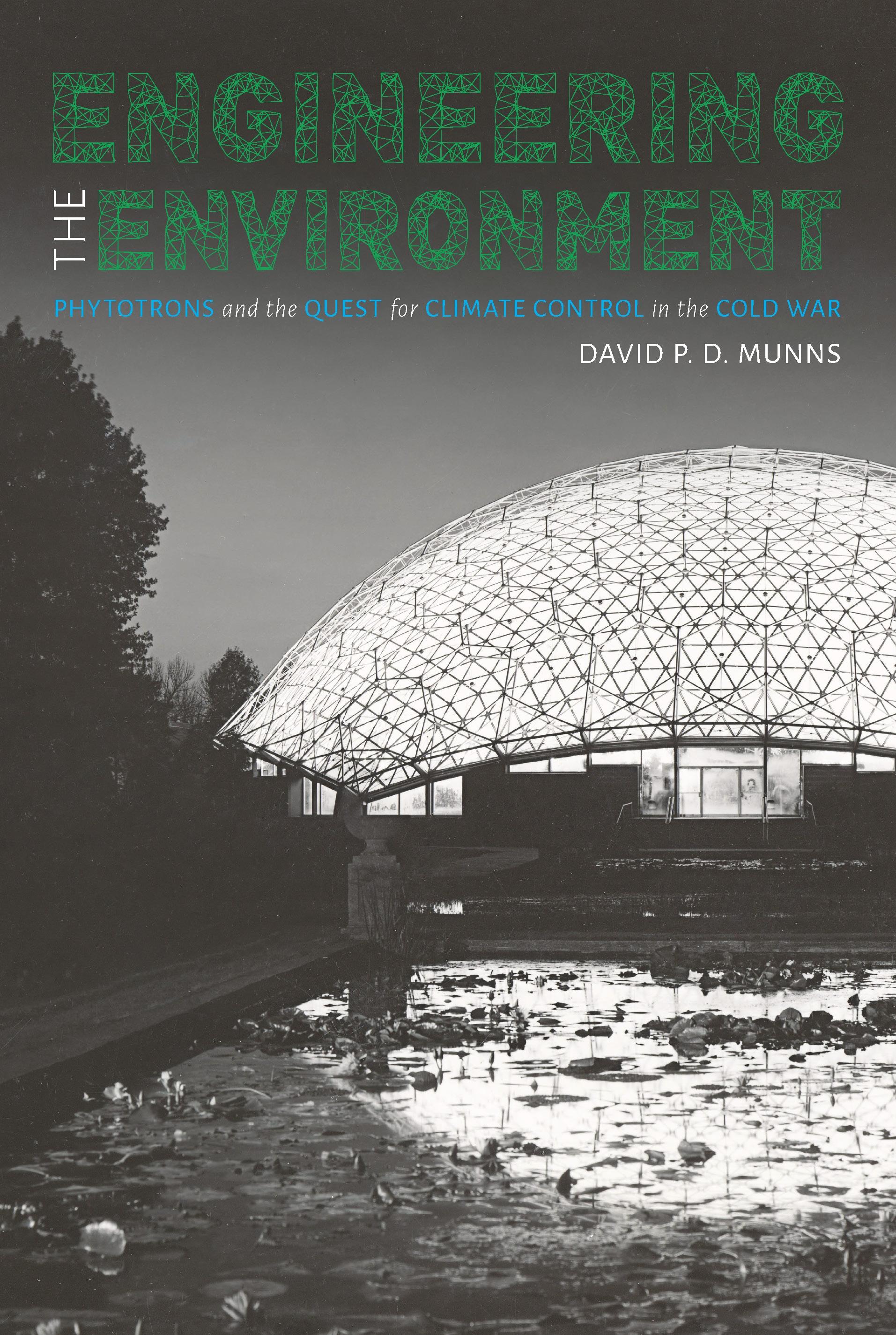
Promising an end to global hunger and political instability, huge climate-controlled laboratories known as phytotrons spread around the world to thirty countries after the Second World War. The United States built nearly a dozen, including the first at Caltech in 1949. Made possible by computers and other novel greenhouse technologies of the early Cold War, phytotrons enabled plant scientists to experiment on the environmental causes of growth and development of living organisms. Subsequently, they turned biologists into technologists who, in their pursuit of knowledge about plants, also set out to master the machines that controlled their environment.
Engineering the Environment tells the forgotten story of a research program that revealed the shape of the environment, the limits of growth and development, and the limits of human control over complex technological systems. As support and funding for basic science dwindled in the mid-1960s, phytotrons declined and ultimately disappeared—until, nearly thirty years later, the British built the Ecotron to study the impact of climate change on biological communities. By revisiting this history of phytotrons, David Munns reminds us of the vital role they can play in helping researchers unravel the complexities of natural ecosystems in the Anthropocene.
Engineering the Environment tells the forgotten story of a research program that revealed the shape of the environment, the limits of growth and development, and the limits of human control over complex technological systems. As support and funding for basic science dwindled in the mid-1960s, phytotrons declined and ultimately disappeared—until, nearly thirty years later, the British built the Ecotron to study the impact of climate change on biological communities. By revisiting this history of phytotrons, David Munns reminds us of the vital role they can play in helping researchers unravel the complexities of natural ecosystems in the Anthropocene.
Pay easily by card, Klarna, Apple Pay or Google Pay. Not happy? You always have a 14-day money-back guarantee. Read more in our terms. If you have any questions, email us at hello@memmo.org.
Memmo makes studying easier – wherever you are in the world. We bring your course books and smart study tools together in one place: summaries, quizzes, podcasts and flashcards. Plus Ted, your study buddy who answers anything you wonder. Over 50,000 students already study here – built to help you learn faster and stress less.
You might also like
Buy the book0