
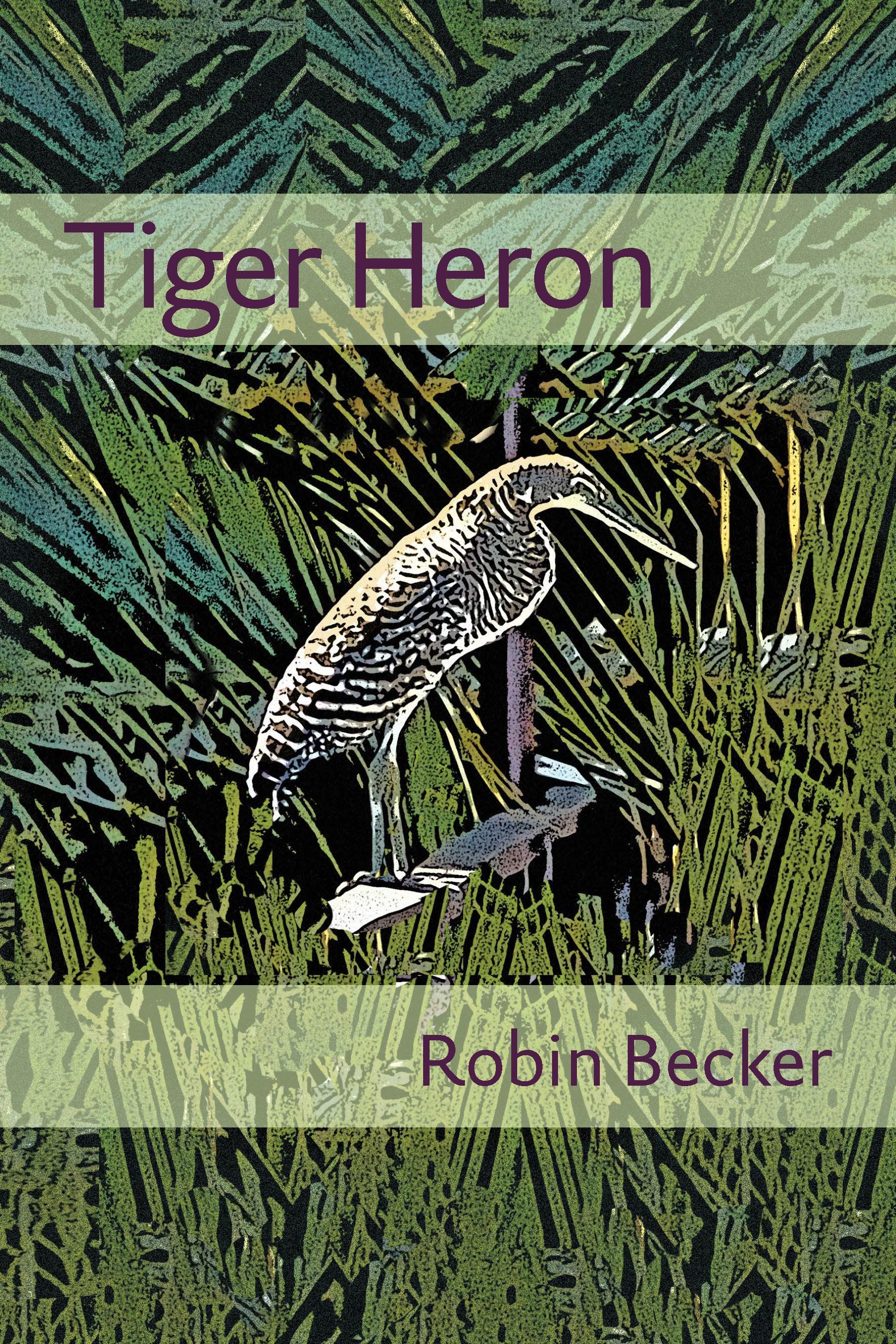
Appearance and disguise—in a Costa Rican rainforest, a West Village repair shop, or an intimate relationship—reveal the turbulence that undergirds daily life, as families and places undergo change. In "Elegy for the Norther Flying Squirrel" and "Divers," Becker takes up the science of climate change and habitat loss. "Language that is by turns virtuosic and quiet, astonishing and accurate," writes a reviewer of Becker's 2006 collection, Domain of Perfect Affection for Jewish Book World Magazine. The challenge of "aligning loss with love" exerts a potent tension in Tiger Heron, as age comprises mortal bodies and intimacies end. A self-mocking wit propels characters "to find and lose and find each other again"—in the imagination and in the stories these poems tell. The final line of "The Sounds of Yiddish"—"Spare us what we can learn to endure"—closes a playful send-up, dramatizing language, culture, and power. Writing in The Washington Post, former U.S. Poet Laureate Robert Pinsky praises Becker's "comic timing." Longtime readers of Becker's work will delight in poems cast in a variety of stanzas and experimental forms. Their occasions are diverse—an animal shelter, a failed trip to Venice, a hospice bedside—but Becker ultimately yokes a language of praise to our stumbling, humble, human efforts.
Pay easily by card, Klarna, Apple Pay or Google Pay. Not happy? You always have a 14-day money-back guarantee. Read more in our terms. If you have any questions, email us at hello@memmo.org.
Memmo makes studying easier – wherever you are in the world. We bring your course books and smart study tools together in one place: summaries, quizzes, podcasts and flashcards. Plus Ted, your study buddy who answers anything you wonder. Over 50,000 students already study here – built to help you learn faster and stress less.
You might also like
Buy the book0