
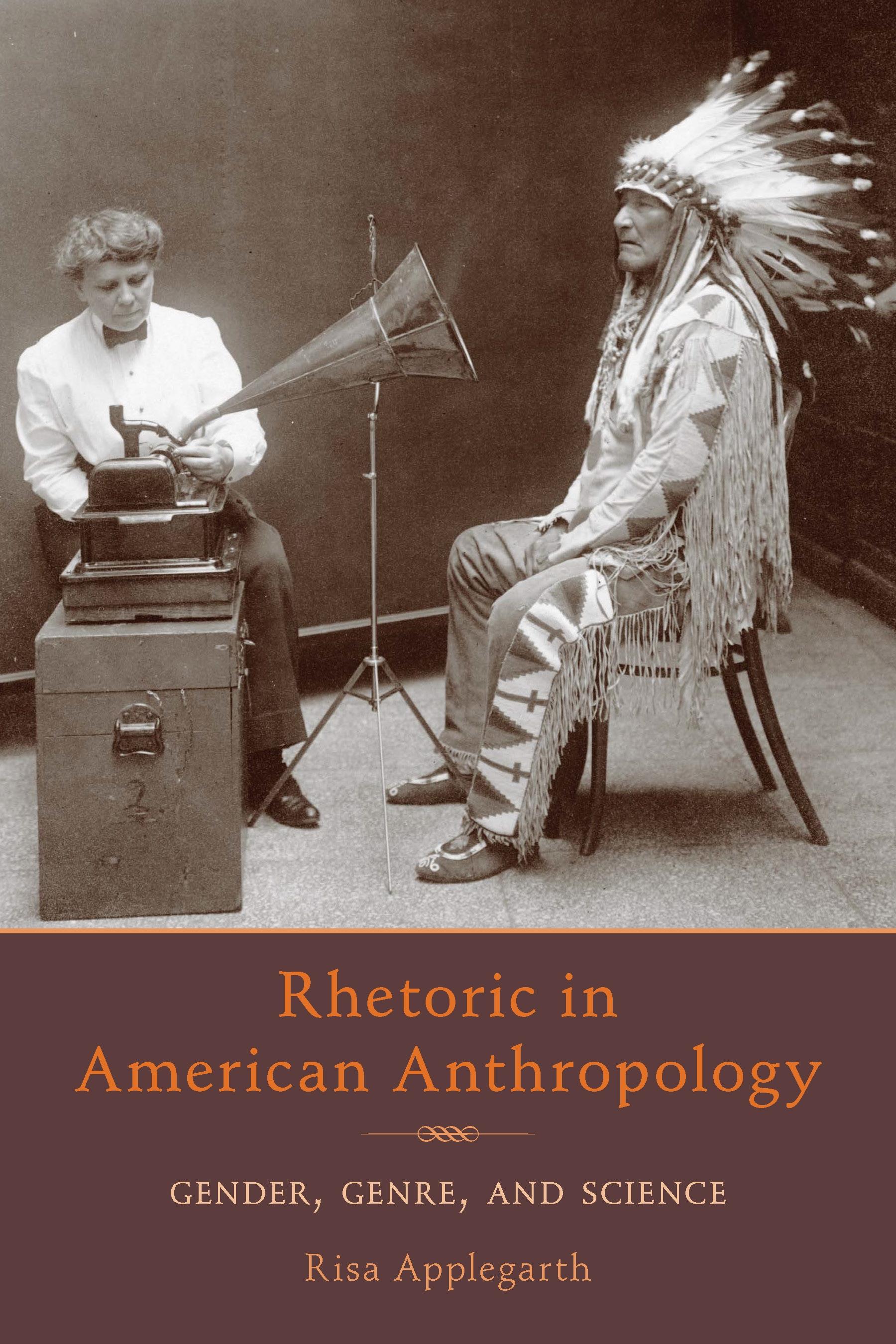
In the early twentieth century, the field of anthropology transformed itself from the "welcoming science," uniquely open to women, people of color, and amateurs, into a professional science of culture. The new field grew in rigor and prestige but excluded practitioners and methods that no longer fit a narrow standard of scientific legitimacy. In Rhetoric in American Anthropology, Risa Applegarth traces the "rhetorical archeology" of this transformation in the writings of early women anthropologists. Applegarth examines the crucial role of ethnographic genres in determining scientific status and recovers the work of marginalized anthropologists who developed alternative forms of scientific writing.
Applegarth analyzes scores of ethnographic monographs to demonstrate how early anthropologists intensified the constraints of genre to define their community and limit the aims and methods of their science. But in the 1920s and 1930s, professional researchers sidelined by the academy persisted in challenging the field's boundaries, developing unique rhetorical practices and experimenting with alternative genres that in turn greatly expanded the epistemology of the field. Applegarth demonstrates how these writers' folklore collections, ethnographic novels, and autobiographies of fieldwork experiences reopened debates over how scientific knowledge was made: through what human relationships, by what bodies, and for what ends. Linking early anthropologists' ethnographic strategies to contemporary theories of rhetoric and composition, Rhetoric in American Anthropology provides a fascinating account of the emergence of a new discipline and reveals powerful intersections among gender, genre, and science.
Applegarth analyzes scores of ethnographic monographs to demonstrate how early anthropologists intensified the constraints of genre to define their community and limit the aims and methods of their science. But in the 1920s and 1930s, professional researchers sidelined by the academy persisted in challenging the field's boundaries, developing unique rhetorical practices and experimenting with alternative genres that in turn greatly expanded the epistemology of the field. Applegarth demonstrates how these writers' folklore collections, ethnographic novels, and autobiographies of fieldwork experiences reopened debates over how scientific knowledge was made: through what human relationships, by what bodies, and for what ends. Linking early anthropologists' ethnographic strategies to contemporary theories of rhetoric and composition, Rhetoric in American Anthropology provides a fascinating account of the emergence of a new discipline and reveals powerful intersections among gender, genre, and science.
Category: Vetenskapsteori och forskningsmetod
e-ISBN: 9780822979470
Shipping weight: 1.2 kg
Ships in: 1-2 days
Pay easily by card, Klarna, Apple Pay or Google Pay. Not happy? You always have a 14-day money-back guarantee. Read more in our terms. If you have any questions, email us at hello@memmo.org.
Memmo makes studying easier – wherever you are in the world. We bring your course books and smart study tools together in one place: summaries, quizzes, podcasts and flashcards. Plus Ted, your study buddy who answers anything you wonder. Over 50,000 students already study here – built to help you learn faster and stress less.
You might also like
Buy the book0