
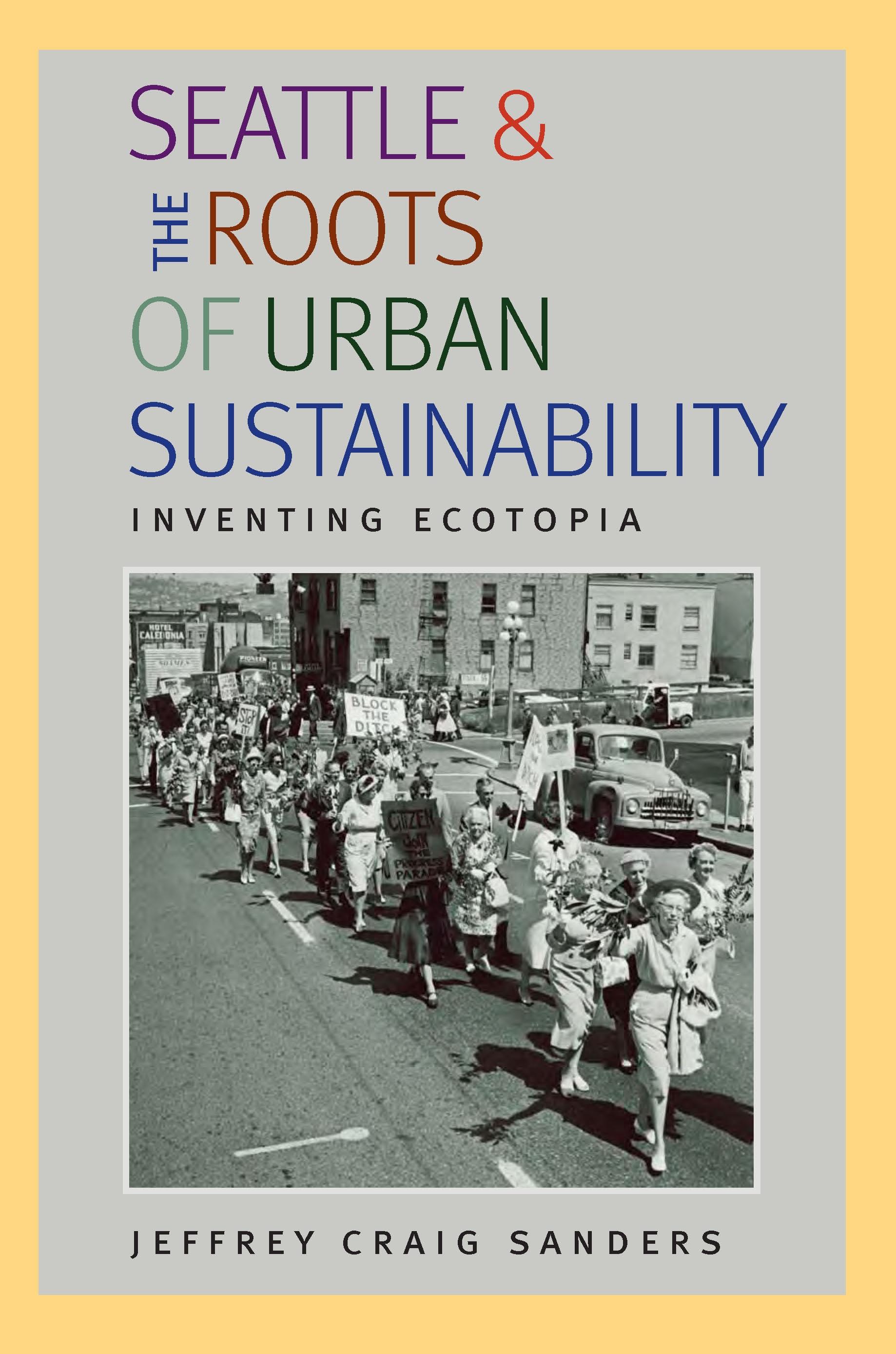
Seattle, often called the "Emerald City," did not achieve its green, clean, and sustainable environment easily. This thriving ecotopia is the byproduct of continuing efforts by residents, businesses, and civic leaders alike. In Seattle and the Roots of Urban Sustainability, Jeffrey Craig Sanders examines the rise of environmental activism in Seattle amidst the "urban crisis" of the 1960s and its aftermath.
Like much activism during this period, the environmental movement began at the grassroots level—in local neighborhoods over local issues. Sanders links the rise of local environmentalism to larger movements for economic, racial, and gender equality and to a counterculture that changed the social and political landscape. He examines emblematic battles that erupted over the planned demolition of Pike Place Market, a local landmark, and environmental organizing in the Central District during the War on Poverty. Sanders also relates the story of Fort Lawton, a decommissioned army base, where Audubon Society members and Native American activists feuded over future land use.
The rise and popularity of environmental consciousness among Seattle's residents came to influence everything from industry to politics, planning, and global environmental movements. Yet, as Sanders reveals, it was in the small, local struggles that urban environmental activism began.
Like much activism during this period, the environmental movement began at the grassroots level—in local neighborhoods over local issues. Sanders links the rise of local environmentalism to larger movements for economic, racial, and gender equality and to a counterculture that changed the social and political landscape. He examines emblematic battles that erupted over the planned demolition of Pike Place Market, a local landmark, and environmental organizing in the Central District during the War on Poverty. Sanders also relates the story of Fort Lawton, a decommissioned army base, where Audubon Society members and Native American activists feuded over future land use.
The rise and popularity of environmental consciousness among Seattle's residents came to influence everything from industry to politics, planning, and global environmental movements. Yet, as Sanders reveals, it was in the small, local struggles that urban environmental activism began.
Pay easily by card, Klarna, Apple Pay or Google Pay. Not happy? You always have a 14-day money-back guarantee. Read more in our terms. If you have any questions, email us at hello@memmo.org.
Memmo makes studying easier – wherever you are in the world. We bring your course books and smart study tools together in one place: summaries, quizzes, podcasts and flashcards. Plus Ted, your study buddy who answers anything you wonder. Over 50,000 students already study here – built to help you learn faster and stress less.
You might also like
Buy the book0