
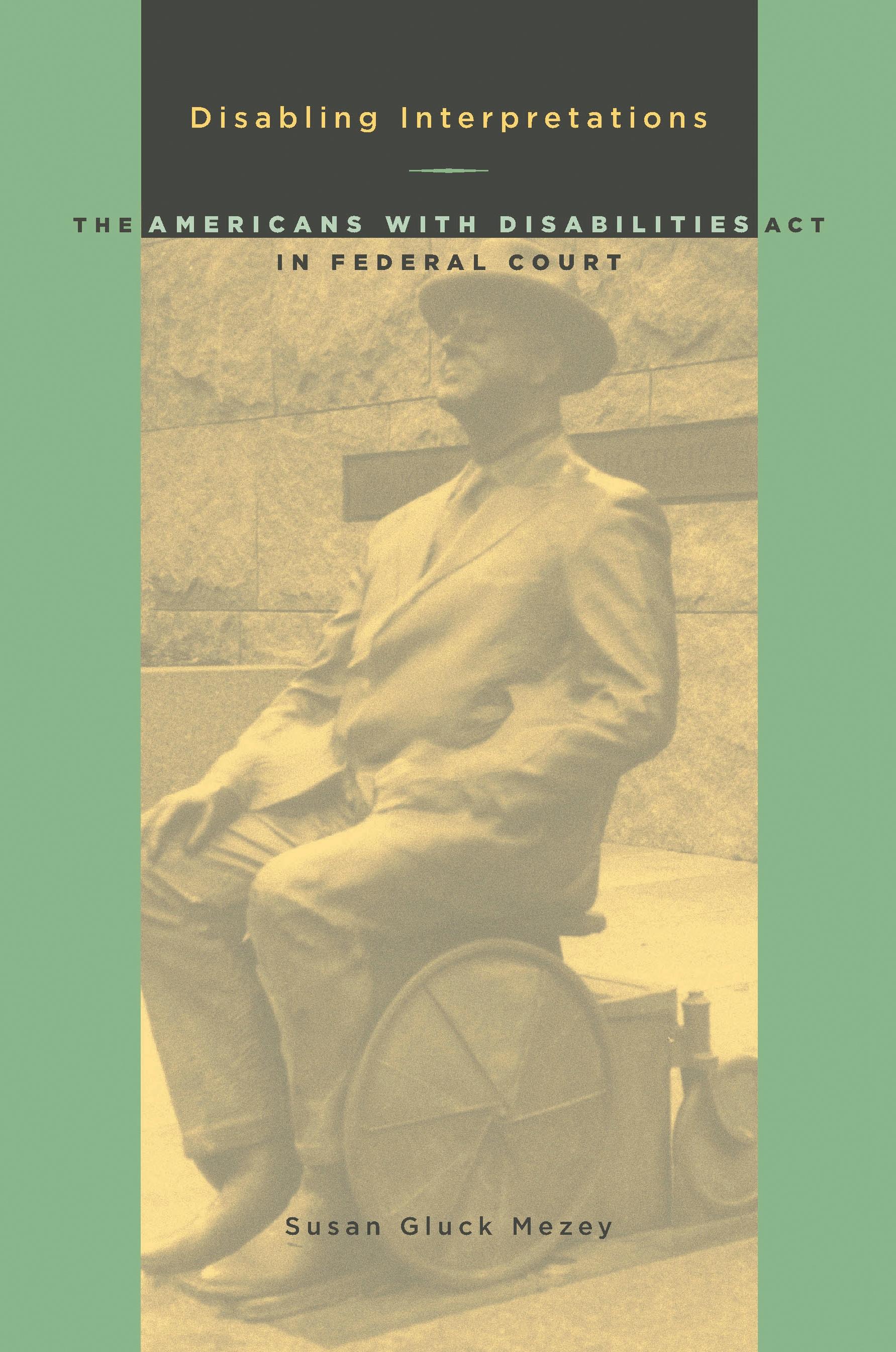
The Americans with Disabilities Act (ADA) of 1990 was intended to send a clear message to society that discrimination on the basis of disability is unacceptable. As with most civil rights laws, the courts were given primary responsibility for implementing disability rights policy.Mezey argues that the act has not fulfilled its potential primarily because of the judiciary's "disabling interpretations" in adjudicating ADA claims. In the decade of litigation following the enactment of the ADA, judicial interpretation of the law has largely constricted the parameters of disability rights and excluded large numbers of claimants from the reach of the law. The Supreme Court has not interpreted the act broadly, as was intended by Congress, and this method of decision making was for the most part mirrored by the courts below. The high court's rulings to expand state sovereign immunity and insulate states from liability in damage suits has also caused claimants to become enmeshed in litigation and has encouraged defendants to challenge other laws affecting disability rights. Despite the law's strong civil rights rhetoric, disability rights remain an imperfectly realized goal.
Category: Juridik
e-ISBN: 9780822972792
Pay easily by card, Klarna, Apple Pay or Google Pay. Not happy? You always have a 14-day money-back guarantee. Read more in our terms. If you have any questions, email us at hello@memmo.org.
Memmo makes studying easier – wherever you are in the world. We bring your course books and smart study tools together in one place: summaries, quizzes, podcasts and flashcards. Plus Ted, your study buddy who answers anything you wonder. Over 50,000 students already study here – built to help you learn faster and stress less.
You might also like
Buy the book0