
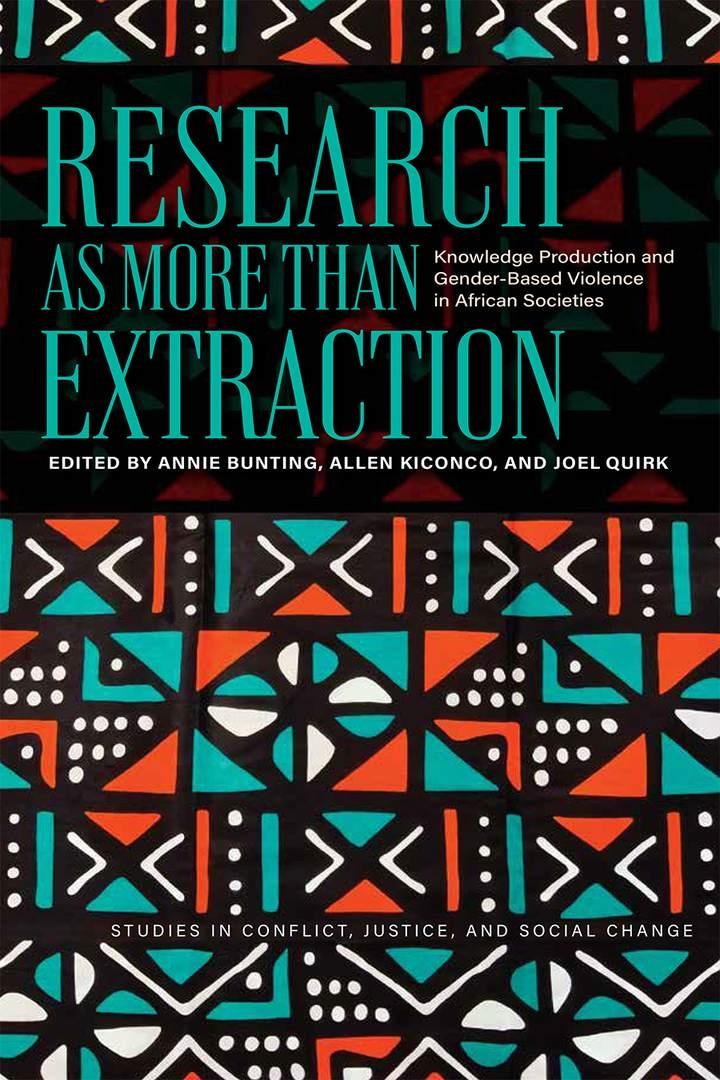
This volume offers practical, detailed guidance and case studies on how to avoid exacerbating inequalities while researching gender-based violence and other related issues in Africa.
Wartime violence and its aftermath present numerous practical, ethical, and political challenges that are especially acute for researchers working on gender-based and sexual violence. Drawing upon applied examples from across the African continent, this volume features unique contributions from researchers and practitioners with decades of experience developing research partnerships, designing and undertaking fieldwork, asking sensitive questions, negotiating access, collecting and evaluating information, and validating results. These are all endeavors that also raise pressing ethical questions, especially in relation to retraumatization, social stigma, and even payment of participants.
Ethical and methodological questions cannot be separated from political and institutional considerations. Systems of privilege and marginalization cannot be wished away, so they need to be both interrogated and contested. This is where precedents and power relations established under colonialism and imperialism take center stage. Europeans have been extracting valuable resources from the African continent for centuries. Research into gender-based violence risks being yet another extractive industry. There are times when committed individuals can make valuable contributions to a more equitable future, but funding streams, knowledge hierarchies, and institutional positions continue to have powerful effects.
Accordingly, the contributors to this volume also concentrate upon the layered effects of power and position, relationships between researchers, organizations, and communities, and the political economy of knowledge production; this brings into focus questions about how and why information gets generated, for which kinds of audiences, and for whose benefit.
Pay easily by card, Klarna, Apple Pay or Google Pay. Not happy? You always have a 14-day money-back guarantee. Read more in our terms. If you have any questions, email us at hello@memmo.org.
Memmo makes studying easier – wherever you are in the world. We bring your course books and smart study tools together in one place: summaries, quizzes, podcasts and flashcards. Plus Ted, your study buddy who answers anything you wonder. Over 50,000 students already study here – built to help you learn faster and stress less.