
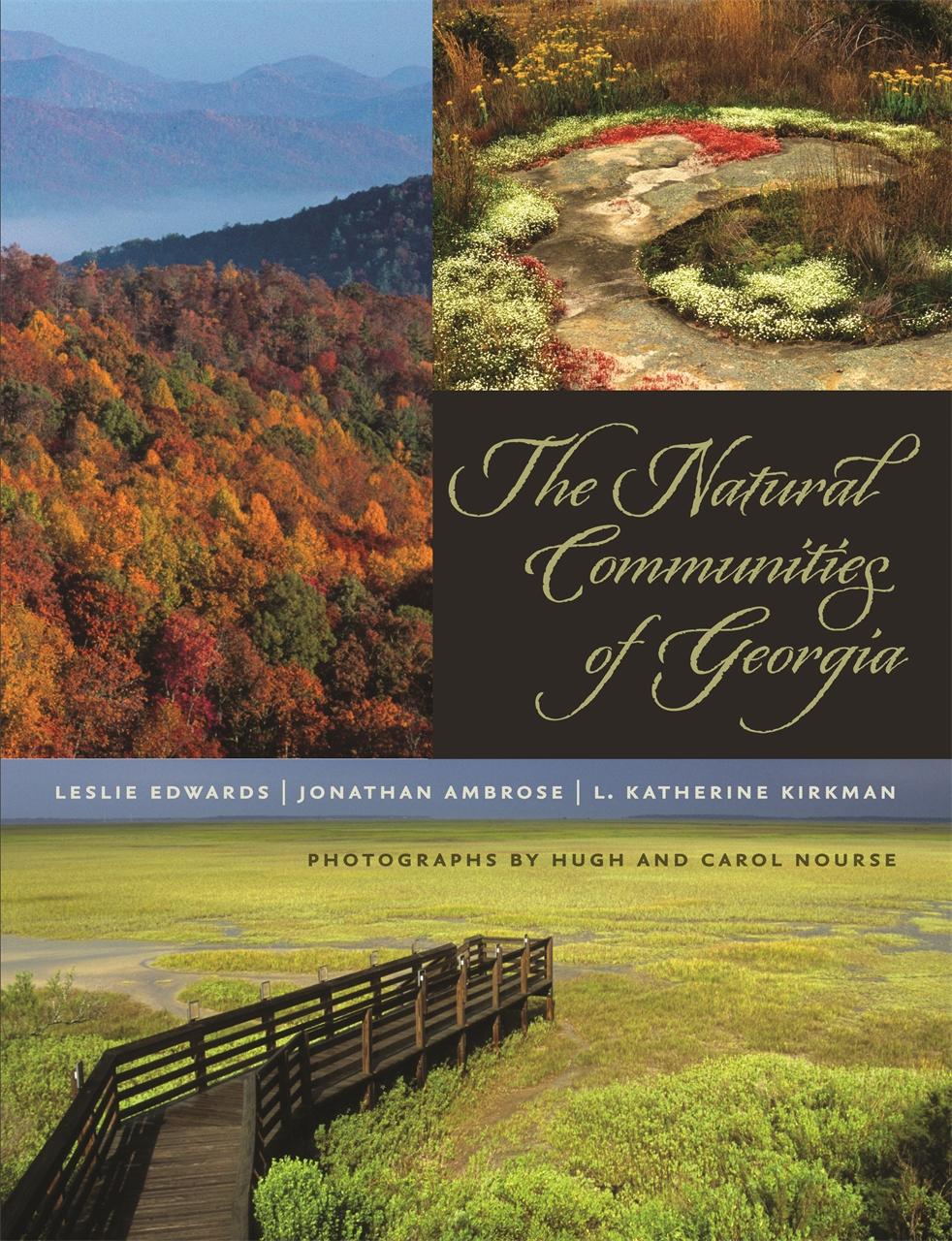
The Natural Communities of Georgia
The Natural Communities of Georgia presents a comprehensive overview of the state’s natural landscapes, providing an ecological context to enhance understanding of this region’s natural history.
Georgia boasts an impressive range of natural communities, assemblages of interacting species that have either been minimally impacted by modern human activities or have successfully recovered from them. This guide makes the case that identifying these distinctive communities and the factors that determine their distribution are central to understanding Georgia’s ecological diversity and the steps necessary for its conservation.
Within Georgia’s five major ecoregions the editors identify and describe a total of sixty-six natural communities, such as the expansive salt marshes of the barrier islands in the Maritime ecoregion, the fire-driven longleaf pine woodlands of the Coastal Plain, the beautiful granite outcrops of the Piedmont, the rare prairies of the Ridge and Valley, and the diverse coves of the Blue Ridge.
The description of each natural community includes Traits that make it interesting and significant Physical factors and ecological processes that determine the distribution and characteristics of each community Typical plant communities Representative or noteworthy animals Sidebars that discuss particularly interesting features
With contributions from scientists who have managed, researched, and written about Georgia landscapes for decades, the guide features more than four hundred color photographs that reveal the stunning natural beauty and diversity of the state. The book also explores conservation issues, including rare or declining species, current and future threats to specific areas, and research needs, and provides land management strategies for preserving, restoring, and maintaining biotic communities.
The Natural Communities of Georgia is an essential reference for ecologists and other scientists, as well as a rich resource for Georgians interested in the region’s natural heritage.
Major support for this project was provided by the AGL Resources Foundation. Additional support was provided by the Georgia Department of Natural Resources, Wildlife Resources Division. In-kind support was provided by the Joseph W. Jones Ecological Research Center at Ichauway and Georgia State University.
Pay easily by card, Klarna, Apple Pay or Google Pay. Not happy? You always have a 14-day money-back guarantee. Read more in our terms. If you have any questions, email us at hello@memmo.org.
Memmo makes studying easier – wherever you are in the world. We bring your course books and smart study tools together in one place: summaries, quizzes, podcasts and flashcards. Plus Ted, your study buddy who answers anything you wonder. Over 50,000 students already study here – built to help you learn faster and stress less.