
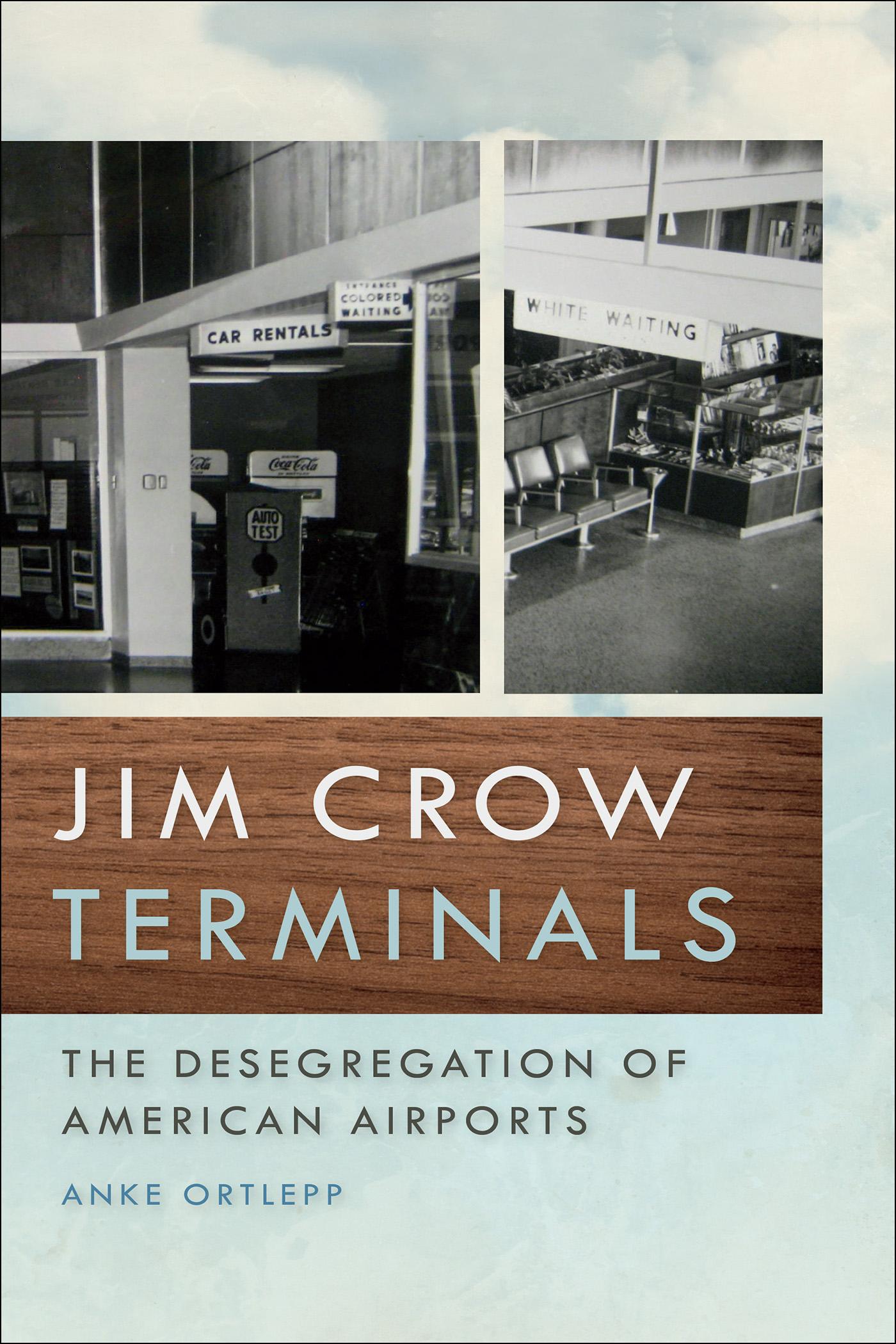
Historical accounts of racial discrimination in transportation have focused until now on trains, buses, and streetcars and their respective depots, terminals, stops, and other public accommodations. It is essential to add airplanes and airports to this narrative, says Anke Ortlepp. Air travel stands at the center of the twentieth century’s transportation revolution, and airports embodied the rapidly mobilizing, increasingly prosperous, and cosmopolitan character of the postwar United States. When segregationists inscribed local definitions of whiteness and blackness onto sites of interstate and even international transit, they not only brought the incongruities of racial separation into sharp relief but also obligated the federal government to intervene.
Ortlepp looks at African American passengers; civil rights organizations; the federal government and judiciary; and airport planners, architects, and managers as actors in shaping aviation’s legal, cultural, and built environments. She relates the struggles of black travelers—to enjoy the same freedoms on the airport grounds that they enjoyed in the aircraft cabin—in the context of larger shifts in the postwar social, economic, and political order. Jim Crow terminals, Ortlepp shows us, were both spatial expressions of sweeping change and sites of confrontation over the renegotiation of racial identities. Hence, this new study situates itself in the scholarly debate over the multifaceted entanglements of “race” and “space.”
Pay easily by card, Klarna, Apple Pay or Google Pay. Not happy? You always have a 14-day money-back guarantee. Read more in our terms. If you have any questions, email us at hello@memmo.org.
Memmo makes studying easier – wherever you are in the world. We bring your course books and smart study tools together in one place: summaries, quizzes, podcasts and flashcards. Plus Ted, your study buddy who answers anything you wonder. Over 75,000 students already study here – built to help you learn faster and stress less.