
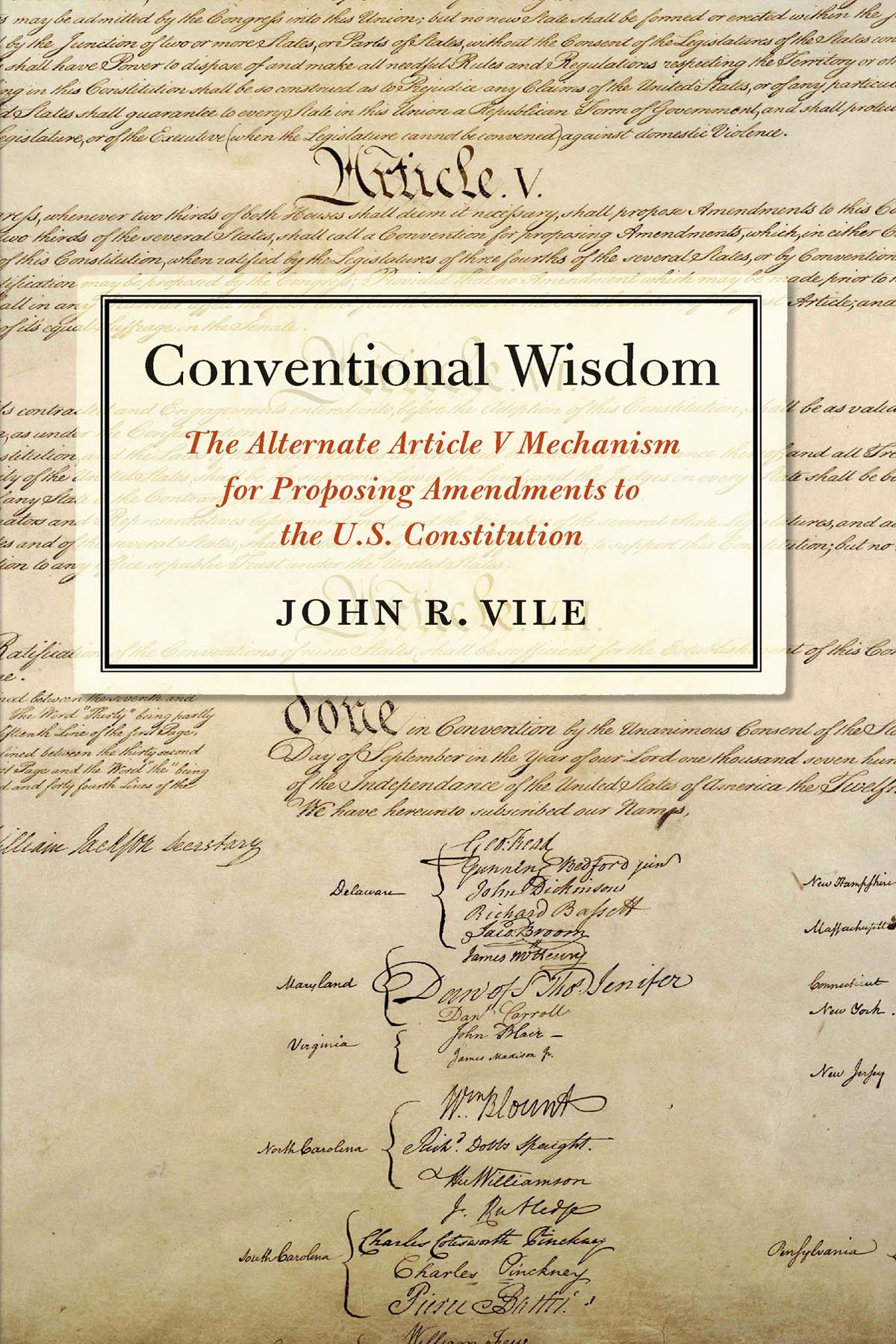
Article V of the Constitution allows two-thirds majorities of both houses of Congress to propose amendments to the document and a three-fourths majority of the states to ratify them. Scholars and frustrated advocates of constitutional change have often criticized this process for being too difficult. Despite this, state legislatures have yet to use the other primary method that Article V outlines for proposing amendments: it permits two-thirds of the state legislatures to petition Congress to call a convention to propose amendments that, like those proposed by Congress, must be ratified by three-fourths of the states.
In this book, John R. Vile surveys more than two centuries of scholarship on Article V and concludes that the weight of the evidence (including a much-overlooked Federalist essay) indicates that states and Congress have the legal right to limit the scope of such conventions to a single subject and that political considerations would make a runaway convention unlikely. Charting a prudent course between those who fail to differentiate revolutionary change from constitutional change, those who fear ever using the Article V convention mechanism that the Framers clearly envisioned, and those who would vest total control of the convention in Congress, the states, or thebconvention itself, Vile’s work will enhance modern debates on the subject.
Pay easily by card, Klarna, Apple Pay or Google Pay. Not happy? You always have a 14-day money-back guarantee. Read more in our terms. If you have any questions, email us at hello@memmo.org.
Memmo makes studying easier – wherever you are in the world. We bring your course books and smart study tools together in one place: summaries, quizzes, podcasts and flashcards. Plus Ted, your study buddy who answers anything you wonder. Over 50,000 students already study here – built to help you learn faster and stress less.