
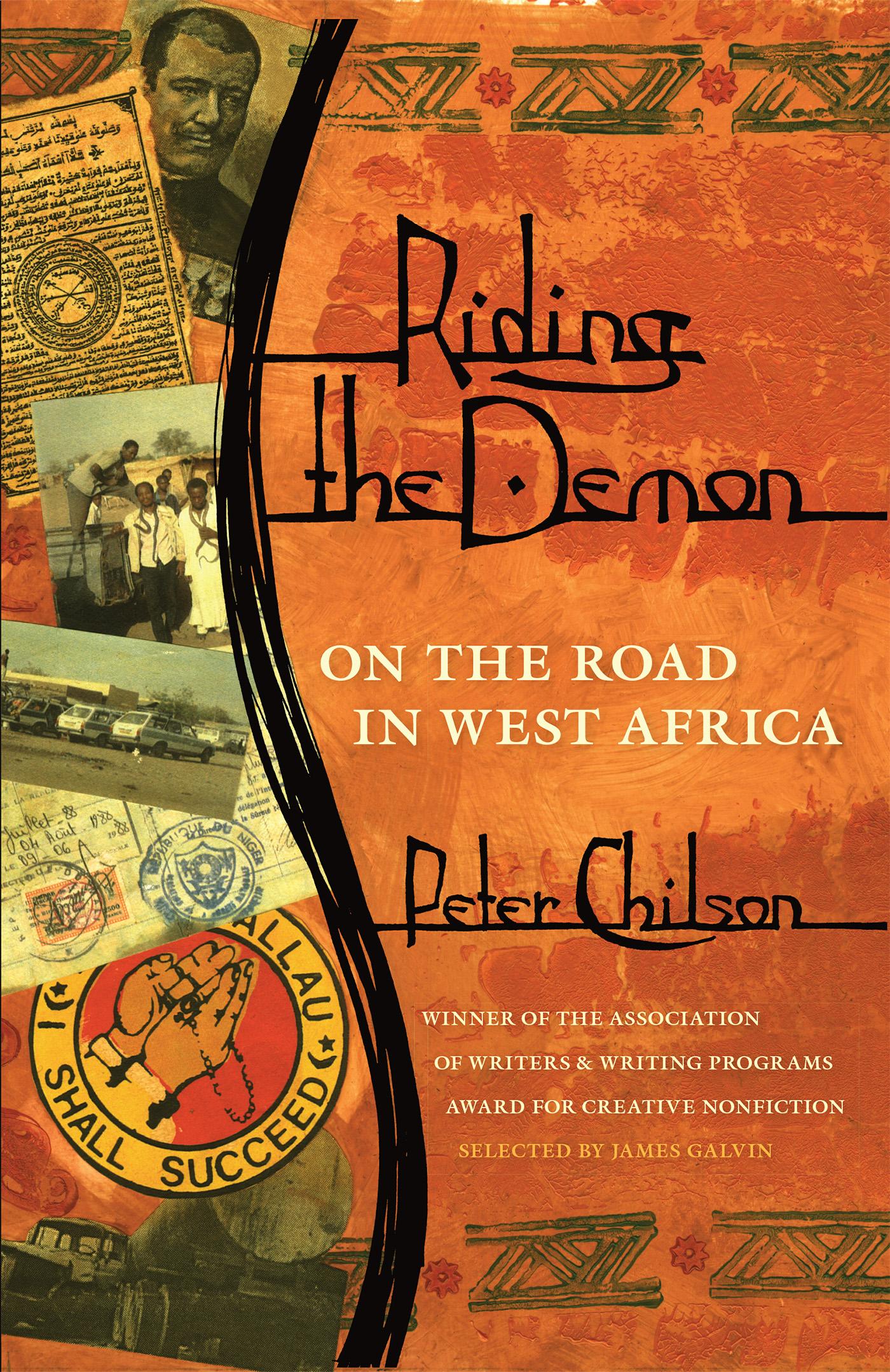
In Niger, where access to rail and air travel requires overcoming many obstacles, roads are the nation’s lifeline. For a year in the early 1990s, Peter Chilson traveled this desert country by automobile to experience West African road culture. He crisscrossed the same roads again and again with bush taxi driver Issoufou Garba in order to learn one driver's story inside and out. He hitchhiked, riding in cotton trucks, and traveled with other bush taxi drivers, truckers, road engineers, an anthropologist, Niger's only licensed woman commercial driver, and a customs officer.
The road in Africa, says Chilson, is more than a direction or a path to take. Once you've booked passage and taken your seat, the road becomes the center of your life. Hurtling along at eighty miles an hour in a bush taxi equipped with bald tires, no windows, and sometimes no doors, travelers realize that they've surrendered everything.
Chilson uses the road not to reinforce Africa's worn image of decay and corruption but to reveal how people endure political and economic chaos, poverty, and disease. The road has reflected the struggle for survival in Niger since the first automobile arrived there, and it remains a useful metaphor for the fight for stability and prosperity across Africa.
Pay easily by card, Klarna, Apple Pay or Google Pay. Not happy? You always have a 14-day money-back guarantee. Read more in our terms. If you have any questions, email us at hello@memmo.org.
Memmo makes studying easier – wherever you are in the world. We bring your course books and smart study tools together in one place: summaries, quizzes, podcasts and flashcards. Plus Ted, your study buddy who answers anything you wonder. Over 75,000 students already study here – built to help you learn faster and stress less.