
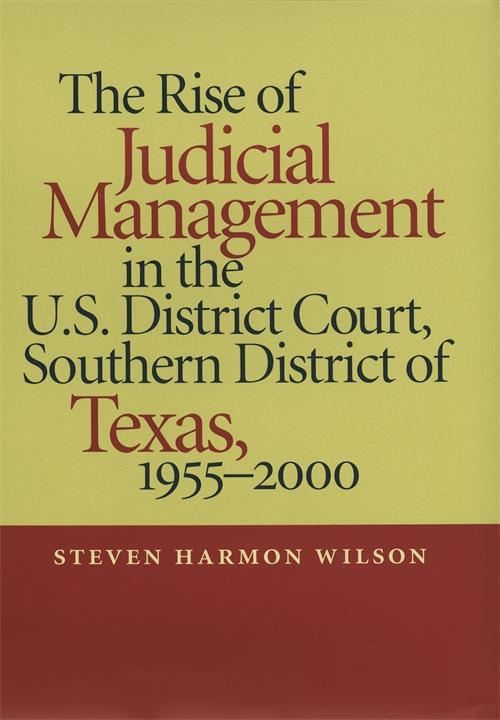
This is the first book-length study of a federal district court to analyze the revolutionary changes in its mission, structure, policies, and procedures over the past four decades. As Steven Harmon Wilson chronicles the court's attempts to keep pace with an expanding, diversifying caseload, he situates those efforts within the social, cultural, and political expectations that have prompted the increase in judicial seats from four in 1955 to the current nineteen.
Federal judges have progressed from being simply referees of legal disputes to managers of expanding courts, dockets, and staffs, says Wilson. The Southern District of Texas offers an especially instructive model by which to study this transformation. Not only does it contain a varied population of Hispanics, African Americans, and whites, but its jurisdiction includes an international border and some of the busiest seaports in the United States. Wilson identifies three areas of judicial management in which the shift has most clearly manifested itself. Through docket and case management judges have attempted to rationalize the flow of work through the litigation process. Lastly, and most controversially, judges have sought to bring "constitutionally flawed" institutions into compliance through "structural reform" rulings in areas such as housing, education, employment, and voting.
Wilson draws on sources ranging from judicial biography and oral-history interviews to case files, published opinions, and administrative memoranda. Blending legal history with social science, this important new study ponders the changing meaning of federal judgeship as it shows how judicial management has both helped and hindered the resolution of legal conflicts and the protection of civil rights.
Pay easily by card, Klarna, Apple Pay or Google Pay. Not happy? You always have a 14-day money-back guarantee. Read more in our terms. If you have any questions, email us at hello@memmo.org.
Memmo makes studying easier – wherever you are in the world. We bring your course books and smart study tools together in one place: summaries, quizzes, podcasts and flashcards. Plus Ted, your study buddy who answers anything you wonder. Over 50,000 students already study here – built to help you learn faster and stress less.