
Winner of the John Hope Franklin Prize (1991)
Winner of the Theodore Saloutos Award from the Immigration History Society (1993)
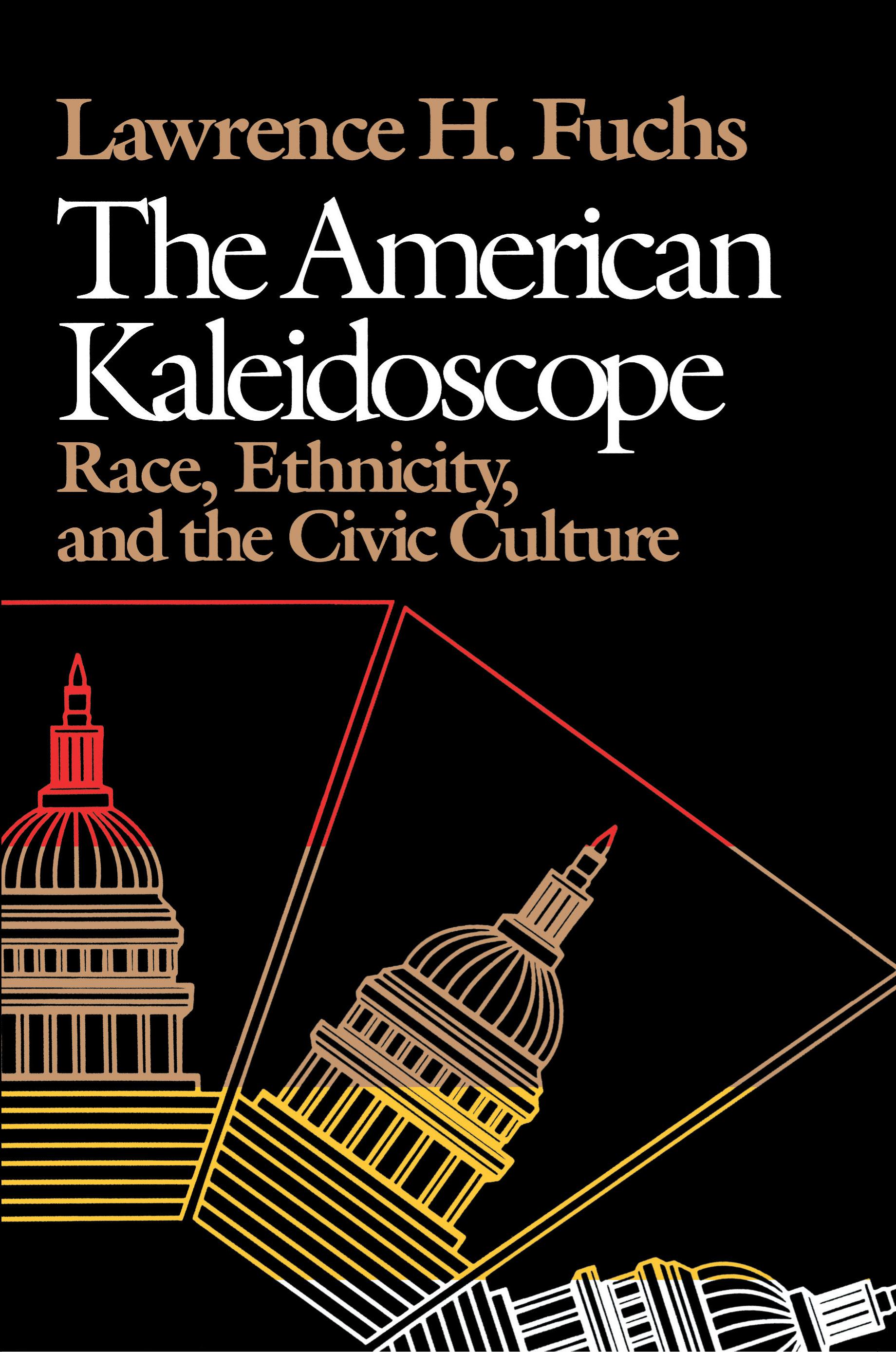
Do recent changes in American law and politics mean that our national motto — e pluribus unum — is at last becoming a reality? Lawrence H. Fuchs searches for answers to this question by examining the historical patterns of American ethnicity and the ways in which a national political culture has evolved to accommodate ethnic diversity. Fuchs looks first at white European immigrants, showing how most of them and especially their children became part of a unifying political culture. He also describes the ways in which systems of coercive pluralism kept persons of color from fully participating in the civic culture. He documents the dismantling of those systems and the emergence of a more inclusive and stronger civic culture in which voluntary pluralism flourishes.
In comparing past patterns of ethnicity in America with those of today, Fuchs finds reasons for optimism. Diversity itself has become a unifying principle, and Americans now celebrate ethnicity. One encouraging result is the acculturation of recent immigrants from Third World countries. But Fuchs also examines the tough issues of racial and ethnic conflict and the problems of the ethno-underclass, the new outsiders. The American Kaleidoscope ends with a searching analysis of public policies that protect individual rights and enable ethnic diversity to prosper.
Because of his lifelong involvement with issues of race relations and ethnicity, Lawrence H. Fuchs is singularly qualified to write on a grand scale about the interdependence in the United States of the unum and the pluribus. His book helps to clarify some difficult issues that policymakers will surely face in the future, such as those dealing with immigration, language, and affirmative action.
Pay easily by card, Klarna, Apple Pay or Google Pay. Not happy? You always have a 14-day money-back guarantee. Read more in our terms. If you have any questions, email us at hello@memmo.org.
Memmo makes studying easier – wherever you are in the world. We bring your course books and smart study tools together in one place: summaries, quizzes, podcasts and flashcards. Plus Ted, your study buddy who answers anything you wonder. Over 50,000 students already study here – built to help you learn faster and stress less.