
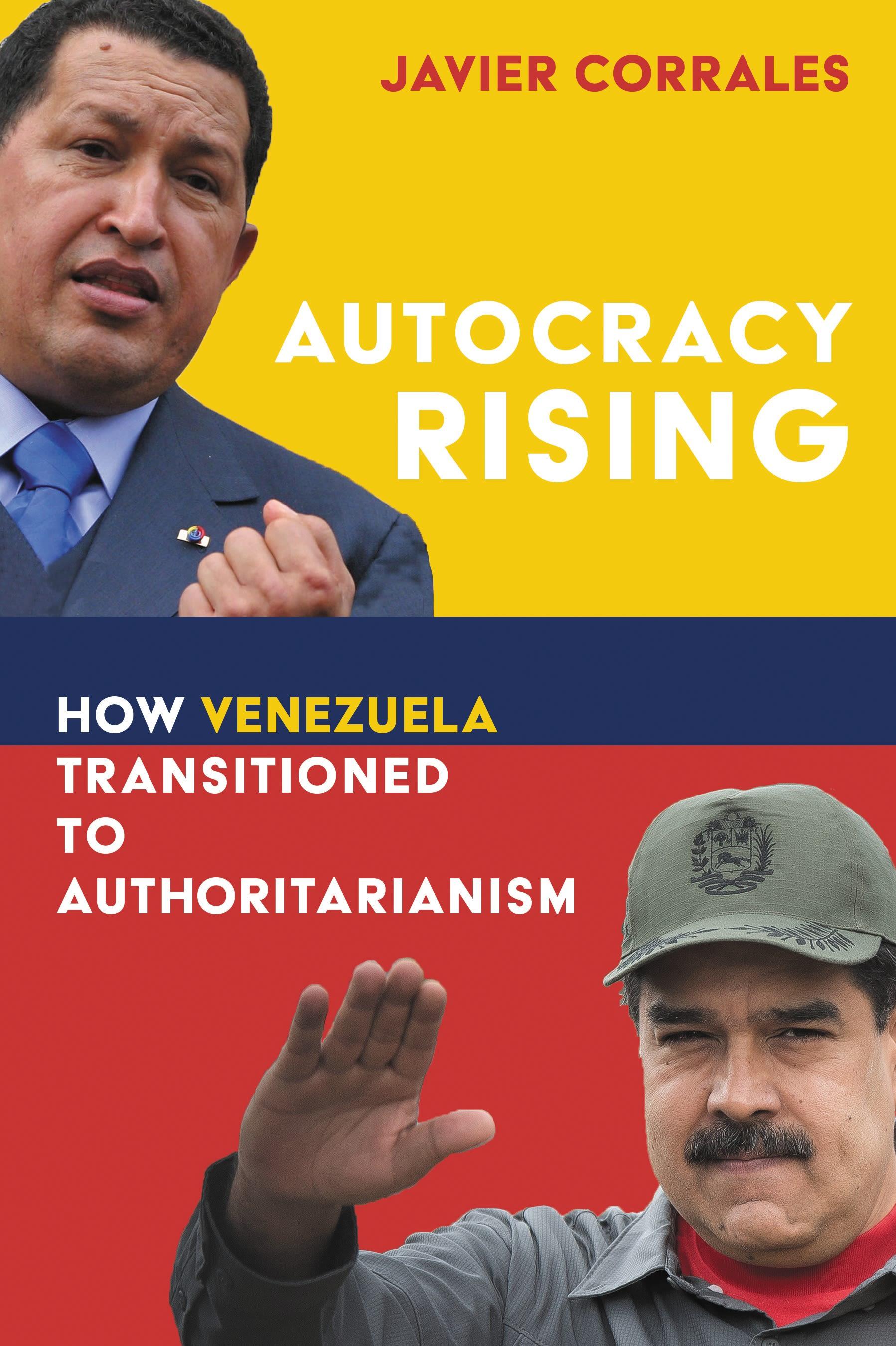
How Nicolás Maduro reinvented authoritarianism for the twenty-first centurVenezuela, which once enjoyed periods of democratically elected governments in the latter half of the twentieth century, has descended into autocratic rule, coupled with economic collapse. In his new book, Autocracy Rising, veteran scholar of Latin American politics Javier Corrales explores how and why this happened.
Corrales focuses on two themes: party systems and institutional capacity. He argues that Venezuela’s democratic backsliding advanced when the ruling party obtained far too much electoral clout while the opposition fragmented. The state then took control of formerly independent agencies of the state. This allowed the ruling party to use and abuse of the law to favor the president—which in turn generated a permanent economic crisis.
After succeeding Hugo Chávez in 2013, Nicolás Maduro confronted, unexpectedly, another change in the party system: a rising opposition. This triggered deeper autocratization. To survive, the state was compelled to modernize autocratic practices and seek alliances with sinister partners. In short, Maduro concentrated power, paradoxically, by sharing power.
Autocracy Rising compares what occurred in Venezuela to twenty other cases throughout Latin America where presidents were forced out of office. Corrales illuminates the depressing cycle in which semi-authoritarian regimes become increasingly autocratic in response to crisis, only to cause new crises that lead to even greater authoritarianism.
Corrales focuses on two themes: party systems and institutional capacity. He argues that Venezuela’s democratic backsliding advanced when the ruling party obtained far too much electoral clout while the opposition fragmented. The state then took control of formerly independent agencies of the state. This allowed the ruling party to use and abuse of the law to favor the president—which in turn generated a permanent economic crisis.
After succeeding Hugo Chávez in 2013, Nicolás Maduro confronted, unexpectedly, another change in the party system: a rising opposition. This triggered deeper autocratization. To survive, the state was compelled to modernize autocratic practices and seek alliances with sinister partners. In short, Maduro concentrated power, paradoxically, by sharing power.
Autocracy Rising compares what occurred in Venezuela to twenty other cases throughout Latin America where presidents were forced out of office. Corrales illuminates the depressing cycle in which semi-authoritarian regimes become increasingly autocratic in response to crisis, only to cause new crises that lead to even greater authoritarianism.
Pages: 256
Category: Statsvetenskap & Politik
e-ISBN: 9780815738084
Shipping weight: 1.2 kg
Ships in: 1-2 days
Pay easily by card, Klarna, Apple Pay or Google Pay. Not happy? You always have a 14-day money-back guarantee. Read more in our terms. If you have any questions, email us at hello@memmo.org.
Memmo makes studying easier – wherever you are in the world. We bring your course books and smart study tools together in one place: summaries, quizzes, podcasts and flashcards. Plus Ted, your study buddy who answers anything you wonder. Over 50,000 students already study here – built to help you learn faster and stress less.