
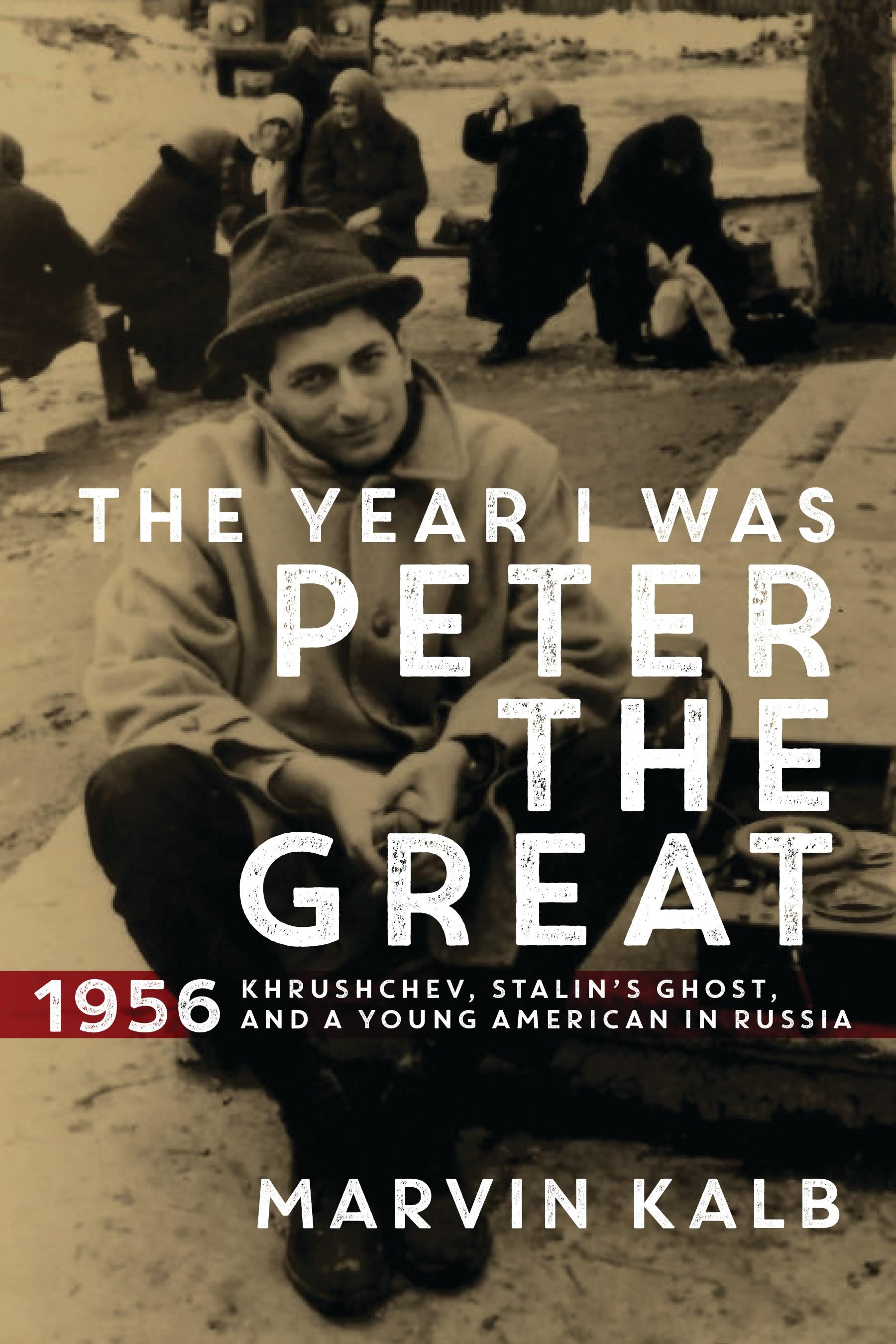
A chronicle of the year that changed Soviet Russiaand molded the future path of one of America's pre-eminent diplomatic correspondents
1956 was an extraordinary year in modern Russian history. It was called the year of the thawa time when Stalin's dark legacy of dictatorship died in February only to be reborn later that December. This historic arc from rising hope to crushing despair opened with a speech by Nikita Khrushchev, then the unpredictable leader of the Soviet Union. He astounded everyone by denouncing the one figure who, up to that time, had been hailed as a genius, a wizard of communismJosef Stalin himself. Now, suddenly, this once unassailable god was being portrayed as a madman whose idiosyncratic rule had seriously undermined communism and endangered the Soviet state.
This amazing switch from hero to villain lifted a heavy overcoat of fear from the backs of ordinary Russians. It also quickly led to anti-communist uprisings in Eastern Europe, none more bloody and challenging than the one in Hungary, which Soviet troops crushed at year's end.
Marvin Kalb, then a young diplomatic attaché at the U.S. Embassy in Moscow, observed this tumultuous year that foretold the end of Soviet communism three decades later. Fluent in Russian, a doctoral candidate at Harvard, he went where few other foreigners would dare go, listening to Russian students secretly attack communism and threaten rebellion against the Soviet system, traveling from one end of a changing country to the other and, thanks to his diplomatic position, meeting and talking with Khrushchev, who playfully nicknamed him Peter the Great.
In this, his fifteenth book, Kalb writes a fascinating eyewitness account of a superpower in upheaval and of a people yearning for an end to dictatorship.
1956 was an extraordinary year in modern Russian history. It was called the year of the thawa time when Stalin's dark legacy of dictatorship died in February only to be reborn later that December. This historic arc from rising hope to crushing despair opened with a speech by Nikita Khrushchev, then the unpredictable leader of the Soviet Union. He astounded everyone by denouncing the one figure who, up to that time, had been hailed as a genius, a wizard of communismJosef Stalin himself. Now, suddenly, this once unassailable god was being portrayed as a madman whose idiosyncratic rule had seriously undermined communism and endangered the Soviet state.
This amazing switch from hero to villain lifted a heavy overcoat of fear from the backs of ordinary Russians. It also quickly led to anti-communist uprisings in Eastern Europe, none more bloody and challenging than the one in Hungary, which Soviet troops crushed at year's end.
Marvin Kalb, then a young diplomatic attaché at the U.S. Embassy in Moscow, observed this tumultuous year that foretold the end of Soviet communism three decades later. Fluent in Russian, a doctoral candidate at Harvard, he went where few other foreigners would dare go, listening to Russian students secretly attack communism and threaten rebellion against the Soviet system, traveling from one end of a changing country to the other and, thanks to his diplomatic position, meeting and talking with Khrushchev, who playfully nicknamed him Peter the Great.
In this, his fifteenth book, Kalb writes a fascinating eyewitness account of a superpower in upheaval and of a people yearning for an end to dictatorship.
Pages: 304
Category: Biografi & Memoarer
e-ISBN: 9780815731627
Shipping weight: 1.2 kg
Ships in: 1-2 days
Pay easily by card, Klarna, Apple Pay or Google Pay. Not happy? You always have a 14-day money-back guarantee. Read more in our terms. If you have any questions, email us at hello@memmo.org.
Memmo makes studying easier – wherever you are in the world. We bring your course books and smart study tools together in one place: summaries, quizzes, podcasts and flashcards. Plus Ted, your study buddy who answers anything you wonder. Over 50,000 students already study here – built to help you learn faster and stress less.