
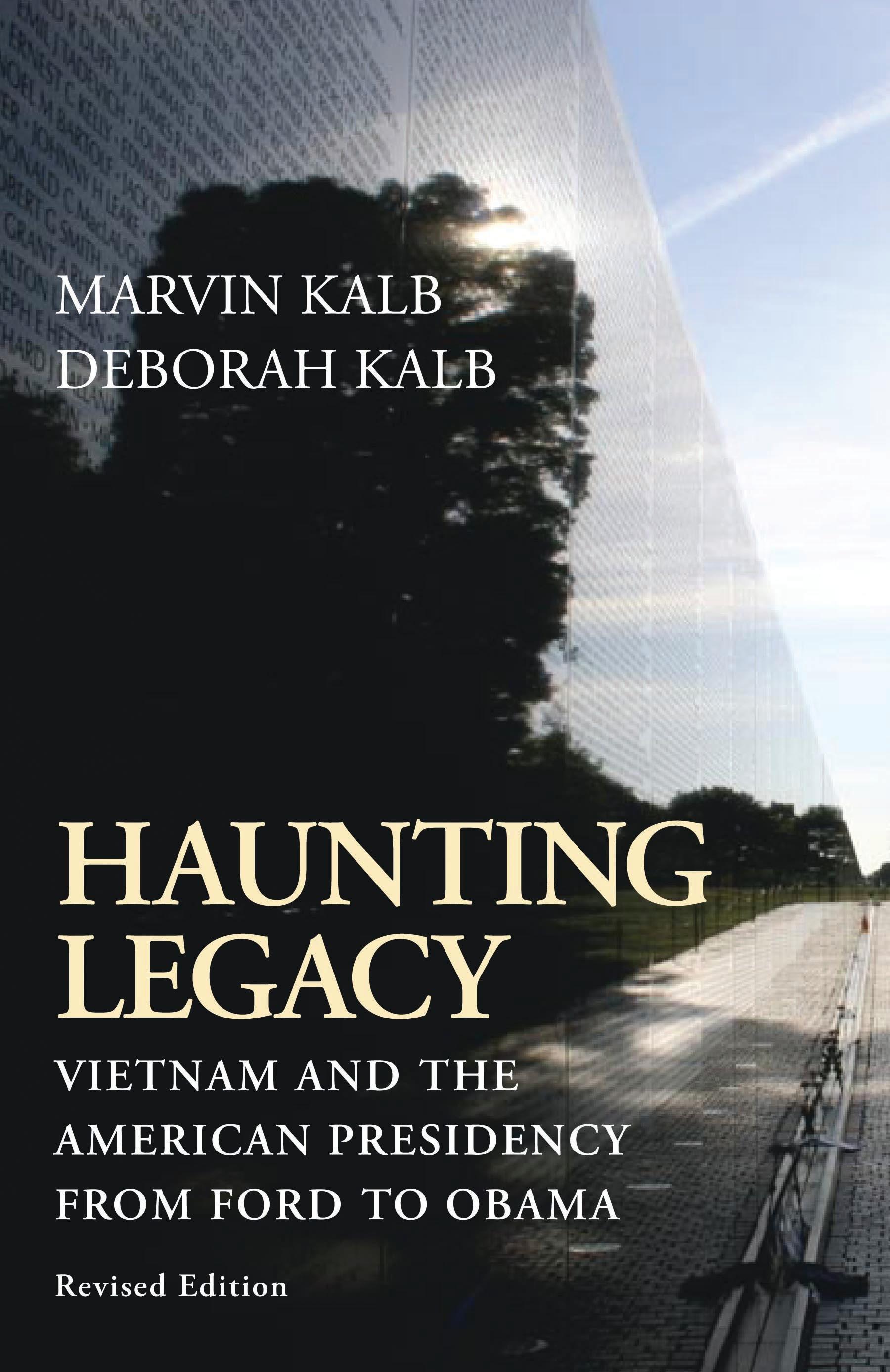
The United States had never lost a warthat is, until 1975, when it was forced to flee Saigon in humiliation after losing to what Lyndon Johnson called a "raggedy-ass little fourth-rate country." The legacy of this first defeat has haunted every president since, especially on the decision of whether to put "boots on the ground" and commit troops to war.
In Haunting Legacy, the father-daughter journalist team of Marvin Kalb and Deborah Kalb presents a compelling, accessible, and hugely important history of presidential decisionmaking on one crucial issue: in light of the Vietnam debacle, under what circumstances should the United States go to war?
The sobering lesson of Vietnam is that the United States is not invincibleit can lose a warand thus it must be more discriminating about the use of American power. Every president has faced the ghosts of Vietnam in his own way, though each has been wary of being sucked into another unpopular war. Ford (during the Mayaguez crisis) and both Bushes (Persian Gulf, Iraq, Afghanistan) deployed massive force, as if to say, "Vietnam, be damned." On the other hand, Carter, Clinton, and Reagan (to the surprise of many) acted with extreme caution, mindful of the Vietnam experience. Obama has also wrestled with the Vietnam legacy, using doses of American firepower in Libya while still engaged in Iraq and Afghanistan.
The authors spent five years interviewing hundreds of officials from every post war administration and conducting extensive research in presidential libraries and archives, and they've produced insight and information never before published. Equal parts taut history, revealing biography, and cautionary tale, Haunting Legacy is must reading for anyone trying to understand the power of the past to influence war-and-peace decisions of the present, and of the future.
In Haunting Legacy, the father-daughter journalist team of Marvin Kalb and Deborah Kalb presents a compelling, accessible, and hugely important history of presidential decisionmaking on one crucial issue: in light of the Vietnam debacle, under what circumstances should the United States go to war?
The sobering lesson of Vietnam is that the United States is not invincibleit can lose a warand thus it must be more discriminating about the use of American power. Every president has faced the ghosts of Vietnam in his own way, though each has been wary of being sucked into another unpopular war. Ford (during the Mayaguez crisis) and both Bushes (Persian Gulf, Iraq, Afghanistan) deployed massive force, as if to say, "Vietnam, be damned." On the other hand, Carter, Clinton, and Reagan (to the surprise of many) acted with extreme caution, mindful of the Vietnam experience. Obama has also wrestled with the Vietnam legacy, using doses of American firepower in Libya while still engaged in Iraq and Afghanistan.
The authors spent five years interviewing hundreds of officials from every post war administration and conducting extensive research in presidential libraries and archives, and they've produced insight and information never before published. Equal parts taut history, revealing biography, and cautionary tale, Haunting Legacy is must reading for anyone trying to understand the power of the past to influence war-and-peace decisions of the present, and of the future.
Pages: 356
Category: Statsvetenskap & Politik
e-ISBN: 9780815724407
Shipping weight: 1.2 kg
Ships in: 1-2 days
Pay easily by card, Klarna, Apple Pay or Google Pay. Not happy? You always have a 14-day money-back guarantee. Read more in our terms. If you have any questions, email us at hello@memmo.org.
Memmo makes studying easier – wherever you are in the world. We bring your course books and smart study tools together in one place: summaries, quizzes, podcasts and flashcards. Plus Ted, your study buddy who answers anything you wonder. Over 50,000 students already study here – built to help you learn faster and stress less.