
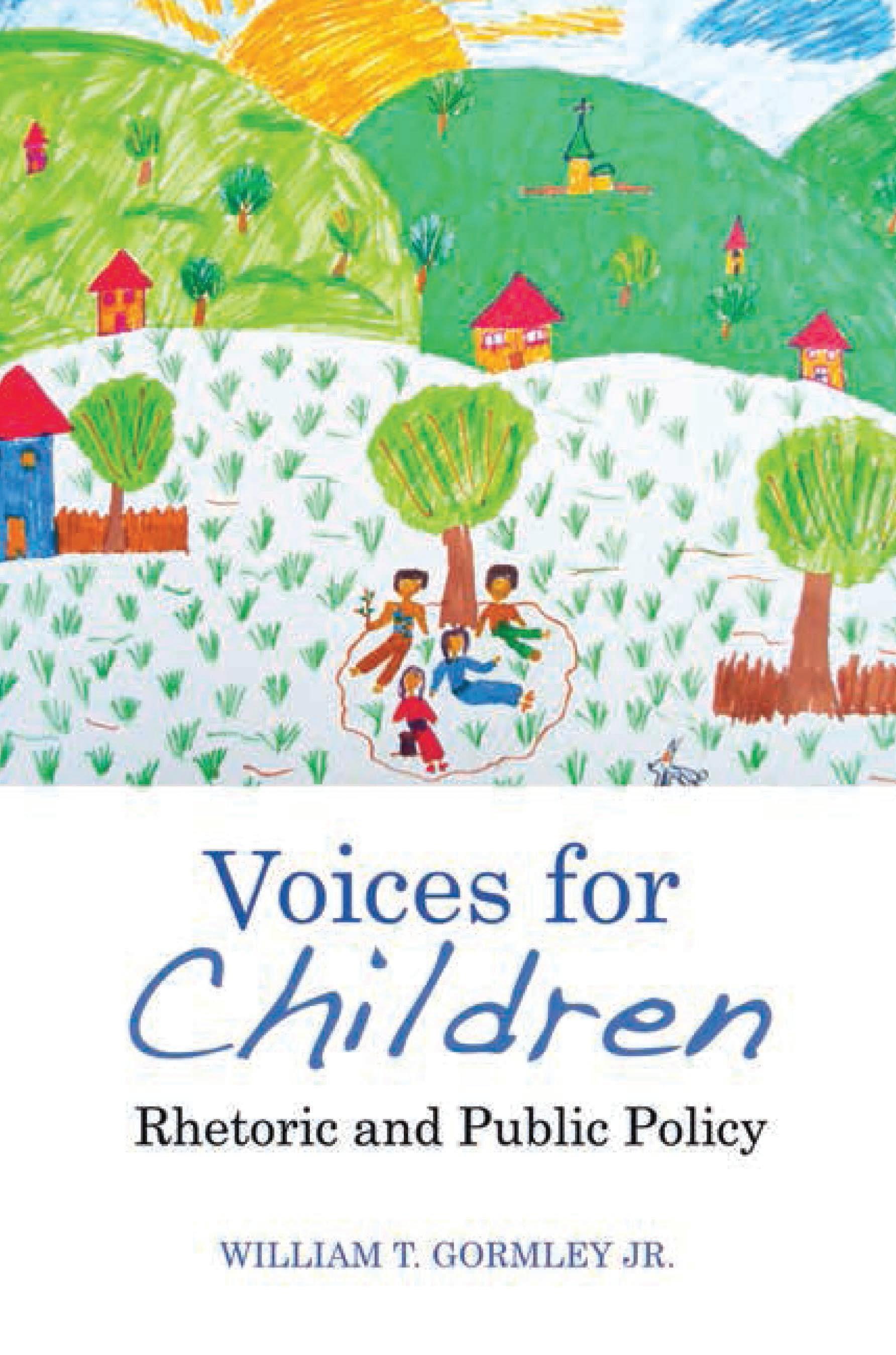
The United States spends more on programs for the elderly than it does on programs that enhance child development and improve child welfare. Why has public policy neglected the development phase of young Americans' lives not only in substantive dollars spent, but also in program design and implementation? Noted child care and education policy expert William Gormley highlights the portrayal of children's issues in both the mass media and in public policymaking to explain why children have gotten short shrift. A key explanation is the limited mass media coverage of strong arguments in support of children's programs.
After documenting changes in rhetoric on children and public policy over time and variations across policy domains and government venues, Gormley demonstrates that some ""issue frames"" are more effective than others in persuading voters. In two randomized experiments, he finds that ""economic"" frames are more effective than ""moralistic"" frames in generating public support for children's programs. Independent voters are especially responsive to economic frames. In several illuminating case studies, in Connecticut, Utah, North Carolina, and Pennsylvania, he finds that strong rhetoric makes a difference but that it is sometimes eclipsed by even stronger political and economic constraints.
Voices for Children offers a fresh perspective on raging debates over child health, child poverty, child welfare, and education programs at the federal and state levels. It finds some hopeful examples that could transform how we think about children's issues and the kinds of public policies we adopt.
After documenting changes in rhetoric on children and public policy over time and variations across policy domains and government venues, Gormley demonstrates that some ""issue frames"" are more effective than others in persuading voters. In two randomized experiments, he finds that ""economic"" frames are more effective than ""moralistic"" frames in generating public support for children's programs. Independent voters are especially responsive to economic frames. In several illuminating case studies, in Connecticut, Utah, North Carolina, and Pennsylvania, he finds that strong rhetoric makes a difference but that it is sometimes eclipsed by even stronger political and economic constraints.
Voices for Children offers a fresh perspective on raging debates over child health, child poverty, child welfare, and education programs at the federal and state levels. It finds some hopeful examples that could transform how we think about children's issues and the kinds of public policies we adopt.
Pages: 198
Category: Statsvetenskap & Politik
e-ISBN: 9780815724032
Shipping weight: 1.2 kg
Ships in: 1-2 days
Pay easily by card, Klarna, Apple Pay or Google Pay. Not happy? You always have a 14-day money-back guarantee. Read more in our terms. If you have any questions, email us at hello@memmo.org.
Memmo makes studying easier – wherever you are in the world. We bring your course books and smart study tools together in one place: summaries, quizzes, podcasts and flashcards. Plus Ted, your study buddy who answers anything you wonder. Over 50,000 students already study here – built to help you learn faster and stress less.