
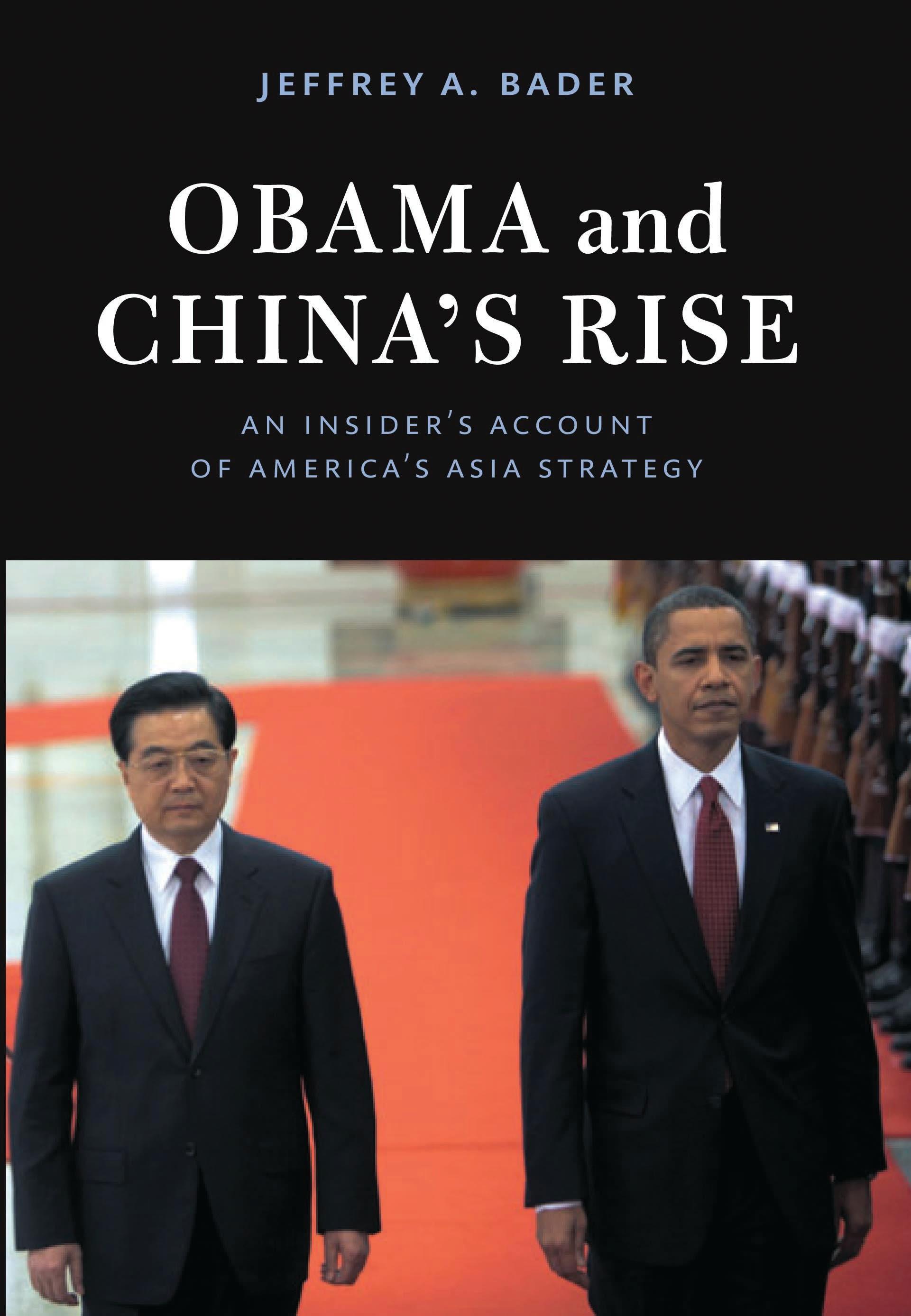
""Future presidents will need to find the right balance in China policy, so as to maintain America's strength and watchfulness but not fall into the classic security dilemma, wherein each side believes that growing capabilities reflect hostile intent and responds by producing that reality. I believe that President Obama struck that balance."" From Obama and China's Rise
In 2005, veteran diplomat and Asia analyst Jeffrey Bader met for the first time with the then-junior U.S. senator from Illinois. When Barack Obama entered the White House a few years later, Bader was named the senior director for East Asian affairs on the National Security Council, becoming one of a handful of advisers responsible for formulating and implementing the administration's policy regarding that key region. For obvious reasonsa booming economy, expanding military power, and increasing influence over the regionthe looming impact of a rising China dominated their efforts.
Obama's original intent was to extend U.S. influence and presence in East Asia, which he felt had been neglected by a Bush administration fixated on the Middle East, particularly Iraq, and the war on terror. China's rise, particularly its military buildup, was heightening anxiety among its neighbors, including key U.S. allies Japan and South Korea. Bader explains the administration's efforts to develop stable relations with China while improving relationships with key partners worried about Beijing's new assertiveness.
In Obama and China's Rise, Bader reveals what he did, discusses what he saw, and interprets what it meantfirst during the Obama campaign, and then for the administration. The result is an illuminating backstage view of the formulation and execution of American foreign policy as well as a candid assessment of both. Bader combines insightful and authoritative foreign policy analysis with a revealing and humanizing narrative of his own personal journey.
In 2005, veteran diplomat and Asia analyst Jeffrey Bader met for the first time with the then-junior U.S. senator from Illinois. When Barack Obama entered the White House a few years later, Bader was named the senior director for East Asian affairs on the National Security Council, becoming one of a handful of advisers responsible for formulating and implementing the administration's policy regarding that key region. For obvious reasonsa booming economy, expanding military power, and increasing influence over the regionthe looming impact of a rising China dominated their efforts.
Obama's original intent was to extend U.S. influence and presence in East Asia, which he felt had been neglected by a Bush administration fixated on the Middle East, particularly Iraq, and the war on terror. China's rise, particularly its military buildup, was heightening anxiety among its neighbors, including key U.S. allies Japan and South Korea. Bader explains the administration's efforts to develop stable relations with China while improving relationships with key partners worried about Beijing's new assertiveness.
In Obama and China's Rise, Bader reveals what he did, discusses what he saw, and interprets what it meantfirst during the Obama campaign, and then for the administration. The result is an illuminating backstage view of the formulation and execution of American foreign policy as well as a candid assessment of both. Bader combines insightful and authoritative foreign policy analysis with a revealing and humanizing narrative of his own personal journey.
Pages: 171
Category: Statsvetenskap & Politik
e-ISBN: 9780815722434
Shipping weight: 1.2 kg
Ships in: 1-2 days
Pay easily by card, Klarna, Apple Pay or Google Pay. Not happy? You always have a 14-day money-back guarantee. Read more in our terms. If you have any questions, email us at hello@memmo.org.
Memmo makes studying easier – wherever you are in the world. We bring your course books and smart study tools together in one place: summaries, quizzes, podcasts and flashcards. Plus Ted, your study buddy who answers anything you wonder. Over 50,000 students already study here – built to help you learn faster and stress less.